In industrial automation and control systems, proximity sensor switches are fundamental components for detecting the presence or absence of objects without physical contact. Among the various output configurations, the NPN output is widely utilized due to its compatibility with many programmable logic controllers (PLCs) and electronic circuits. This article delves into the specifics of NPN output voltage in proximity sensors, explaining its principles, typical values, and practical considerations for engineers and technicians.
An NPN output in a proximity sensor refers to a transistor-based switching mechanism where the output terminal is connected to the negative voltage supply (ground or 0V) when activated. This type is also known as a sinking output, as it sinks current from the load to ground. The voltage associated with NPN outputs is typically defined by the sensor's power supply and the load it drives. Most industrial proximity sensors operate with a DC power supply ranging from 10 to 30 volts DC, with 12V DC and 24V DC being the most common standards. When the sensor detects a target, the NPN transistor switches on, allowing current to flow from the load through the output to ground, effectively pulling the output voltage close to 0V. In the off state, the output voltage rises to near the supply voltage level, as it is pulled up by an external resistor or the load itself.
The actual output voltage in an NPN configuration depends on several factors, including the supply voltage, load resistance, and transistor characteristics. For instance, with a 24V DC supply, the output voltage when active (on) is typically very low, often below 1V, due to the small saturation voltage (Vce(sat)) of the transistor—usually around 0.1 to 0.3V for modern devices. When inactive (off), the output voltage can approach the full supply voltage if a pull-up resistor is used, ensuring a clear high signal for control systems. Engineers must consider the voltage drop across the transistor to avoid signal degradation, especially in long wiring runs or high-current applications. Additionally, the load connected to the sensor, such as a PLC input module, should have an input impedance that matches the sensor's output capability to ensure reliable switching.
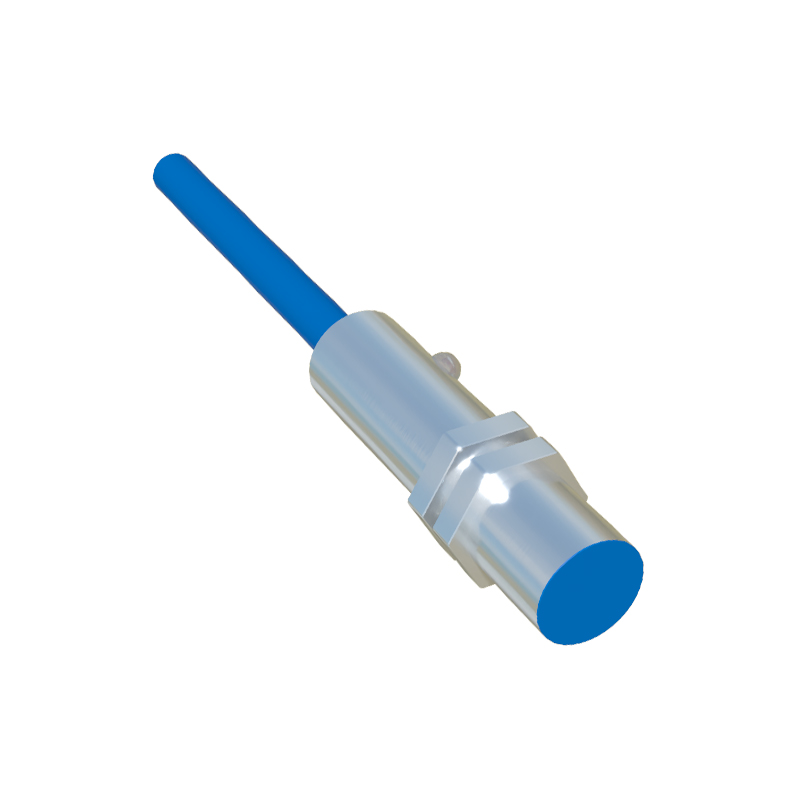
In practice, selecting the correct power supply and verifying voltage levels are critical for system integration. For example, a 12V DC sensor with NPN output may be used in automotive or low-voltage environments, while 24V DC sensors are preferred in industrial settings for better noise immunity and longer cable distances. It is essential to consult the sensor's datasheet for precise specifications, including maximum output current, leakage current in the off state, and response time. Common issues like voltage spikes or electromagnetic interference can affect output stability, so proper shielding and surge protection are recommended. By understanding these voltage dynamics, professionals can optimize sensor performance, reduce downtime, and enhance safety in automated processes.
Overall, the NPN output voltage in proximity sensor switches is a key parameter that influences system design and reliability. With its sinking nature, it provides a straightforward interface for many control devices, but attention to detail in voltage matching and environmental factors is necessary for seamless operation. As technology advances, sensors with integrated diagnostics and wider voltage ranges are becoming available, offering greater flexibility for diverse applications in manufacturing, robotics, and beyond.