Laser sensors are pivotal components in modern industrial automation, measurement, and control systems. Their precision, speed, and reliability stem from a sophisticated integration of several core subsystems. Understanding the composition of a laser sensor is essential for engineers and technicians involved in selection, integration, and maintenance. This guide delves into the fundamental building blocks of a typical laser sensor, explaining the role and operation of each component.
At the heart of every laser sensor is the Laser Diode (Emitter). This semiconductor device generates the coherent, monochromatic light beam that serves as the sensor's probing tool. Typically operating in the visible red or infrared spectrum, the laser diode is chosen for its wavelength, which affects the sensor's performance in different applications (e.g., material penetration, ambient light immunity). A drive circuit meticulously controls the diode's current to ensure stable output power and, in some sensors, to modulate the beam for enhanced performance in distance measurement or signal discrimination.
The emitted laser light then passes through Collimating Optics. Raw light from the diode is divergent. The collimating lens assembly shapes this light into a tight, parallel beam. This process is crucial for achieving high spatial resolution and long working ranges. The quality of these optics directly influences the beam's spot size and shape, which are critical parameters for applications requiring fine detail detection or precise edge finding.
The projected beam interacts with the target object. The reflected or scattered light is collected by the Receiver Optics. This lens system gathers the often weak return signal and focuses it onto the sensitive area of the Photodetector. Common photodetector types include Photodiodes (PIN diodes for general purpose, Avalanche Photodiodes/APDs for high sensitivity) and Position-Sensitive Detectors (PSDs or CMOS/CCD arrays). The photodetector's function is to convert the incoming light photons into a proportional electrical current.
This minute electrical signal is then processed by the Signal Processing Circuitry, arguably the "brain" of the sensor. This stage involves several key operations:
1. Amplification: Boosts the weak signal from the photodetector to a usable level.
2. Filtering: Applies electronic filters to eliminate noise from ambient light (e.g., 50/60 Hz flicker from room lighting) or other electrical interference.
3. Demodulation: In sensors using a modulated laser beam, this circuit extracts the measurement information encoded in the signal's phase or frequency, which is key for time-of-flight or phase-shift distance measurement principles.
4. Analog-to-Digital Conversion (ADC): Converts the processed analog signal into a digital format for the microcontroller.
The digitized signal is fed into a Microcontroller or Digital Signal Processor (DSP). This unit executes the sensor's core algorithms. It calculates the desired output—such as distance, presence, thickness, or displacement—based on the received signal's properties (e.g., time delay, triangulation geometry, or intensity). It also manages communication protocols, handles user-configurable parameters (set via teach-in buttons or software interfaces), and drives the Output Interface.
The Output Interface provides the physical connection to the broader control system. Common industrial outputs include:
* Digital Switches: NPN/PNP transistors providing a simple ON/OFF signal when a target is detected or a threshold is crossed.
* Analog Outputs: (0-10V, 4-20mA) providing a continuous signal proportional to the measured value, like distance.
* Serial Communication: Interfaces like RS-232, RS-485, or industrial fieldbuses (PROFIBUS, EtherCAT) for transmitting detailed data and configuration.
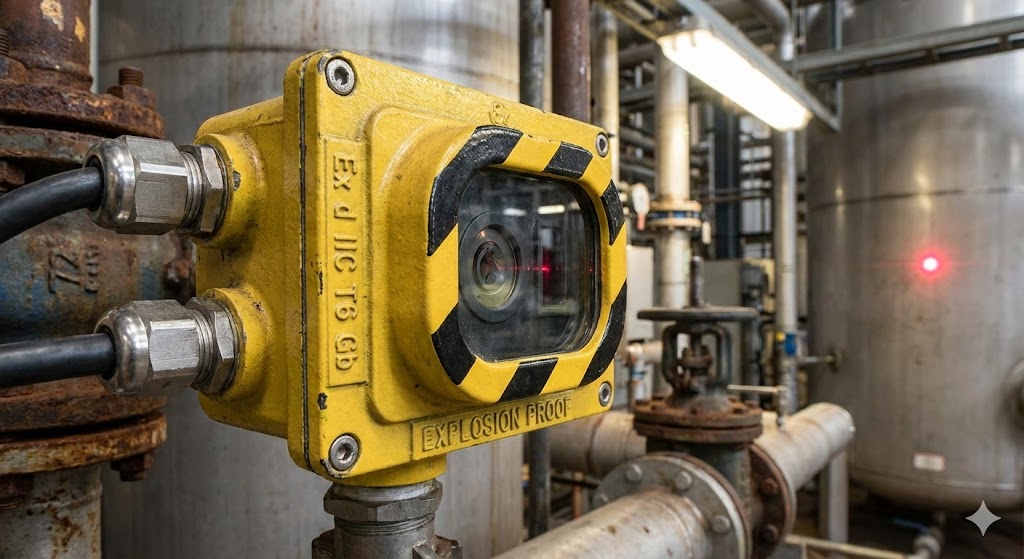
Encasing and protecting all these delicate components is the Sensor Housing. Constructed from robust materials like metal or industrial-grade plastics, it provides mechanical stability, protects against dust and liquids (rated by IP codes), and often includes mounting threads or brackets. For harsh environments, housings may feature special coatings or be made of stainless steel.
In summary, a laser sensor is a symphony of optoelectronic and electronic components working in unison. From the generation of a precise light beam to the sophisticated processing of its echo and the delivery of a clear output signal, each component—laser diode, optics, detector, circuitry, processor, and housing—plays an indispensable role. This intricate composition is what enables laser sensors to deliver the exceptional accuracy and robustness required in demanding industrial applications, from factory floors to laboratory settings.