Laser inductive sensors represent a critical category of non-contact measurement and detection devices widely employed across modern industrial automation, robotics, and quality control systems. These sensors operate by emitting a focused laser beam towards a target object. The interaction between the laser light and the object's surface—whether through reflection, interruption, or triangulation—generates a signal that is processed to determine precise parameters such as presence, distance, position, or thickness. Their high accuracy, rapid response times, and ability to function in challenging environments make them indispensable. This article delves into the primary types of laser inductive sensors, elucidating their operating principles and typical applications.
One fundamental classification is based on the method of detection. Through-beam sensors, also known as opposed-mode sensors, consist of two separate units: a laser transmitter and a receiver positioned opposite each other. The sensor detects an object when it interrupts the laser beam traveling between the two units. This configuration offers the longest sensing ranges and high reliability, as it is less susceptible to the target object's color, reflectivity, or surface finish. Common applications include part counting on high-speed conveyor lines, break detection in material webs, and safety curtains in hazardous areas.
In contrast, retro-reflective sensors integrate both the emitter and receiver into a single housing. They utilize a reflector, typically a corner-cube reflector, placed opposite the sensor. The emitted laser beam bounces off the reflector and returns to the receiver. An object is detected when it blocks this reflected beam. While offering easier alignment than through-beam systems, their effective range is shorter. They are ideal for detecting transparent objects, such as glass or plastic films, where standard photoelectric sensors might fail, and are commonly used in packaging and bottling industries.
Diffuse-reflective sensors, or proximity sensors, represent the most common type. Here, the emitter and receiver are housed together, but they do not require a separate reflector. The sensor detects an object by measuring the light scattered (diffused) back from the object's surface. The sensing distance depends heavily on the target's size, color, and surface texture—light-colored, matte surfaces provide the best response. Advanced versions, known as background suppression sensors or fixed-field sensors, use triangulation principles to detect objects only within a precisely defined zone, ignoring more distant backgrounds. This makes them perfect for applications like detecting stacked boxes on a pallet or controlling robot gripper positions.
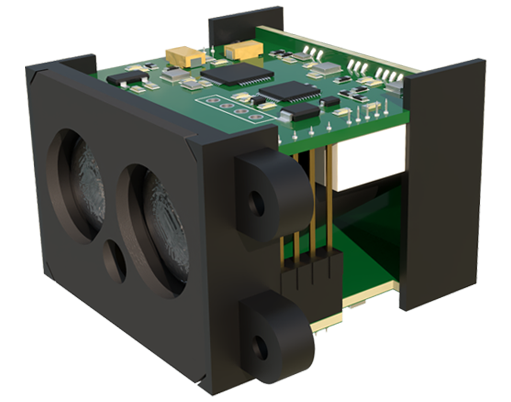
For precise distance and displacement measurement, laser triangulation sensors are the premier choice. They project a laser spot onto the target surface. The reflected light strikes a position-sensitive detector (e.g., a CCD or PSD array) at an angle. As the target's distance changes, the position of the reflected spot on the detector shifts. By calculating this shift, the sensor determines the exact distance with micron-level resolution. These sensors are extensively used for profiling, thickness gauging of rolled metals or plastics, vibration analysis, and inspecting component dimensions in automotive and semiconductor manufacturing.
A specialized variant is the confocal chromatic sensor. It uses white light, which is split into a spectrum by a lens system. Only a specific wavelength is focused precisely on the target surface; this wavelength changes with distance. By analyzing the reflected wavelength, the sensor achieves extremely high resolution for measuring minute distances or the thickness of transparent layers, like coatings or glass. This technology is crucial in high-precision sectors such as microelectronics and optical engineering.
Furthermore, laser profile scanners (or line scanners) extend the triangulation principle into two dimensions. Instead of a single point, they project a laser line across an object. A camera captures the deformation of this line, enabling the creation of a detailed 2D or 3D profile. This is fundamental for robot guidance, weld seam inspection, and complete surface contour inspection.
Choosing the correct laser inductive sensor depends on multiple factors: required sensing range, accuracy, environmental conditions (dust, ambient light), target characteristics, and cost. Through-beam sensors excel in long-range, reliable detection. Diffuse sensors offer flexible, compact installation. Triangulation and confocal sensors provide the pinnacle of metrological precision.
In conclusion, the diverse family of laser inductive sensors provides tailored solutions for virtually every industrial sensing challenge. From simple presence detection to complex dimensional metrology, understanding the distinct types—through-beam, retro-reflective, diffuse, background suppression, triangulation, confocal, and profile scanners—empowers engineers to design more efficient, accurate, and intelligent automated systems. As Industry 4.0 advances, the integration of these sensors with IoT platforms and data analytics will further unlock predictive maintenance and enhanced process optimization.