In the realm of industrial automation and machine safety, proximity sensors are indispensable components. They detect the presence or absence of an object without physical contact, offering reliability, longevity, and high-speed operation. A critical aspect of selecting the right sensor for an application is understanding its distinct operating modes. These modes define how the sensor interacts with its target and its environment, influencing factors like sensing range, mounting constraints, and immunity to interference. This article delves into the primary operating modes of proximity sensors, providing clarity for engineers and technicians in specification and deployment.
The most common and fundamental operating mode is the Standard Sensing Mode, also often referred to as the front-facing or axial mode. In this configuration, the sensor's active face is directed perpendicularly toward the target's approach path. The sensing field projects axially from the front of the sensor. This mode is ideal for applications where the target approaches head-on, such as counting objects on a conveyor, detecting a piston position in a cylinder, or verifying the presence of a part in a fixture. It typically offers the longest nominal sensing range for a given sensor model. Mounting is straightforward, but care must be taken to ensure no metal or other sensing material is within the sensing field from the sides, as it may cause false triggering.
For applications with spatial constraints or where side detection is necessary, the Side-Sensing or Lateral Mode is employed. Here, the sensor is mounted such that its active face is parallel to the target's path of travel. The target passes by the side of the sensor, activating it when it enters the lateral sensing field. This mode is invaluable for edge detection on moving webs, monitoring the flanks of materials, or in tight spaces where frontal mounting is impossible. The effective sensing range in lateral mode is generally shorter than in the standard mode. Proper alignment and gap between the sensor and the target path are crucial for consistent operation.
A specialized mode designed to overcome challenges with sensing flush-mounted or embedded metal objects is the Flush or Shielded Mounting Mode. Sensors designed for this mode have a metal ring or shield surrounding the sensing face. This shield confines the electromagnetic field, preventing it from spreading laterally. Consequently, these sensors can be mounted flush with or embedded into a metal bracket or machine frame without the metal interfering with the sensing field. They are perfect for applications where the sensor must be protected from physical damage or where a smooth surface profile is required. The trade-off is a reduced sensing range compared to an unshielded equivalent.
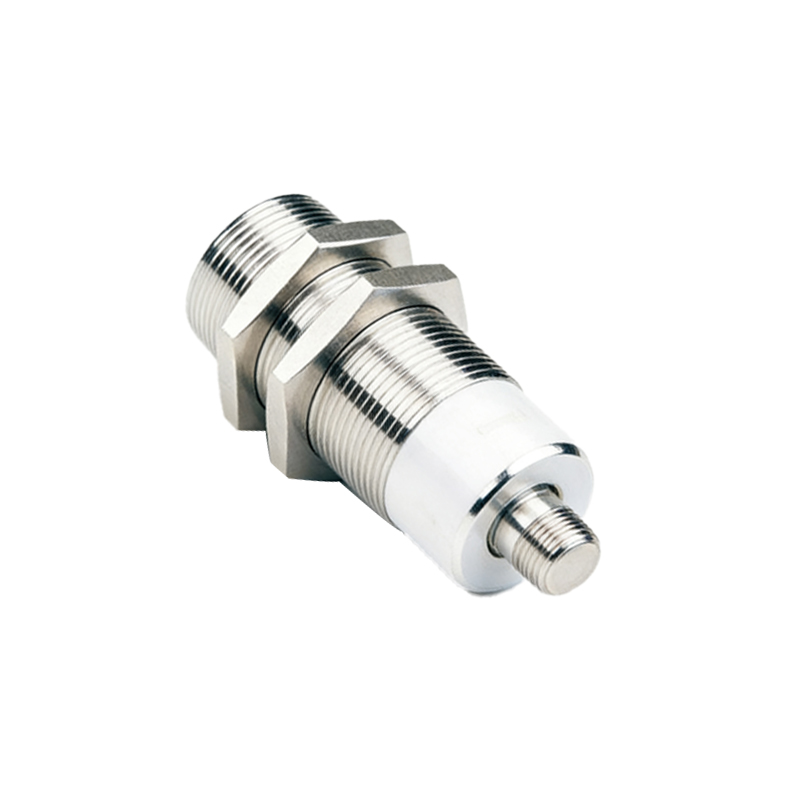
Conversely, Non-Flush or Unshielded Mounting Mode sensors do not have this surrounding metallic shield. Their electromagnetic field projects not only axially but also extends to the sides. This grants them a longer sensing range for the same physical size. However, they require a clear, non-metallic area around the sensor when mounted; typically, a free zone is specified in the datasheet. If mounted near metal, the sensing field is distorted, leading to a drastic reduction in range or complete failure. These sensors are used where maximum range is needed and mounting in a non-metallic environment is feasible.
Beyond these primary physical modes, modern programmable sensors often feature selectable Output Operating Modes. The two key types are Normally Open (NO) and Normally Closed (NC). A Normally Open (NO) sensor's output switch is open (inactive) when no target is present and closes (activates) when a target is detected. A Normally Closed (NC) sensor operates inversely: the output circuit is closed when no target is present and opens upon detection. The choice between NO and NC is critical for safety and control logic. For instance, NC wiring is often used in safety circuits (e.g., guard door monitoring) because a wire break mimics the "door open" state, causing a safe shutdown—a principle known as "fail-safe."
Furthermore, some advanced sensors offer an Analog Output Mode or Programmable Switching Points. Instead of a simple on/off digital signal, these sensors provide a continuous analog voltage or current output proportional to the distance to the target. This enables precise position monitoring, thickness measurement, or edge guidance. Programmable models allow users to set specific thresholds within the sensing range for digital switching, offering incredible flexibility for applications with varying target sizes or positions.
Selecting the correct operating mode is not merely a technical detail but a cornerstone of system reliability. Engineers must consider the target material (ferrous metal, non-ferrous metal, or non-metal), the required sensing distance, the available mounting space and material, environmental factors like temperature and washdown, and the required output signal for the controller. A thorough review of sensor datasheets, which detail sensing ranges for different modes and materials, is essential. By matching the sensor's operational mode to the application's specific demands, one ensures optimal performance, enhanced machine safety, and reduced downtime