Capacitive proximity sensors are versatile and widely used non-contact sensing devices in industrial automation, consumer electronics, and various other fields. Unlike inductive sensors that detect only metals, capacitive sensors can detect a vast range of materials, including liquids, plastics, glass, wood, and granular substances. Their operation is based on the fundamental principles of capacitance and the ability to sense changes in an electrostatic field.
At its core, a capacitive proximity sensor functions like an open capacitor. A typical sensor consists of an active electrode (the sensing surface) and a ground electrode, often formed by the sensor's housing or a separate terminal. When a voltage is applied to the active electrode, an electrostatic field is generated in front of the sensor. This field is the sensing zone. Initially, with no target present, the sensor's oscillator circuit is inactive or oscillating at a very low amplitude, as the capacitance between the active electrode and ground is at a baseline level.
The key principle is that any material with a dielectric constant (εr) greater than that of air (which is approximately 1) can affect this electrostatic field. When a target object enters the sensing field, it alters the dielectric properties of the space between the electrodes. The target acts as a dielectric, increasing the effective capacitance of the system. Even conductive materials, when grounded or of sufficient size, can be detected as they effectively become the second plate of a capacitor, significantly increasing the capacitance.
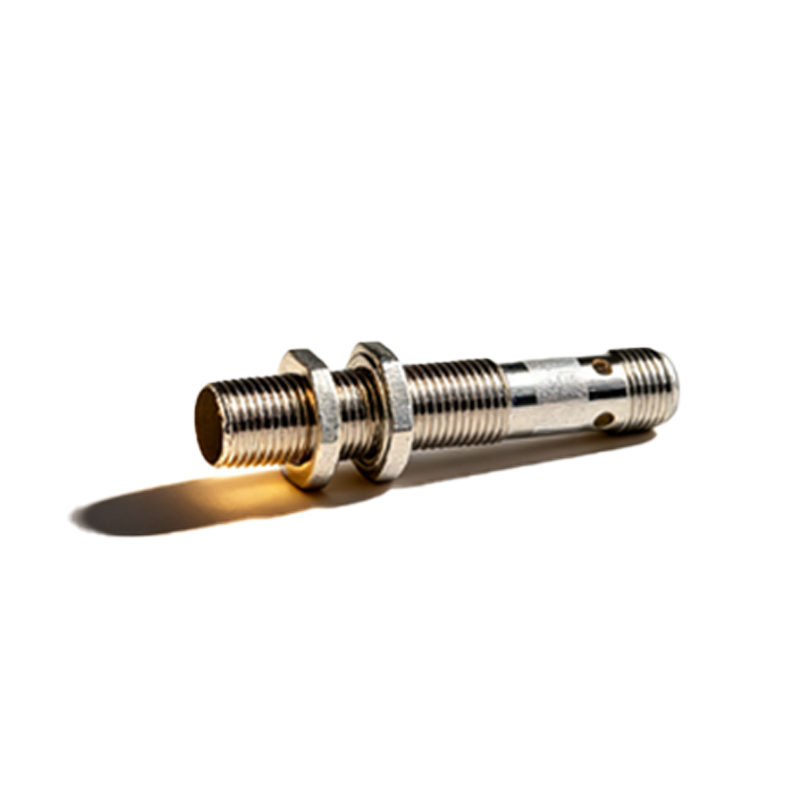
This change in capacitance is detected by the sensor's internal circuitry, typically an RC or LC oscillator circuit. As the capacitance increases, the oscillation amplitude rises. A threshold circuit monitors this amplitude. Once it exceeds a pre-set threshold—corresponding to the sensing distance—the sensor's output state changes. This output can be a switching signal (PNP/NPN, NO/NC) or an analog signal proportional to the distance or capacitance change.
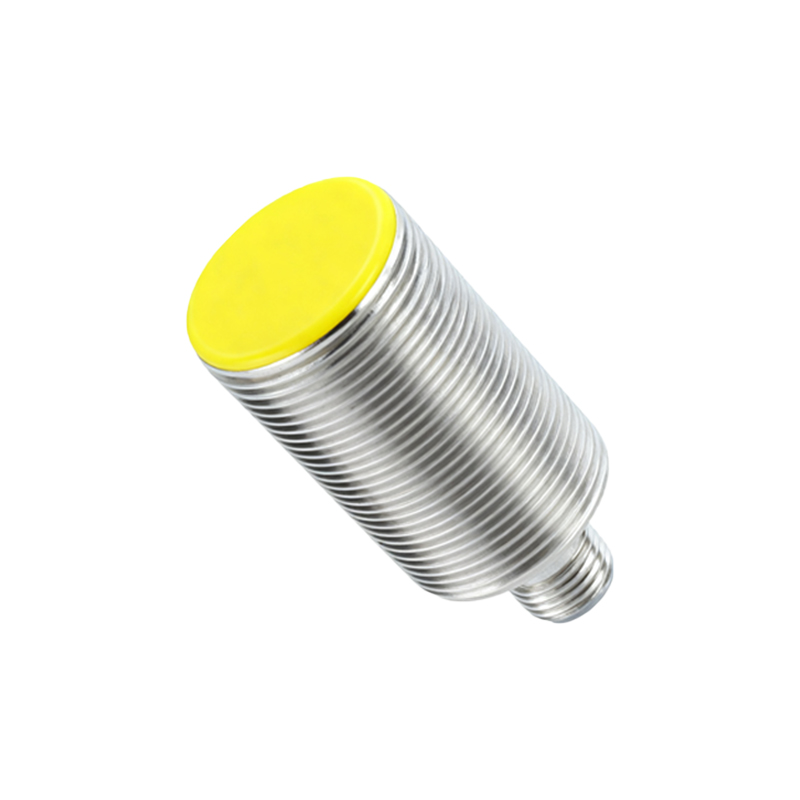
Several factors influence the sensing performance and effective range. The most critical is the dielectric constant of the target material. Materials with high dielectric constants, like water (εr ≈ 80), are easily detected at greater distances compared to low-εr materials like plastics (εr ≈ 2-5). The size and shape of the target also matter; a larger surface area parallel to the sensor face increases the capacitive coupling. The sensing distance specified in datasheets, known as the nominal sensing distance (Sn), is usually defined for a grounded metal target. For non-metallic materials, a reduction factor must be applied. Environmental factors such as humidity, temperature, and the presence of dust or contaminants can also affect performance, which is why many sensors feature sensitivity adjustment potentiometers to compensate for background effects or to fine-tune for specific applications.
Capacitive sensors offer distinct advantages. Their ability to detect non-metallic objects through non-metallic barriers (like glass or plastic walls) makes them ideal for level detection of liquids or powders in tanks. They are excellent for presence detection of labels on packaging, monitoring fill levels in bottles, or detecting the presence of wood or cardboard. In consumer electronics, they form the basis of touchscreens and touch-sensitive buttons.
However, they also have limitations. They are generally more sensitive to environmental changes than inductive sensors and can be triggered unintentionally by humidity or conductive dust buildup. Their sensing range for non-metallics is shorter, and they can be influenced by stray capacitance from nearby objects or the installer's hand. Proper installation is crucial: maintaining a minimum clearance from metal mounting surfaces (as specified by the manufacturer) prevents false triggering.
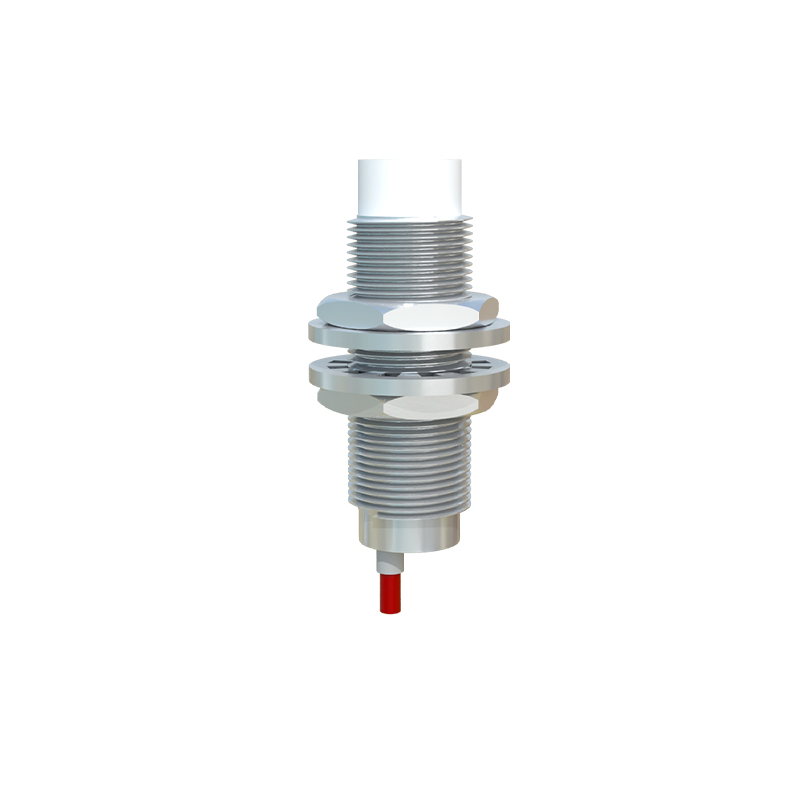
In application, selecting the right capacitive sensor involves considering the target material, required sensing distance, environmental conditions, output type, and housing style (cylindrical, rectangular, etc.). For instance, a flush-mounted sensor is less sensitive but immune to lateral metal influences, while a non-flush sensor offers a longer range. Modern sensors often include advanced features like IO-Link communication for parameterization and diagnostics, short-circuit and overload protection, and enhanced noise immunity.
In conclusion, the working principle of capacitive proximity sensors—detecting changes in capacitance caused by a target altering an electrostatic field—provides a flexible and powerful sensing solution. By understanding the interplay between dielectric properties, sensor design, and environmental factors, engineers can effectively deploy these sensors to solve a wide array of automation and control challenges, from simple object detection to complex process monitoring.