In the rapidly evolving landscape of industrial automation, laser sensors have emerged as a cornerstone technology for sorting equipment, driving unprecedented levels of accuracy, speed, and reliability. These sophisticated devices utilize laser beams to detect, measure, and classify objects based on various parameters such as size, shape, color, and material composition. Unlike traditional mechanical or optical sensors, laser sensors offer non-contact measurement, minimizing wear and tear while maintaining consistent performance in demanding environments.
The fundamental principle behind laser sensors in sorting systems involves emitting a focused laser beam toward a target object. The reflected light is then captured by a receiver, and advanced algorithms analyze the data to determine key characteristics. For instance, in recycling facilities, laser sensors can distinguish between different types of plastics by assessing their spectral reflectance, enabling efficient separation of materials like PET, HDPE, and PVC. This capability not only boosts recycling rates but also reduces contamination, aligning with global sustainability goals.
One of the primary advantages of laser sensors is their high precision. With resolutions reaching micrometer levels, they can identify minute defects or variations in products, ensuring only items meeting strict quality standards proceed down the production line. In food processing industries, this translates to detecting foreign objects or irregularities in packaging, safeguarding consumer health. Moreover, laser sensors operate at exceptional speeds, often processing thousands of items per minute, which is crucial for high-volume applications such as parcel sorting in logistics hubs.
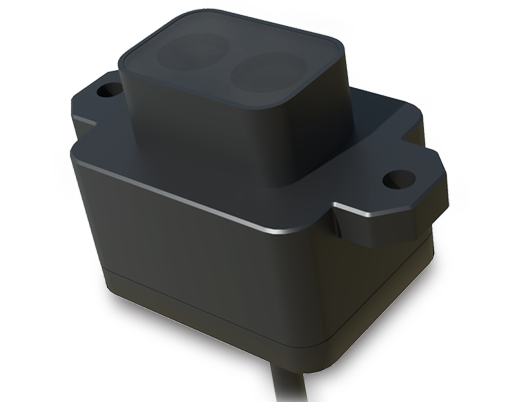
Durability is another key benefit. Designed to withstand harsh conditions—including dust, moisture, and temperature fluctuations—laser sensors maintain functionality where other sensors might fail. Their robust construction often includes IP-rated enclosures, making them suitable for use in outdoor settings or heavy machinery. Additionally, modern laser sensors integrate with IoT platforms, allowing real-time data monitoring and predictive maintenance. By analyzing sensor outputs, operators can anticipate potential failures and optimize sorting processes, reducing downtime and operational costs.
Despite their advantages, implementing laser sensors requires careful consideration. Factors like ambient light interference, object surface properties, and alignment must be addressed to ensure accurate readings. Calibration and regular maintenance are essential, as even minor misalignments can lead to errors. However, advancements in machine learning and adaptive algorithms are mitigating these challenges, enabling sensors to self-adjust and learn from environmental changes.
Looking ahead, the future of laser sensors in sorting equipment appears promising. Innovations such as 3D laser scanning and hyperspectral imaging are expanding their applications, allowing for more detailed object analysis. In e-commerce warehouses, for example, 3D laser sensors can assess package dimensions for optimized storage and shipping. As industries continue to prioritize efficiency and automation, laser sensors will play an increasingly vital role, transforming sorting systems into intelligent, data-driven operations.
In summary, laser sensors represent a transformative technology in sorting equipment, offering precision, speed, and resilience. By enabling accurate material separation and quality control, they contribute to enhanced productivity and sustainability across sectors. As technology evolves, these sensors are set to become even more integral to industrial automation, paving the way for smarter, more efficient sorting solutions.