In the realm of industrial automation and machinery, reliable object detection is paramount. Among the myriad of sensing solutions available, the square proximity sensor stands out for its versatility and robust design. The SN04-N model represents a classic and widely adopted example within this category. This article delves into the technical specifications, operational principles, and practical applications of the SN04-N inductive proximity sensor, providing a detailed overview for engineers and technicians.
The SN04-N is an inductive-type, non-contact proximity switch housed in a compact square-shaped body. This form factor offers distinct advantages in mounting, especially in applications where space is constrained or where a flat sensing surface is preferred over a cylindrical barrel sensor. Its typical construction involves a sensing face embedded in a rugged plastic or metal casing, designed to withstand the harsh conditions of industrial environments, including exposure to oil, coolants, and particulate matter.
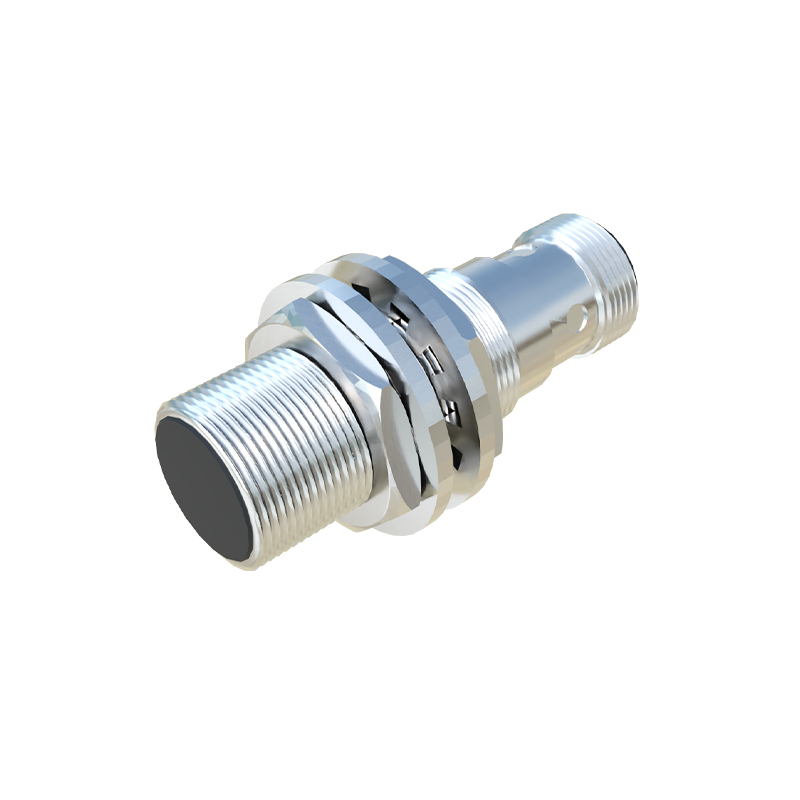
At its core, the SN04-N operates on the principle of electromagnetic induction. The sensor head contains an oscillator circuit that generates a high-frequency electromagnetic field. When a metallic object (the "target") enters this field, eddy currents are induced on the surface of the target. This causes a change in the oscillation amplitude within the sensor. An evaluation circuit within the SN04-N detects this change and triggers a solid-state switching output. It is crucial to note that as an inductive sensor, the SN04-N is designed specifically for detecting ferrous and non-ferrous metals; it is not suitable for sensing non-metallic materials like plastic, wood, or glass.
Key technical parameters define the SN04-N's performance. The sensing distance, often denoted as "Sn," is typically 4mm for this model. This is the nominal operating distance at which a standard target will reliably trigger the sensor. It is important to maintain a safety margin in installation, usually 10-20% less than Sn, to account for temperature fluctuations, voltage variations, and target material differences. The SN04-N commonly features a 3-wire configuration (brown for DC+, blue for DC-, and black for the output signal) and is available in both NPN (sinking) and PNP (sourcing) output types, allowing for seamless integration with various programmable logic controllers (PLCs) and control systems. Operating voltage ranges are typically from 6-36V DC, making it compatible with standard industrial control voltages. The output is normally open (NO), meaning the switch closes (conducts) when a target is detected.
One of the significant advantages of the SN04-N is its high switching frequency, often up to 1kHz or more. This allows for the detection of small, fast-moving parts on assembly lines or high-speed packaging machinery. Furthermore, its solid-state design ensures a long operational life with no mechanical wear from physical contact, unlike limit switches. The IP67 (or similar) ingress protection rating is a standard feature, indicating complete protection against dust and protection against temporary immersion in water, which is essential for washdown areas in food processing or automotive manufacturing.
In practical application, the SN04-N finds extensive use across numerous industries. Common implementations include position sensing of machine tool slides, end-of-travel detection on actuators, counting metallic objects on conveyors, and verifying the presence of parts in assembly jigs. Its square shape allows for side-by-side mounting without mutual interference, which is beneficial in multi-sensor applications. When installing the SN04-N, engineers must consider the mounting flush or non-flush. Flush-mounted sensors can be embedded in metal without affecting their sensing range, whereas non-flush models offer a longer sensing distance but require a clear area around the sensing face.
Troubleshooting is generally straightforward. A consistent failure to detect targets may indicate incorrect wiring, an insufficient power supply, or the use of an inappropriate target material (e.g., aluminum has a shorter effective sensing range than steel). Ensuring the target is within the specified sensing range and is large enough to reliably disturb the electromagnetic field is also critical. Regular maintenance involves simply keeping the sensing face clean from metallic debris buildup, which can cause false triggering.
In conclusion, the SN04-N square proximity sensor remains a fundamental component in the electrical engineer's toolkit. Its robust construction, reliable non-contact operation, and flexible mounting options make it an enduring solution for countless detection tasks in automated systems. Understanding its specifications, limitations, and optimal application practices is key to designing reliable, efficient, and maintainable control systems. As technology evolves, the core principles embodied by sensors like the SN04-N continue to underpin the advancement of industrial automation.