In the realm of industrial automation and machine safety, capacitive proximity sensors represent a critical class of non-contact detection devices. Unlike their inductive counterparts which primarily detect metals, safety capacitive proximity sensors are designed to sense a wide variety of materials—including liquids, powders, granules, and non-metallic solids—by detecting changes in capacitance. Their fundamental operating principle is based on the formation of an electrostatic field between the sensor's active surface and a ground potential. When a target object enters this sensing field, it alters the dielectric constant and thus the capacitance of the system. The sensor's internal oscillator detects this change, triggering a switching signal.
The designation "safety" elevates these sensors from standard functional components to integral parts of a machine's safety-related control system. Safety capacitive proximity sensors are engineered and certified according to stringent international standards such as IEC 60947-5-2, IEC 61508, and ISO 13849. These certifications ensure a high level of reliability, diagnostic coverage, and performance level (PL) necessary for safeguarding personnel and processes. Key safety features often include redundant output circuits, cross-monitoring, and robust housing with high ingress protection (IP) ratings like IP67 or IP69K for harsh environments. They are commonly deployed in safety functions such as presence detection for light curtains, monitoring of safety guard positions, or ensuring the correct level of non-conductive materials in hoppers to prevent overflows or machinery damage.
The advantages of implementing safety-rated capacitive sensors are manifold. They offer reliable detection regardless of the target material's color, transparency, or surface texture, making them versatile for complex applications. Their non-contact nature eliminates mechanical wear, ensuring long-term operational integrity—a paramount concern for safety systems. Furthermore, many models feature adjustable sensitivity, allowing engineers to fine-tune the sensing field to ignore interfering substances like container walls or dust, thereby reducing nuisance tripping. Typical applications span across food and beverage processing (detecting plastic or glass levels), pharmaceutical packaging, woodworking (sensing wood chips or panels), and automotive assembly lines.
When selecting a safety capacitive proximity sensor, several parameters demand careful consideration. The sensing distance, typically shorter than inductive sensors for the same housing size, must be chosen with a sufficient safety margin. The response time must be compatible with the required safety reaction time of the overall system. The environmental conditions—temperature, humidity, potential chemical exposure, and presence of airborne particulates—dictate the required housing material and protection class. Integration into the safety control architecture is also crucial; outputs are often complementary PNP or NPN signals designed to connect directly to a safety PLC or relay, continuously reporting their health status.
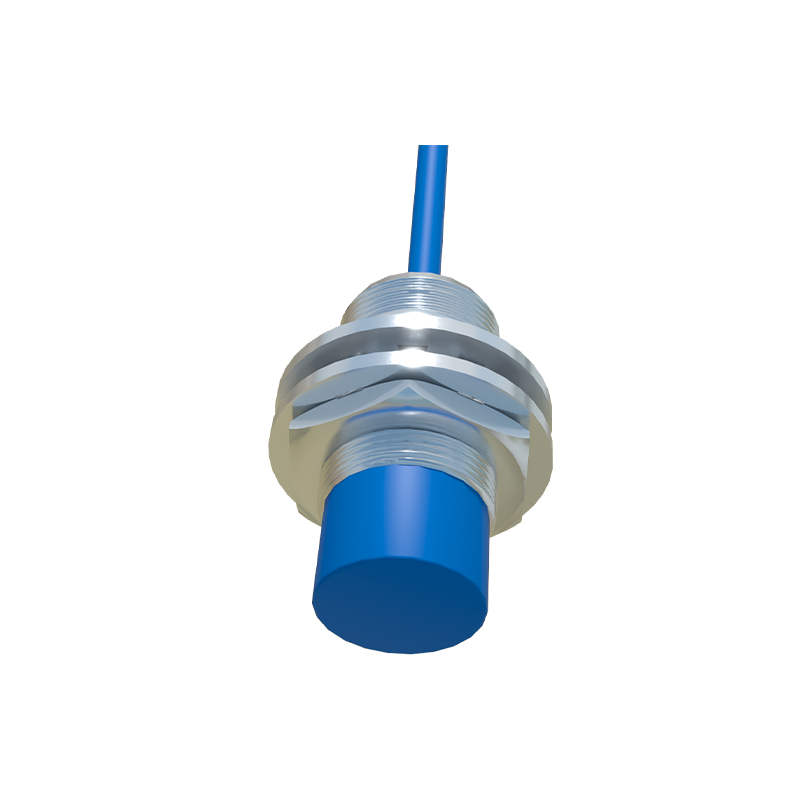
In conclusion, safety capacitive proximity sensors are indispensable for creating robust and compliant safety systems in modern industry. They bridge the gap between versatile material detection and fail-safe operation. By providing dependable, non-contact sensing of a broad material spectrum within a certified safety framework, they play a vital role in protecting both human operators and valuable machinery, thereby enhancing overall plant productivity and operational security. Their correct selection, installation, and integration are fundamental responsibilities for engineers designing safety-critical automation solutions.