In the realm of industrial automation and control systems, proximity sensors are ubiquitous components, silently performing critical tasks in object detection, positioning, and counting. A common question that arises in maintenance, design, and procurement is: "Can proximity sensors be used interchangeably?" The short answer is a qualified "it depends." While they share a fundamental purpose, assuming universal interchangeability can lead to system failures, safety hazards, and costly downtime. This analysis delves into the technical parameters that dictate whether one sensor can functionally replace another.
At the core, proximity sensors detect the presence or absence of a target object without physical contact. The primary technologies are Inductive, Capacitive, Ultrasonic, and Photoelectric. These are fundamentally not interchangeable across types. An inductive sensor, designed to detect metals, will not respond to a plastic or liquid target, whereas a capacitive sensor might. Swapping an ultrasonic sensor for a photoelectric one in a dusty environment could result in failure due to the differing principles of operation (sound waves vs. light beams).
Even within the same technology family, critical specifications must match. The most pivotal is the sensing principle: sinking (NPN) versus sourcing (PNP) outputs. These describe the transistor configuration and current flow. Connecting an NPN sensor to a PNP-input PLC module, or vice versa, will not work and may damage equipment. The electrical characteristics—operating voltage (e.g., 10-30V DC), output current, and number of wires (2-wire, 3-wire, 4-wire)—must be compatible with the control system's power supply and input card.
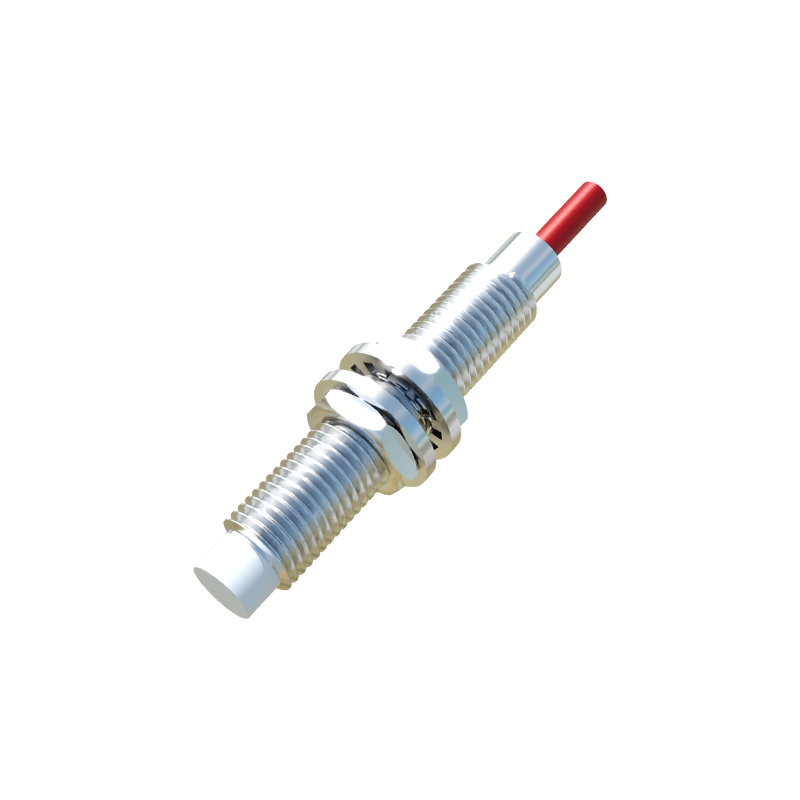
Physical and performance specifications are equally decisive. The housing style (cylindrical, rectangular, slot-type) and mounting dimensions (thread size, barrel diameter, length) must fit the mechanical installation. The sensing distance, or nominal range, is crucial. A replacement sensor with a shorter range may fail to detect the target, while one with a significantly longer range might cause unintended actuation. The repeatability and hysteresis affect precision. For high-speed applications, the switching frequency must be sufficient. Environmental ratings like IP (Ingress Protection) codes for dust/water resistance and temperature range are non-negotiable for reliability in harsh conditions.
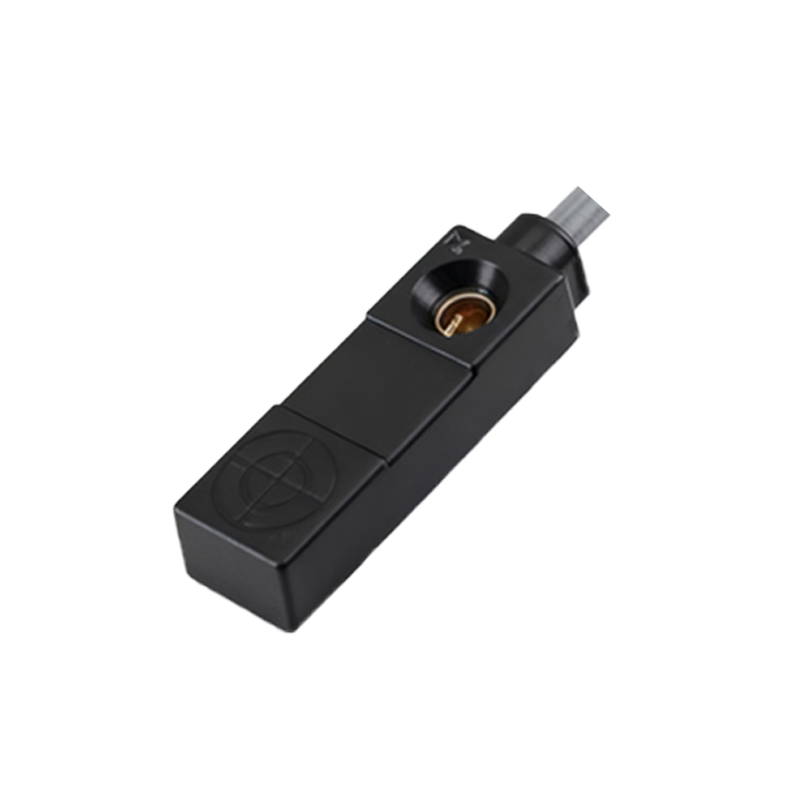
Output configuration is another layer. Does the application require a Normally Open (NO) or Normally Closed (NC) contact? A NO sensor conducts when a target is present; an NC conducts when absent. Incorrectly swapping these can invert the logic of an entire machine sequence. Furthermore, some sensors offer analog outputs (4-20mA, 0-10V) or specialized IO-Link digital communication, which are not directly interchangeable with simple discrete (on/off) sensors.
Beyond the datasheet, application context is king. The target material is paramount for inductive sensors (steel, aluminum, copper all have different correction factors). The required switching state (detect presence or absence) must align. Electrical noise in the environment may necessitate a shielded sensor. In safety-critical applications, only sensors designed and certified for that specific safety function (e.g., SIL, PL) can be used.
Therefore, a systematic approach is required for any substitution. First, obtain the datasheet for the original sensor. Second, meticulously compare the new sensor's specifications against these key parameters: Technology Type, Sensing Principle (NPN/PNP), Voltage/Current, Housing & Range, Output Type (NO/NC), and Environmental Ratings. Third, consider the specific application conditions. Many manufacturers offer cross-reference tools, but these should be a starting point for verification, not a guarantee.
In conclusion, proximity sensors are not universally interchangeable commodities. Successful substitution hinges on a detailed technical evaluation that goes beyond a simple "same size and shape" assessment. Engineers and technicians must prioritize electrical compatibility, performance specifications, and application requirements. When in doubt, consulting the sensor manufacturer's technical support is always the safest and most reliable practice to ensure system integrity, operational safety, and long-term reliability.