Inductive proximity sensors are fundamental components in industrial automation, widely valued for their non-contact detection capabilities, robustness, and reliability in harsh environments. At their core, these sensors operate based on the principles of electromagnetic induction. The primary function of an inductive proximity sensor is to detect the presence or absence of metallic objects without any physical contact, making them ideal for applications involving machinery, material handling, and safety systems.
The basic construction of a standard inductive proximity sensor includes four key elements: a coil wound around a ferrite core, an oscillator circuit, a signal evaluation circuit (often comprising a Schmitt trigger), and an output switching stage. The coil and ferrite core form the sensor's active face or sensing area. When the sensor is powered, the oscillator circuit generates a high-frequency alternating magnetic field that radiates from the ferrite core into the surrounding space. This oscillating field is typically in the range of several hundred kilohertz.
When a metallic target enters this magnetic field, electromagnetic induction principles come into play. According to Faraday's law and Lenz's law, eddy currents are induced on the surface of the conductive target. These eddy currents create their own opposing magnetic field, which interacts with the sensor's original field. This interaction results in a measurable change in the oscillator circuit's characteristics. Specifically, the energy loss due to the eddy currents causes a decrease in the amplitude of the oscillations—a phenomenon often referred to as "damping."
The signal evaluation circuit continuously monitors the oscillator's amplitude. Once the damping exceeds a predefined threshold (set by the sensor's sensing distance specifications), the evaluation circuit triggers a state change. This change is processed, typically by a Schmitt trigger to ensure a clean, hysteresis-stabilized switch, and then sent to the output stage. The output stage can be configured in various forms, such as NPN (sinking), PNP (sourcing), or analog (4-20 mA or 0-10V), to interface with programmable logic controllers (PLCs), relays, or other control systems.
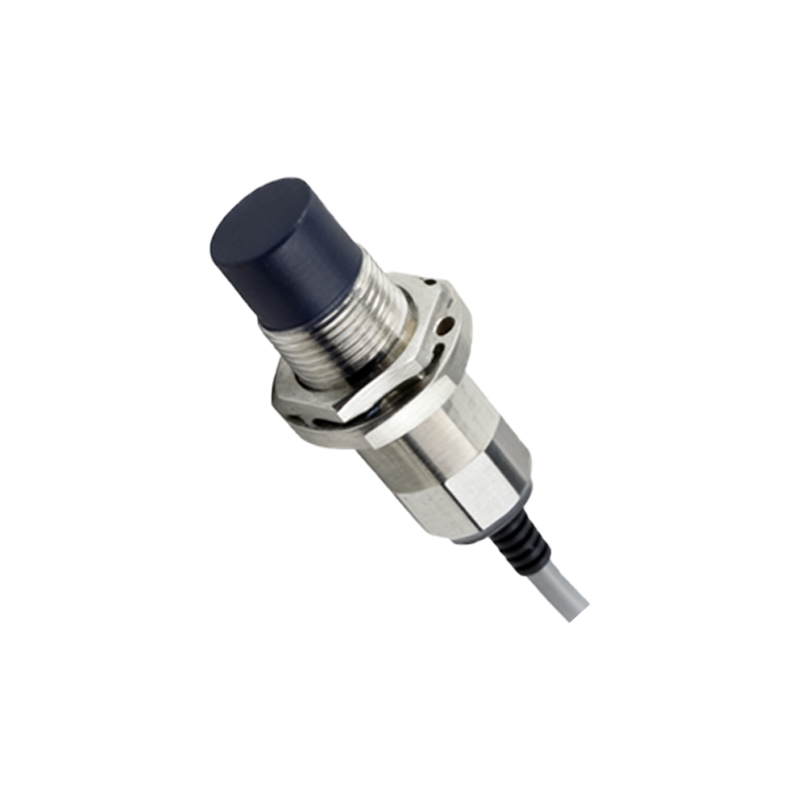
Several factors influence the performance and sensing range of an inductive proximity sensor. The target material is paramount; ferromagnetic metals like iron and steel generate stronger eddy currents and thus have a longer nominal sensing distance. Non-ferrous metals like aluminum, copper, or brass have shorter sensing ranges due to their lower permeability. The target's size, shape, and thickness also play a role—a target smaller than the sensor's active face or too thin may not be detected reliably at the full nominal range. Standardized testing defines the nominal sensing distance (Sn) using a square mild steel target of specific dimensions.
Another critical characteristic is the hysteresis. This is the difference between the switch-on point (when the target approaches) and the switch-off point (when the target moves away). Hysteresis prevents output chatter when a target is positioned at the exact switching threshold, ensuring stable operation despite vibration or minor positional fluctuations.
Modern inductive sensors incorporate advanced features for enhanced functionality. Some models include immunity to electromagnetic interference (EMI), weld-field immunity for use near resistance welding equipment, and embedded diagnostics like short-circuit and overload protection. Cylindrical, rectangular, and ring-shaped housings are available, often rated IP67 or higher for resistance to dust and water ingress.
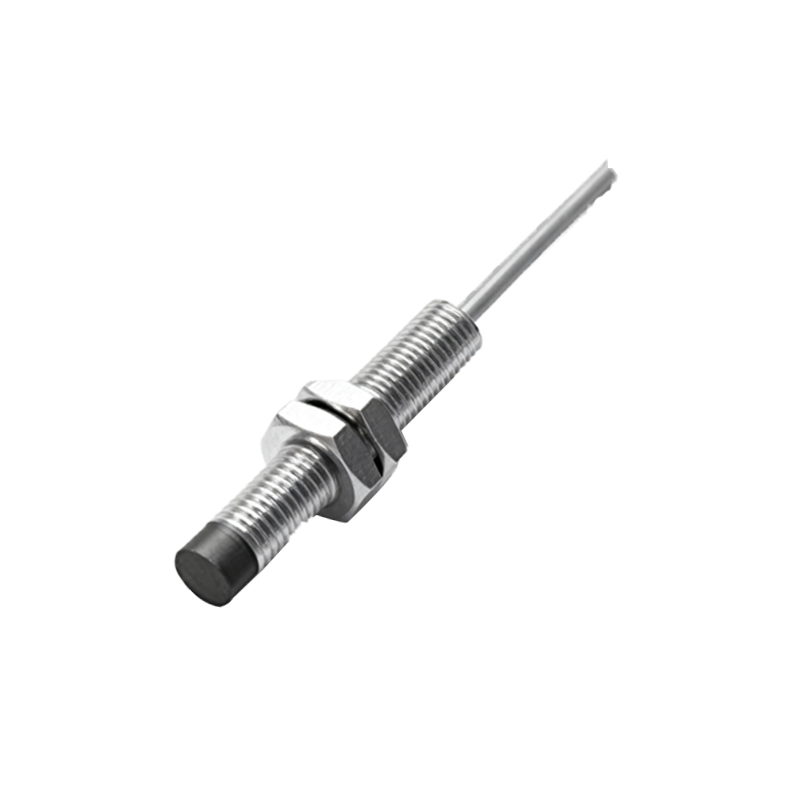
In summary, the operation of an inductive proximity sensor is an elegant application of electromagnetic theory. By generating a high-frequency field and detecting the eddy current losses induced in a metallic target, it provides a solid-state, wear-free switching solution. Its simplicity, coupled with durability and speed, ensures its continued dominance in position detection, counting, and end-of-travel limit applications across countless industrial sectors, from automotive manufacturing to food processing and packaging.