In the realm of industrial automation and precision measurement, laser counting sensors have emerged as indispensable tools. These devices offer non-contact, high-speed, and highly accurate solutions for counting objects across a vast array of applications. Unlike mechanical or basic photoelectric methods, laser counting sensors utilize a focused beam of coherent light to detect and tally items with exceptional reliability, even in challenging environments.
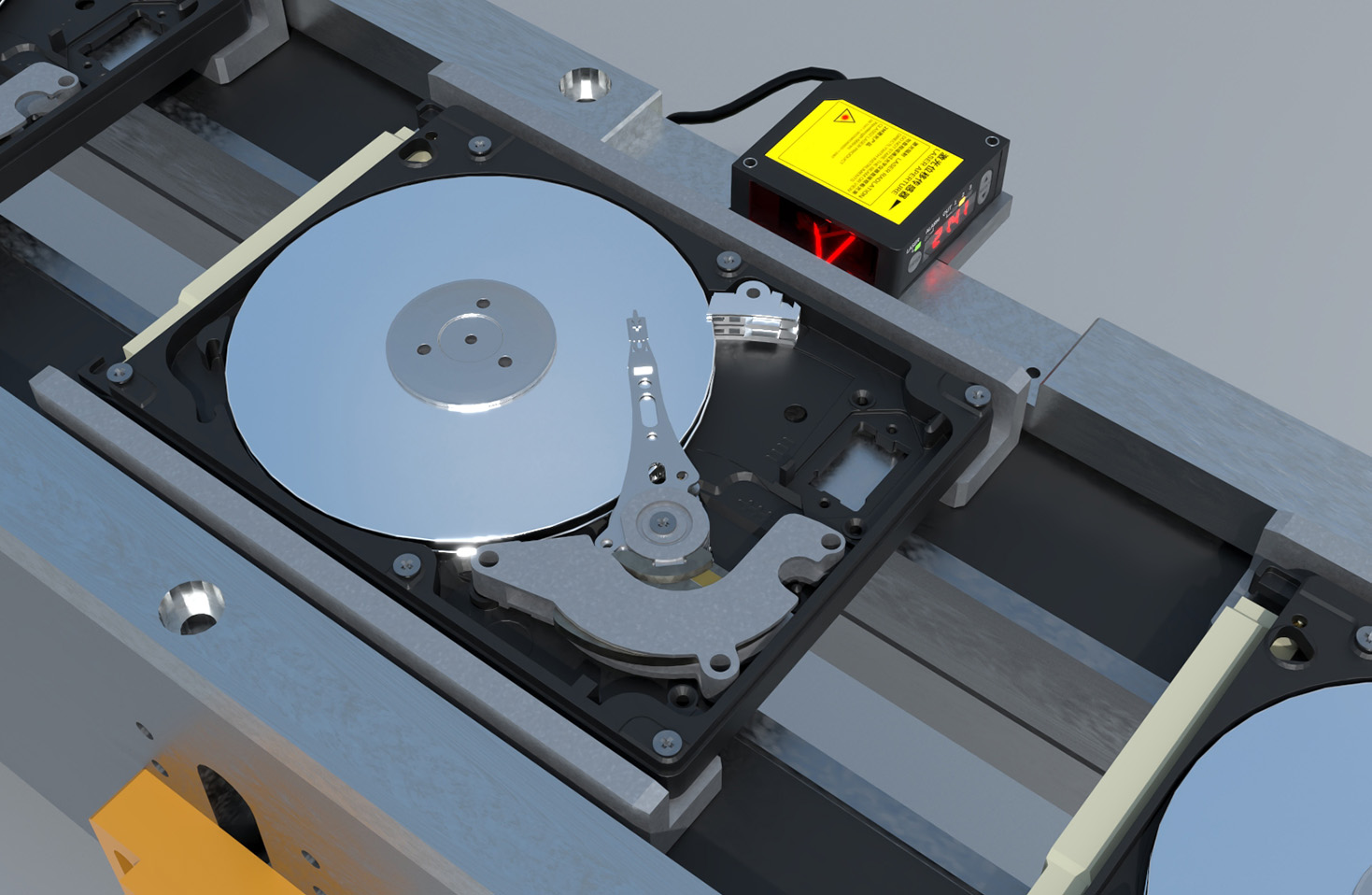
The core principle behind a laser counting sensor is based on the interruption or reflection of a laser beam. Typically, the sensor projects a precise, narrow beam of laser light towards a receiver or a reflective surface. When an object passes through this beam, it causes a detectable change—either by blocking the beam (through-beam mode) or by reflecting it back to the sensor (reflective mode). This change is instantly registered by the sensor's photodetector and sophisticated internal circuitry, which processes the signal to register a count. Advanced models incorporate background suppression technology, allowing them to ignore distant backgrounds and focus solely on the target object, thereby minimizing false counts.
The advantages of using laser technology for counting are numerous. First and foremost is accuracy. The highly collimated nature of laser light provides a sharp, well-defined detection point, enabling the sensor to distinguish between closely spaced objects and count极小 items that might be missed by other methods. Speed is another critical benefit; these sensors can handle counting at rates reaching thousands of items per second, making them ideal for high-speed production lines. Furthermore, their non-contact operation eliminates wear and tear, ensuring long-term reliability and reducing maintenance costs. They are also largely immune to ambient light interference and can perform consistently in environments with dust, vapor, or varying light conditions, provided the correct model is selected.
The applications for laser counting sensors are remarkably diverse. In manufacturing and packaging, they are used to count components, bottles, pills, and packages on conveyor belts. The pharmaceutical industry relies on them for precise pill counting in blister packs or bottles. In logistics and warehousing, they facilitate inventory management by counting boxes on sorting lines. They are also found in the automotive sector for part verification, in the food and beverage industry for counting items like candies or nuts, and in printing for sheet counting. Any process that requires fast, reliable, and repeatable quantification of discrete objects is a potential application.
Selecting the right laser counting sensor requires careful consideration of several factors. The key parameters include sensing range, which must be suitable for the installation distance; the size and material of the objects to be counted; the required counting speed; and the environmental conditions. For small, dark, or absorbent objects, a sensor with sufficient output power is necessary. For shiny or highly reflective targets, a background suppression (BGS) model is often essential to prevent erroneous readings. The choice between through-beam, retro-reflective, and diffuse reflective sensing modes will depend on the physical layout and the possibility of mounting a receiver opposite the emitter. Additionally, output types (e.g., NPN/PNP transistor, analog, or digital communication protocols like IO-Link) must be compatible with the existing control system.
Installation and alignment are crucial for optimal performance. The sensor must be securely mounted to avoid vibration, and the laser beam must be precisely aimed at the detection point. Many modern sensors feature visible red laser beams or alignment aids to simplify this process. Regular maintenance, primarily keeping the lens clean from dust and debris, is simple but vital to ensure uninterrupted operation.
In conclusion, laser counting sensors represent a fusion of optical precision and electronic intelligence, providing a robust answer to modern industrial counting challenges. Their ability to deliver speed, accuracy, and reliability in a non-contact manner makes them a superior choice over traditional methods. As technology advances, these sensors are becoming more intelligent, with integrated diagnostics and connectivity features, further solidifying their role as a cornerstone of efficient automation and quality control processes. For engineers and system integrators, understanding their operation and selection criteria is key to leveraging their full potential and driving productivity gains.