Inductive proximity sensors represent a cornerstone of modern industrial automation, offering non-contact detection of metallic objects. Among the various sensing ranges available, the 350mm inductive proximity sensor stands out for applications requiring extended reach. This article delves into the technical specifications, operational principles, selection criteria, and typical use cases for these robust sensing devices.
Operational Principle and Core Technology
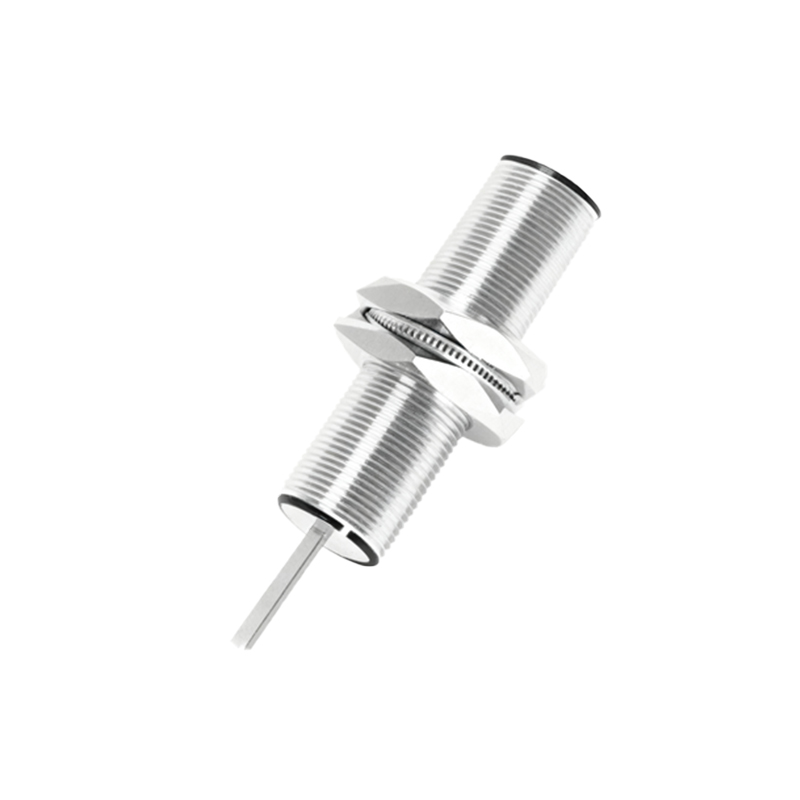
An inductive proximity sensor operating at a 350mm range functions on the principle of electromagnetic induction. The sensor's core component is a coil wound around a ferrite core, which, when energized by an oscillator circuit, generates a high-frequency electromagnetic field at its active face. When a conductive metal target enters this field, eddy currents are induced on the target's surface. These eddy currents draw energy from the oscillator, causing a reduction in its amplitude. An integrated evaluation circuit monitors this amplitude change. Once the amplitude drop exceeds a predefined threshold—corresponding to the sensor's nominal sensing distance (Sn), standardized at 350mm—the circuit triggers a switching action in the sensor's output stage. This solid-state output (typically PNP, NPN, or Namur) then signals the presence of the target to a programmable logic controller (PLC) or other control system. It is crucial to note that the effective sensing distance can vary based on the target material's properties, specifically its conductivity and permeability. A correction factor (often 1.0 for mild steel) must be applied for different metals; for instance, stainless steel may reduce the effective range, while ferrous materials generally offer the best performance.
Key Technical Specifications and Design Features
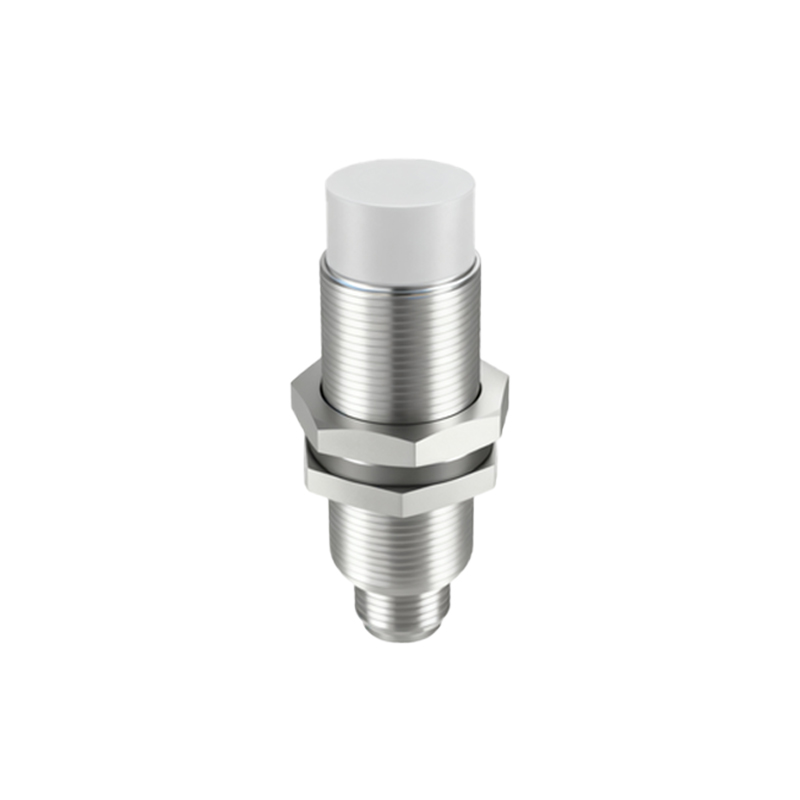
A 350mm range inductive sensor is engineered for demanding environments. Key specifications include:
Sensing Range (Sn): 350mm nominal. The reliable operating distance (Sr) is typically 0.81 x Sn, and the guaranteed operating distance (Sa) is 0.9 x Sr, ensuring hysteresis and immunity to minor fluctuations.
Hysteresis: This is the difference between the switch-on and switch-off points, expressed as a percentage of the sensing distance. It prevents output chatter when a target is positioned at the exact sensing edge.
Output Configuration: Available in 3-wire DC (PNP normally open/closed, NPN normally open/closed), 2-wire AC/DC, or analog (4-20mA, 0-10V) variants. Some models feature IO-Link for advanced diagnostics and parameterization.
Housing Material: Commonly constructed from nickel-plated brass, stainless steel (V2A/AISI 304, V4A/AISI 316), or ruggedized PBT plastic, offering high resistance to mechanical impact, chemicals, and washdowns.
Protection Rating: A minimum of IP67 is standard, allowing temporary immersion. IP68 and IP69K ratings are available for harsh, high-pressure cleaning environments.
Temperature Range: Operational temperature ranges typically span from -25°C to +70°C, with special models extending beyond these limits.
Frequency Response/Switching Frequency: This defines how many switching cycles per second the sensor can handle, critical for high-speed applications.
Selection Criteria and Application Considerations
Choosing the right 350mm inductive sensor requires careful analysis:
1. Target Material and Size: Confirm the sensor's performance with the specific metal (steel, aluminum, copper). The target must meet the minimum size specification (often a standard square plate) to achieve the full 350mm range.
2. Installation Environment: Consider factors like ambient temperature, presence of cutting fluids, oils, metallic dust, or strong electromagnetic interference. Flush-mountable or non-flush-mountable (with a larger sensing field) designs offer different installation benefits.
3. Electrical Requirements: Match the sensor's supply voltage (e.g., 10-30V DC, 20-250V AC) and output type with the control system's input card specifications.
4. Mechanical Integration: The sensor's housing shape (cylindrical, rectangular, block-style) and connection type (cable or connector) must suit the mounting constraints.
Typical Industrial Applications
The extended 350mm range makes these sensors ideal for scenarios where the sensor must be positioned away from the target due to space constraints, heat, or potential mechanical damage.
Material Handling: Detecting the presence of large metal containers, pallets, or bins on conveyor systems before they enter a processing station.
Automotive Manufacturing: Monitoring the position of vehicle bodies or large sub-assemblies on overhead conveyors or skids.
Heavy Machinery: Providing position feedback for large hydraulic cylinders, crane hooks, or gantry positions