In the realm of industrial automation, reliable and precise object detection is paramount. Among the myriad of sensing solutions available, the M12 NPN proximity sensor stands out as a fundamental component in countless machinery and control systems. This article delves into the technical specifications, operational principles, and practical applications of this ubiquitous sensor type, providing a detailed guide for engineers and technicians.
An M12 NPN proximity sensor is a non-contact sensing device designed to detect the presence or absence of metallic objects without physical contact. The "M12" designation refers to its standardized 12mm threaded cylindrical housing, which is a globally recognized form factor ensuring easy installation and interchangeability. The "NPN" describes the type of transistor output the sensor employs. In an NPN configuration, the output acts as a switching element that connects the load to the negative voltage (common or ground) when an object is detected. This is also commonly known as a "sinking" output. Understanding this output type is crucial for proper integration into control circuits, particularly with programmable logic controllers (PLCs) that have specific input card requirements.
The core technology behind most M12 inductive proximity sensors is electromagnetic induction. The sensor's face contains a coil that is part of an oscillating circuit. When a metallic object enters the sensor's active electromagnetic field, eddy currents are induced in the target. This causes a change in the oscillation amplitude, which is detected by the sensor's circuitry. This change triggers the solid-state NPN transistor to switch states, providing a discrete signal. Key performance parameters include sensing distance, which is typically standardized (e.g., 2mm, 4mm, 8mm for M12 models) and should be derated for different metals, repeat accuracy, switching frequency, and environmental ratings like IP67 or IP69K for resistance to dust and water ingress.
The advantages of using M12 NPN proximity sensors are numerous. Their rugged metal or polymer housings are built to withstand harsh industrial environments involving vibration, shock, and temperature fluctuations. The non-contact nature ensures no wear and tear on the sensor or the target, leading to exceptional longevity and maintenance-free operation. They offer high switching speeds, suitable for high-speed counting or positioning tasks on production lines. The standardized M12 connector facilitates quick wiring and replacement, minimizing downtime.
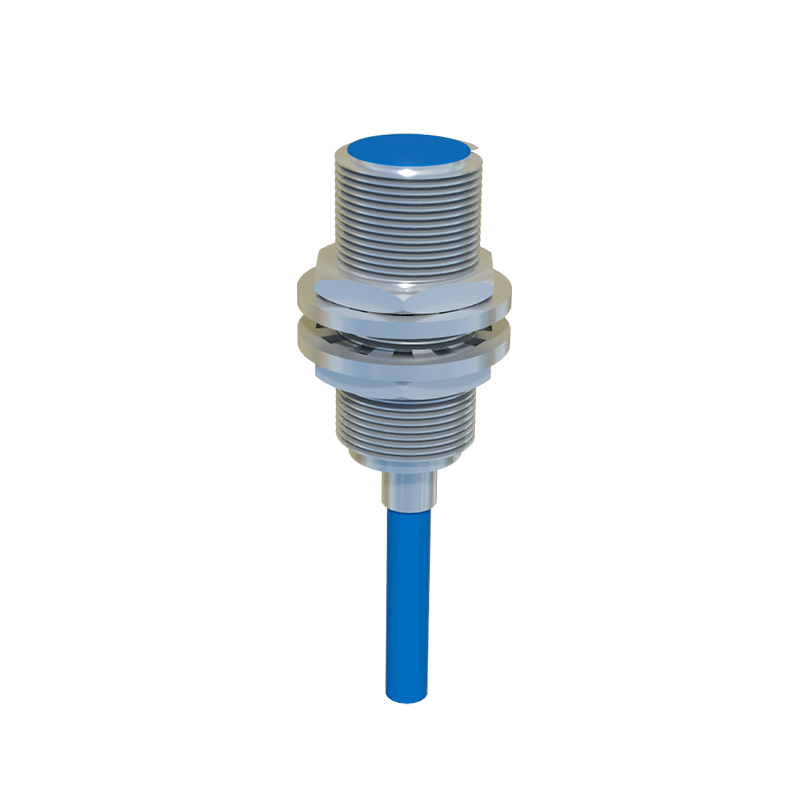
In practical applications, M12 NPN sensors are incredibly versatile. They are extensively used for position detection of machine parts, such as verifying if a cylinder is fully extended or retracted. They serve as end-of-travel limit switches in automated guided vehicles (AGVs) and robotic arms. On assembly lines, they count products, detect the presence of components for process verification, and control sorting gates. In packaging machinery, they ensure proper fill levels or label placement. A critical consideration during system design is ensuring compatibility. Since the NPN output sinks current to ground, the PLC input module or receiving device must be configured to accept a sinking signal, often requiring a common positive voltage supply. Incorrect pairing with a PNP-sourcing input circuit will result in malfunction.
Installation and maintenance are straightforward but require attention to detail. Engineers must respect the specified mounting conditions, maintaining adequate clearance from surrounding metal to avoid false triggering. Regular cleaning of the sensing face is recommended to prevent buildup of contaminants like metal chips or oil that could reduce the effective sensing range. Diagnostic LEDs, a standard feature on most models, provide immediate visual feedback on power status and switching state, aiding in rapid troubleshooting.
When selecting an M12 NPN proximity sensor, key factors beyond the basic specifications include the target material (steel, aluminum, brass), required sensing range, electrical requirements (voltage range, current output), and housing material (stainless steel for corrosive environments, nickel-plated brass for general use). Compliance with industry standards (e.g., IEC 60947-5-2) is also a mark of quality and reliability.

In conclusion, the M12 NPN proximity sensor is a workhorse of industrial sensing. Its robust design, reliable performance, and standardized form factor make it an indispensable tool for engineers designing and maintaining automated systems. A thorough understanding of its NPN sinking operation, combined with careful selection and installation practices, ensures optimal performance and contributes to enhanced machine efficiency and productivity across diverse industrial sectors, from automotive manufacturing to food processing and material handling.