In industrial automation and control systems, 4-wire proximity sensors are widely used for their reliable detection capabilities and straightforward integration. Unlike their 2-wire or 3-wire counterparts, 4-wire sensors offer distinct advantages, primarily the separation of power supply lines and output signal lines, which enhances stability and simplifies troubleshooting. This article provides a detailed, practical guide to the correct wiring methods for 4-wire proximity sensors, ensuring optimal performance and system safety.
A standard 4-wire proximity sensor typically consists of the following terminals: two for the power supply (usually labeled as V+ or Brown for positive and V- or Blue for negative/ground) and two for the output (commonly Black for the normally open (NO) or normally closed (NC) output signal and White for the output common or reference line). It is crucial to consult the specific sensor's datasheet before wiring, as color codes and terminal designations can vary between manufacturers.
The first step in wiring is connecting the power supply. Most 4-wire proximity sensors operate on DC voltage, commonly 10-30V DC. Connect the positive lead of your DC power source to the V+ (Brown) terminal and the negative lead to the V- (Blue) terminal. Ensuring correct polarity is paramount; reverse polarity can permanently damage the sensor's internal circuitry. Use appropriately sized wires, typically 18-22 AWG, and secure connections to prevent loosening due to vibration.
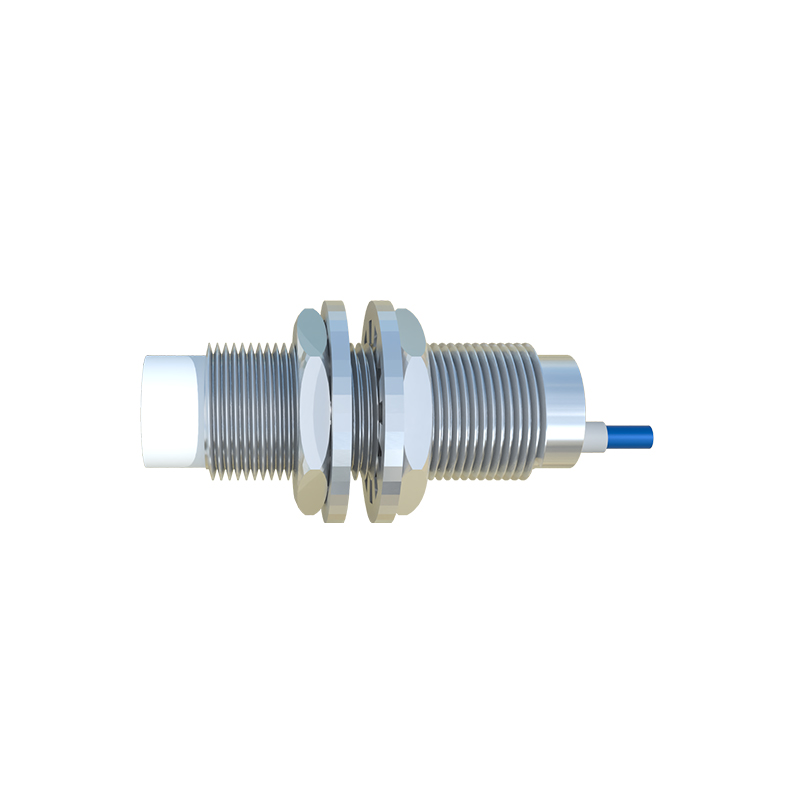
Next, address the output wiring. The output circuit of a 4-wire sensor is separate from the power circuit. This allows for flexible integration with various controllers like PLCs (Programmable Logic Controllers), relays, or other input modules. The Black wire is often the switched output. If configured as a normally open (NO) sensor, the Black wire will have no voltage relative to the White wire when no target is detected. When a target enters the sensing range, the switch closes, and voltage appears between Black and White. For a normally closed (NC) configuration, the behavior is opposite.
Connect the White wire to the common reference point of your load or controller input. For instance, when connecting to a PLC digital input, the White wire would typically connect to the PLC's common terminal (often 0V or DC-), and the Black wire would connect to the specific input channel. The load (the PLC input, relay coil, etc.) is placed in series between the Black output wire and the positive supply, or between the output and the common, depending on the sensor's sourcing or sinking configuration. Always verify whether your sensor provides a PNP (sourcing) or NPN (sinking) output, as this determines how the load is connected relative to the power supply.
A key advantage of the 4-wire design is the ability to have different output types. Some sensors allow independent NO and NC outputs via the Black and White wires, providing maximum flexibility for control logic. Furthermore, the separation of circuits minimizes electrical noise interference on the signal line, leading to more stable and accurate detection.
Safety precautions cannot be overstated. Always disconnect power before making or modifying connections. Use proper insulation and cable management. After wiring, perform a functional test: apply power, observe the sensor's indicator LED (if present), and verify the output state changes correctly when a target is presented and removed. Check for any abnormal heating at the connections.
In summary, wiring a 4-wire proximity sensor involves a clear two-step process: establishing a stable, correctly polarized power connection, and then wiring the isolated output to the control device according to its sourcing/sinking type and desired logic (NO/NC). Adherence to manufacturer specifications, attention to polarity, and rigorous testing are the cornerstones of a successful installation, ensuring long-term reliability in demanding industrial environments.