In the realm of industrial automation and control systems, proximity sensors are indispensable components for non-contact object detection. Among the diverse range of form factors and connection types, the 3-wire M8 proximity sensor stands out for its compact size, robust performance, and widespread applicability. This article delves into the technical specifications, wiring configurations, operational principles, and key selection criteria for these critical devices, providing a detailed resource for electrical engineers and system integrators.
The "M8" designation refers to the standardized metric thread size of the sensor's cylindrical housing, which is 8 millimeters in diameter. This compact form factor makes M8 sensors ideal for installations where space is at a premium, such as in tightly packed machinery, robotic end-effectors, or small-scale assembly modules. The 3-wire configuration is one of the most common and versatile electrical interfaces for DC-powered proximity sensors. Unlike 2-wire sensors that are wired in series with the load, 3-wire sensors provide separate paths for power supply, ground, and the switching signal (output). This design offers superior performance, including lower leakage current, faster switching speeds, and more stable operation, which is crucial for modern programmable logic controller (PLC) inputs and high-speed counting applications.
A standard 3-wire M8 proximity sensor typically features a quick-disconnect cable or a built-in fixed cable with an M8 connector. The three wires are color-coded according to international standards (often brown, blue, and black for DC models). The brown wire is connected to the positive DC supply voltage (commonly 10-30V DC), the blue wire to the negative or 0V (ground), and the black wire carries the output signal. The output can be either NPN (sinking) or PNP (sourcing). An NPN sensor switches the negative (0V) line to the load, meaning the black wire acts as the switched negative. Conversely, a PNP sensor switches the positive voltage line to the load. The choice between NPN and PNP is fundamental and depends on the input circuit configuration of the controller (e.g., PLC). Many sensors also feature a fourth wire (white) for complementary output or diagnostic functions, but the core 3-wire variant remains the workhorse for standard detection tasks.
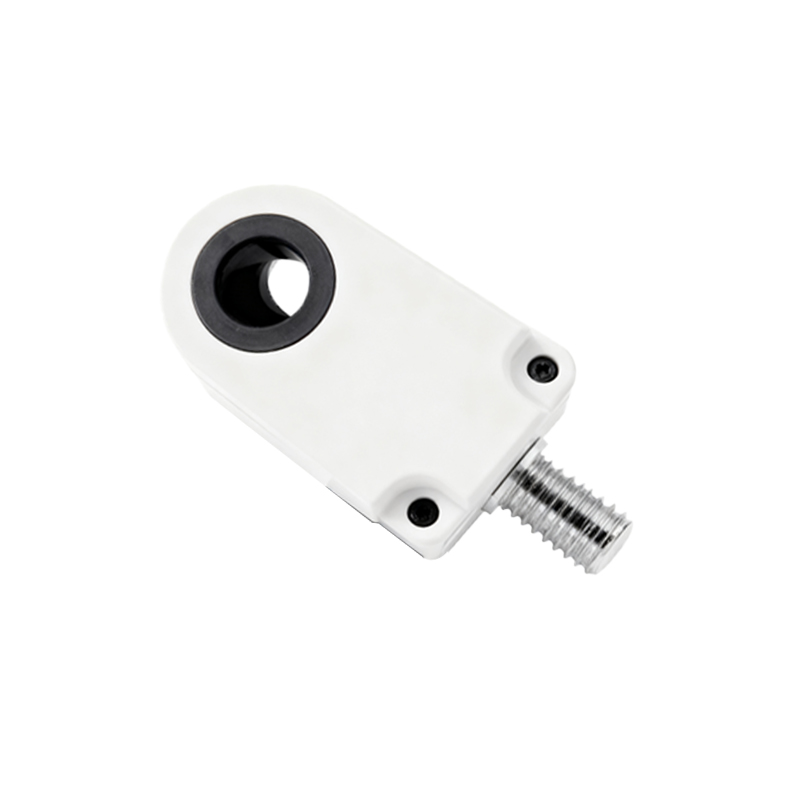
These sensors operate primarily on two principles: inductive and capacitive sensing. Inductive M8 proximity sensors are used for detecting metallic objects. They contain an oscillator circuit that generates a high-frequency electromagnetic field at the active face. When a ferrous or non-ferrous metal object enters this field, it induces eddy currents, causing a change in the oscillation amplitude. This change is detected by the sensor's circuitry, which then triggers the solid-state output switch. Capacitive M8 sensors can detect both metallic and non-metallic materials (plastics, liquids, wood) by sensing changes in capacitance caused by the target object altering the sensor's electrostatic field.
Key technical parameters must be evaluated during selection. Sensing distance, or "Sn," is critical; for a standard M8 inductive sensor, this typically ranges from 1 to 2 mm, though shielded (flush-mountable) and unshielded (non-flush) versions offer different mounting and range characteristics. The operating voltage range, output current capacity, switching frequency (response speed), and protection ratings (such as IP67 for dust and water ingress protection) are equally vital. Engineers must also consider the housing material, often nickel-plated brass or stainless steel, for compatibility with harsh industrial environments involving coolants, oils, or washdowns.
Installation and wiring require attention to detail. Ensuring correct polarity, using shielded cables in electrically noisy environments, and maintaining the specified clearance around the sensor head to avoid false triggers from adjacent metal are standard best practices. Diagnostic LEDs, commonly found on these sensors, provide immediate visual feedback on power status and output switching, greatly aiding in commissioning and troubleshooting.
In conclusion, the 3-wire M8 proximity sensor is a precision component that balances miniaturization with reliable performance. Its standardized interface and robust construction make it a preferred choice for countless automation applications, from packaging and material handling to CNC machinery. A thorough understanding of its wiring, operating principle (inductive vs. capacitive), output type (NPN/PNP), and environmental specifications empowers engineers to design more efficient, reliable, and maintainable control systems. As automation trends continue towards miniaturization and increased I/O density, the role of these compact sensors is set to become even more prominent.