Proximity and photoelectric sensors are fundamental components in modern industrial automation, serving as the "eyes" of machinery by detecting the presence, absence, or position of objects without physical contact. A proximity sensor is a device that detects the presence of nearby objects through various physical principles, most commonly electromagnetic fields, capacitance, or light. In contrast, a photoelectric sensor specifically uses a light beam, typically infrared, visible, or laser light, to detect objects, measure distance, or differentiate surfaces.
The core concept of a proximity sensor revolves around generating a sensing field and monitoring changes within it. Inductive proximity sensors, for instance, generate an oscillating electromagnetic field. When a metallic object enters this field, it induces eddy currents that dampen the oscillation, triggering a switch in the sensor's output state. These sensors are ideal for detecting metals in harsh environments like machining centers or automotive assembly lines, offering high reliability and resistance to dirt, oil, and vibration. Capacitive proximity sensors operate by detecting changes in capacitance caused by any material—metal, plastic, wood, or liquid—entering their electrostatic field. This makes them versatile for applications such as level detection in tanks or presence sensing of non-metallic containers in packaging machinery.
Photoelectric sensors function on the principle of light transmission and reception. They consist of an emitter (light source) and a receiver. The three primary operating modes are through-beam, retro-reflective, and diffuse reflective. In through-beam mode, the emitter and receiver are separate units facing each other. An object is detected when it interrupts the light beam, providing long-range and highly accurate detection, commonly used in material handling for break detection or safety light curtains. Retro-reflective sensors house both emitter and receiver in one housing, using a reflector to bounce the light back. Detection occurs when an object blocks the reflected beam, suitable for medium-range applications like conveyor belt monitoring. Diffuse reflective sensors rely on light reflecting directly off the target object itself, making them compact and ideal for short-range detection, such as in robotic pick-and-place systems or counting products on a line.
Advanced photoelectric sensors incorporate background suppression or foreground suppression technologies. Background suppression sensors use triangulation to measure distance, ignoring objects beyond a set range, which is crucial for detecting objects on a conveyor regardless of color or reflectivity. Foreground suppression ignores close reflections, focusing on distant targets, useful in transparent bottle detection in filling plants. Furthermore, laser-based photoelectric sensors offer highly focused beams for precise detection of small objects or exact positioning, often applied in electronics assembly or precision alignment tasks.
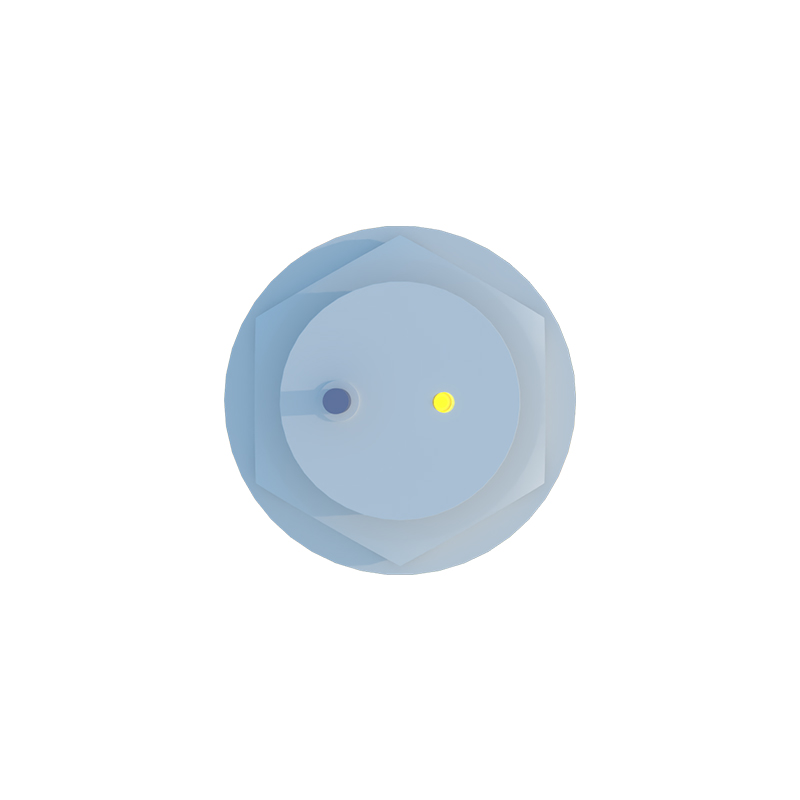
The selection between proximity and photoelectric sensors depends on application-specific factors: target material, sensing distance, environmental conditions, required response speed, and installation constraints. Proximity sensors excel in detecting metallic objects at short ranges (typically up to 60 mm) in dirty or wet conditions, with no moving parts ensuring long service life. Photoelectric sensors provide much longer sensing ranges (from a few centimeters to over 100 meters), capability to detect any material, and flexibility in sensing modes, but they can be affected by ambient light, dust, or fog.
In industrial practice, these sensors are integral to automation systems, enabling functions like object counting, jam detection, limit switching, and quality control. For example, in automotive manufacturing, inductive proximity sensors monitor piston position in cylinders, while photoelectric sensors verify part assembly. In food processing, capacitive sensors detect liquid levels in stainless steel tanks, and diffuse photoelectric sensors ensure proper packaging seal integrity. Modern sensors often feature IO-Link communication, allowing for parameter adjustment, diagnostics, and integration into Industry 4.0 networks for predictive maintenance and data analytics.
Understanding the operational principles, advantages, and limitations of proximity and photoelectric sensors is essential for designing efficient, reliable, and safe automated systems. Their non-contact nature minimizes wear, reduces maintenance, and enhances operational speed, contributing significantly to productivity and precision across industries from manufacturing and logistics to robotics and consumer electronics. As technology evolves, these sensors continue to advance with features like longer ranges, higher immunity to interference, and smarter connectivity, solidifying their role as indispensable tools in the automation landscape.