In the realm of industrial automation, robotics, and high-precision measurement, the demand for accurate, reliable, and fast positioning solutions is paramount. Multi-point laser positioning sensors have emerged as a cornerstone technology, enabling systems to determine the precise location, orientation, and profile of objects in two or three-dimensional space. Unlike single-point sensors that measure distance to a single spot, these advanced devices project multiple laser points or lines onto a target surface, capturing rich spatial data in a single scan. This capability is revolutionizing quality control, assembly, and guidance processes across diverse sectors.
The core technology behind multi-point laser positioning sensors typically involves laser triangulation. A laser diode projects a structured pattern—such as a line, a grid, or an array of discrete points—onto the target. A high-resolution CMOS or CCD camera, positioned at a known angle to the laser source, captures the image of this pattern. As the target's distance or surface contour changes, the position of the laser points in the camera's field of view shifts. Sophisticated onboard processors then analyze these distortions using triangulation algorithms to calculate precise X, Y, and Z coordinates for each point. This generates a dense point cloud or profile data, providing a comprehensive digital representation of the object's surface geometry.
Key advantages of multi-point laser sensors are their speed and data richness. By capturing thousands of measurement points simultaneously, they enable real-time, in-line inspection of complex shapes, contours, and dimensions. This is invaluable for applications like verifying weld seam profiles, inspecting molded part dimensions, or ensuring the correct assembly of electronic components. Furthermore, their non-contact nature prevents damage to delicate surfaces and allows measurement of hot, moving, or otherwise inaccessible objects.
The applications for multi-point laser positioning sensors are vast and growing. In automotive manufacturing, they are used for precise robot guidance in windshield installation, door panel alignment, and chassis measurement. In electronics, they ensure the coplanarity of Ball Grid Array (BGA) components on circuit boards. In logistics and warehousing, they facilitate automated parcel dimensioning and palletizing. Additionally, they play a critical role in reverse engineering, cultural heritage preservation (3D scanning of artifacts), and even in medical device manufacturing for verifying intricate implant geometries.
Selecting the right multi-point laser sensor requires careful consideration of several parameters. Measurement Range and Field of View (FOV): This defines the physical area the sensor can cover. A larger FOV is suitable for scanning big objects, while a smaller one offers higher resolution for detailed features. Resolution and Accuracy: Resolution refers to the smallest detectable change in position, while accuracy indicates how close the measurement is to the true value. High-precision tasks demand sensors with micron-level accuracy. Scanning Rate: Measured in Hertz (Hz), this determines how many profiles per second the sensor can capture. High-speed production lines require sensors with scanning rates of thousands of Hz. Environmental Robustness: Industrial environments can be harsh. Key specifications include Ingress Protection (IP) ratings for dust and water resistance, operating temperature range, and resistance to ambient light interference or vibrations. Output Interface and Software: The sensor must provide compatible output (e.g., Ethernet, EtherCAT, PROFINET) and be supported by intuitive software for data processing, profile analysis, and integration with PLCs or robotic controllers.
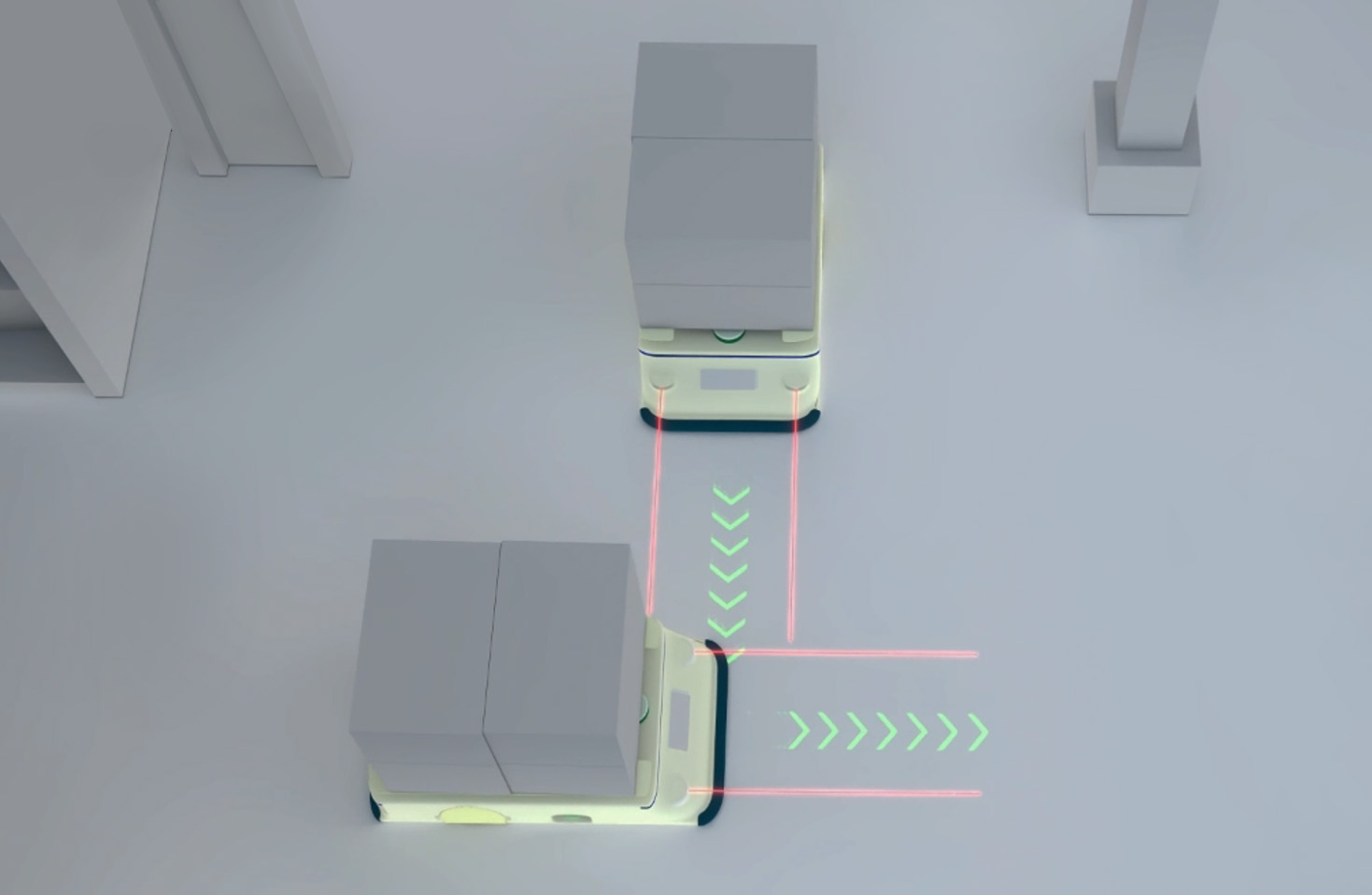
Looking ahead, the evolution of multi-point laser sensors is geared towards higher speeds, greater accuracy, and enhanced intelligence. Integration with artificial intelligence and machine learning algorithms will allow sensors not only to capture data but also to autonomously identify defects, classify objects, and make real-time process adjustments. Miniaturization will open new applications in compact robotics and consumer electronics assembly. Furthermore, the fusion of laser scanning data with other sensor inputs, like 2D vision or inertial measurement units, will create even more robust and versatile perception systems for autonomous guided vehicles (AGVs) and collaborative robots.
In conclusion, multi-point laser positioning sensors are indispensable tools for modern precision engineering. By delivering high-density, three-dimensional spatial data at remarkable speeds, they empower automation systems with unparalleled perception, driving improvements in quality, efficiency, and flexibility. For engineers and system integrators, a deep understanding of their operating principles, capabilities, and selection criteria is essential to harnessing their full potential and staying competitive in an increasingly automated world.