In the intricate world of industrial automation and machine control, the silent, reliable operation of countless systems hinges on a fundamental question: "Is the object present and in the correct position?" Answering this question with unwavering accuracy, often in harsh environments, is the primary domain of the magnetic proximity switch sensor. This robust and versatile component serves as the essential digital eye for machinery, translating physical presence into a clear, electrical signal that forms the backbone of logic control, safety interlocking, and process sequencing.
Unlike optical or ultrasonic sensors, a magnetic proximity sensor operates on a simple yet profoundly effective principle. The sensor itself contains a reed switch or a solid-state Hall effect element. When a permanent magnet, typically mounted on a moving part like a cylinder piston, door, or conveyor pallet, comes within a specified detection range, it actuates the internal switch. This action either closes or opens an electrical circuit. The key advantage is the complete lack of physical contact between the sensor and the target magnet. This non-contact sensing eliminates mechanical wear, ensures a long operational life measured in millions of cycles, and allows for detection through non-ferrous barriers like aluminum, plastic, or stainless steel housings. This makes them ideal for applications requiring sealed, hygienic, or explosion-proof designs.
The applications of magnetic proximity sensors are vast and critical. In pneumatic and hydraulic systems, they are the standard for detecting cylinder piston position, confirming whether a cylinder is fully extended or retracted. This feedback is indispensable for automated sequences; the next step in a process only proceeds once the sensor confirms the cylinder's position. On production lines, they count products, detect the presence of fixtures on pallets, and verify the open or closed status of safety guards and doors, immediately halting machinery if a guard is breached. Within the automotive manufacturing sector, these sensors ensure robotic welding arms or grippers are in their home position before initiating a cycle. In material handling, they monitor the position of elevators, gates, and conveyors.
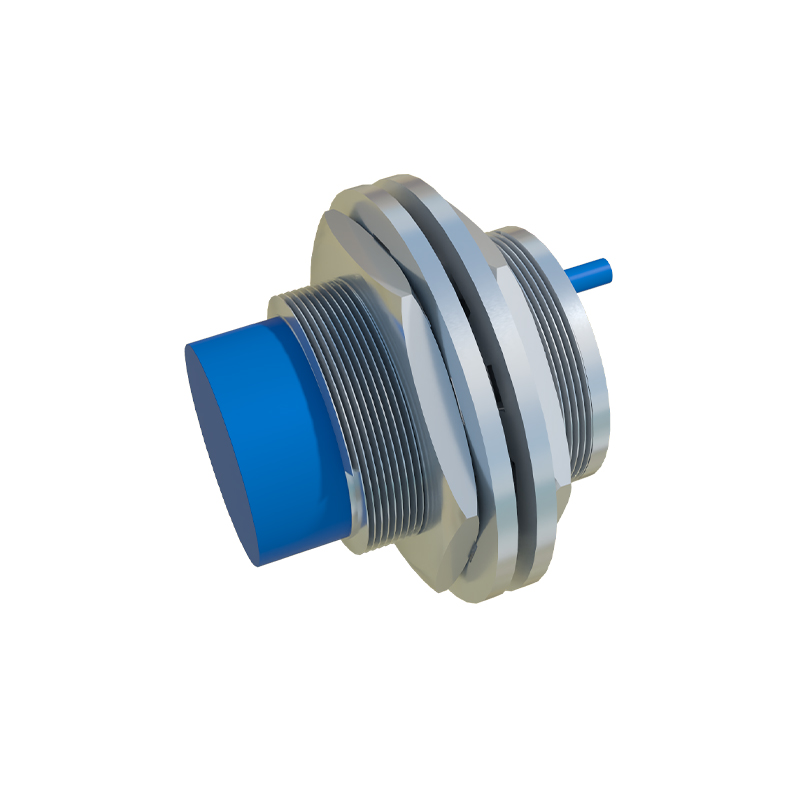
Choosing the correct magnetic proximity sensor involves several technical considerations. The sensing distance, or switching distance, must be carefully selected based on the application's mechanical tolerances. Engineers must also specify the electrical output type—typically PNP (sourcing) or NPN (sinking) transistor outputs compatible with Programmable Logic Controllers (PLCs). The housing material is another critical factor; sensors in washdown environments (e.g., food and beverage) require high-grade stainless steel (such as V4A/AISI 316L) casings, while those in heavy machinery might need rugged, nickel-plated brass housings. Furthermore, the type of magnet used on the target and its orientation relative to the sensor face significantly impact reliable detection.
The evolution of these sensors continues. Modern variants integrate advanced diagnostics via IO-Link communication, providing real-time data on operational health, temperature, and switch-point precision to predictive maintenance systems. This transforms them from simple binary switches into intelligent nodes within the Industrial Internet of Things (IIoT) ecosystem. Their inherent immunity to dust, oil, moisture, and ambient light interference solidifies their position as a workhorse in environments where other sensor technologies would falter.
In conclusion, the magnetic proximity switch sensor is far more than a simple switch. It is a fundamental enabler of automation, providing the critical, reliable feedback that allows machines to "see" and react to their physical state. Its non-contact principle, environmental robustness, and adaptability make it an irreplaceable component in designing safe, efficient, and intelligent industrial systems. From packaging machines to robotic cells, its role in ensuring precision, safety, and operational continuity cannot be overstated, forming a digital nervous system for modern manufacturing and control.