In the realm of industrial automation and control systems, proximity sensors stand as fundamental components, enabling non-contact detection of objects with precision and reliability. These devices are engineered to sense the presence, absence, or position of a target object without any physical contact, thereby eliminating mechanical wear and tear and allowing for high-speed operation. Their role is critical in applications ranging from simple object counting to complex robotic guidance and safety interlocks.
The operational principle of most proximity sensors involves generating an electromagnetic field or a beam of radiation. When a target object enters this field, it causes a change in the field's state or the signal's return path. This change is detected and converted into an electrical output signal, typically a switch closure (ON/OFF signal). The nature of the sensing field defines the primary types of proximity sensors, each suited for specific materials and environmental conditions.
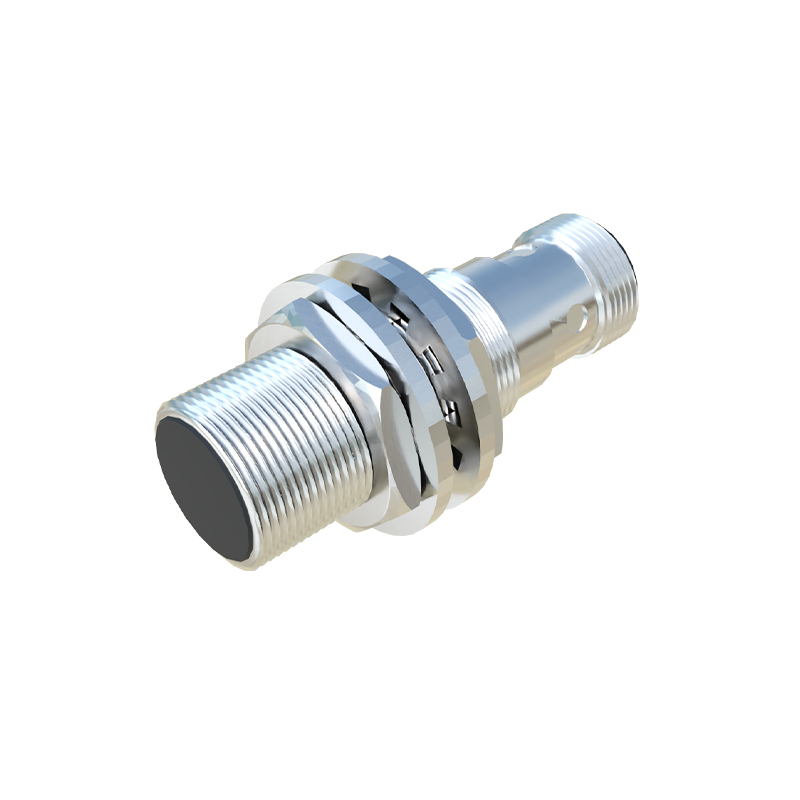
Inductive Proximity Sensors are among the most common. They generate an oscillating electromagnetic field. When a metallic object (ferrous or non-ferrous) enters this field, it induces eddy currents within the target, which dampens the oscillation amplitude of the sensor's coil. This damping effect is detected, triggering the output switch. Inductive sensors are ideal for detecting metals and are highly resistant to environmental factors like dust, oil, and moisture. They are extensively used in machine tools, automotive assembly lines, and material handling for tasks like part positioning, limit switching, and metal detection.
Capacitive Proximity Sensors can detect both metallic and non-metallic materials, including liquids, plastics, glass, and wood. They function by generating an electrostatic field. Any object with a dielectric constant different from air entering this field alters the capacitance of the sensor's circuit, which is then measured to trigger an output. This makes them versatile for applications involving material level detection (e.g., in silos or tanks), presence detection of non-metallic objects on conveyor belts, and even sensing through certain non-metallic container walls.
Ultrasonic Proximity Sensors operate on a time-of-flight principle. They emit high-frequency sound waves (ultrasonic pulses) and measure the time taken for the echo to return after bouncing off a target object. This allows them to measure distance as well as detect presence, making them suitable for both proximity sensing and ranging. They are effective for detecting objects of virtually any material, shape, or color, and perform well in challenging environments with dust, smoke, or light interference. Common uses include pallet detection, loop control, and liquid level sensing.
Photoelectric Sensors, while sometimes categorized separately, function as proximity devices in their diffuse (reflective) mode. They consist of an emitter (usually an LED producing visible red, infrared, or laser light) and a receiver. In the diffuse mode, the sensor detects light reflected directly from the target object. The presence of the object within a specified range modulates the received light intensity, triggering the output. They excel at detecting small objects, offer long sensing ranges, and can sense a wide variety of materials. Applications include packaging, bottling, and electronic assembly.
Selecting the appropriate proximity sensor requires a careful analysis of several key parameters:

1. Target Material: The object's composition (metal, plastic, liquid) is the primary determinant for choosing between inductive, capacitive, or ultrasonic types.
2. Sensing Distance: The required nominal operating distance (snap point) and any necessary safety margin. The effective sensing distance can be influenced by the target's size, shape, and material.
3. Output Type: Digital (PNP/NPN) or analog (4-20 mA, 0-10V) outputs are available. Digital outputs are standard for simple detection, while analog provides continuous distance information.
4. Environmental Conditions: Factors such as temperature extremes, washdown requirements (IP rating), exposure to chemicals, or the presence of electrical noise must be considered.
5. Mounting and Size: The physical constraints of the installation location dictate the sensor's housing style (e.g., cylindrical, rectangular) and mounting method.
Installation and wiring are critical for optimal performance. Proper alignment with the target, maintaining the specified clearance around the sensor face (to prevent false triggers from the mounting bracket), and using shielded cables in electrically noisy environments are standard best practices. Regular maintenance, though minimal, involves keeping the sensing face clean from debris, oil, or buildup that could attenuate the sensing field.
In conclusion, proximity sensors are indispensable for modern automated systems, providing robust, contactless sensing solutions. Understanding the distinct technologies—inductive for metals, capacitive for diverse materials, ultrasonic for challenging conditions and distance, and photoelectric for versatility and range—empowers engineers to design efficient, reliable, and safe control systems. As Industry 4.0 and smart