Laser sensors have become indispensable components in modern industrial automation, offering unparalleled precision, speed, and reliability. At their core, these devices operate on the principle of emitting a focused beam of coherent light—typically from a laser diode—towards a target object. The sensor then detects the interaction of this beam with the target, whether through reflection, interruption, or time-of-flight measurement, to gather critical data such as distance, presence, thickness, or position. Unlike traditional photoelectric sensors, laser sensors utilize a highly collimated light beam, which results in exceptional resolution and the ability to detect minute objects or perform precise measurements even over considerable distances. This fundamental characteristic makes them ideal for applications where accuracy is non-negotiable.
The operational methodology of laser sensors can be broadly categorized into several types, each suited for specific tasks. Triangulation sensors, for instance, are excellent for high-precision distance measurement and profile scanning. They work by projecting a laser spot onto the target; the reflected light is captured by a receiver at a known angle, and the displacement of the spot on the receiver's sensor array is calculated to determine distance. Contrast sensors, on the other hand, are optimized for detecting marks, labels, or color differences on surfaces by analyzing the intensity of the reflected laser light. Time-of-flight (ToF) sensors measure the time delay between the emission of a laser pulse and the detection of its reflection, enabling long-range distance measurement and area monitoring. Each technology presents unique advantages, and the selection hinges entirely on the application's specific requirements for range, resolution, environmental conditions, and target properties.
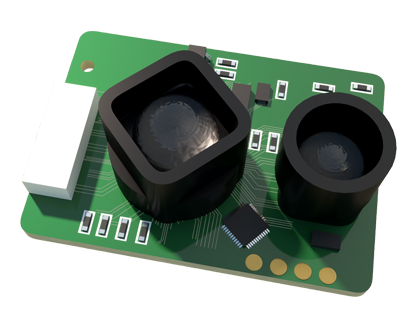
In practical industrial settings, the applications of laser sensors are vast and transformative. In automotive manufacturing, they are deployed for precise gap and flush measurement between body panels, ensuring superior build quality. Within the electronics industry, these sensors facilitate the exact positioning of microchips on circuit boards and inspect solder paste thickness. Logistics and packaging lines rely on laser sensors for accurate object counting, height detection for palletizing, and barcode reading at high speeds. Furthermore, in harsh environments involving dust, steam, or vibration—where other sensing technologies might falter—laser sensors often maintain robust performance due to their focused beam that can penetrate minor obstructions. Their non-contact nature also prevents product damage and reduces mechanical wear, leading to lower maintenance costs and higher system uptime.

Selecting the appropriate laser sensor requires a meticulous evaluation of several technical parameters. Key specifications include measuring range, which defines the minimum and maximum distances for reliable operation; spot size, which affects resolution and the ability to detect small features; and response time, critical for high-speed production lines. Environmental factors are equally crucial: the sensor's housing must have an adequate Ingress Protection (IP) rating for dust and moisture, and its operational temperature range must align with the facility's conditions. The type of output (e.g., analog voltage/current, digital switch, or serial communication like IO-Link) must integrate seamlessly with the existing control system, such as a PLC. Additionally, consider the target's characteristics—its color, material, surface texture, and reflectivity—as these dramatically influence the sensor's performance. A highly reflective or glossy surface might require a sensor with background suppression, while a dark, absorbent material might need a more powerful laser emitter.
Looking ahead, the evolution of laser sensor technology continues to push the boundaries of industrial automation. Integration with Industrial Internet of Things (IIoT) platforms is becoming standard, allowing for predictive maintenance through continuous performance monitoring and data analytics. Advancements in laser diode and CMOS sensor technology are yielding units with even smaller form factors, higher resolutions, and lower power consumption. The fusion of laser measurement data with machine vision systems and AI algorithms is opening new frontiers in complex inspection and adaptive robotic guidance. For engineers and system integrators, staying abreast of these trends is essential for designing future-proof, efficient, and intelligent automation solutions. Ultimately, a deep understanding of laser sensor principles and a careful, application-driven selection process are the cornerstones of leveraging their full potential to enhance productivity, quality, and safety in the industrial landscape.