In the realm of modern surveillance and industrial monitoring, laser sensors have emerged as a cornerstone technology, offering unparalleled precision, reliability, and versatility. These devices operate on the principle of emitting a focused beam of coherent light—typically from a laser diode—and analyzing the reflected signal to measure distance, detect presence, or identify objects. Unlike traditional passive imaging systems, active laser sensing provides critical data even in challenging environmental conditions such as low light, fog, or complete darkness, making it indispensable for security, automation, and quality control.
The core working mechanism of a laser sensor involves time-of-flight (ToF) or triangulation methods. In ToF sensors, the time taken for a laser pulse to travel to a target and back is measured to calculate distance with millimeter-level accuracy. This is particularly valuable in perimeter security systems, where detecting intrusions across vast areas with minimal false alarms is paramount. Triangulation-based sensors, on the other hand, use the angle of reflected light to determine position, excelling in high-precision applications like robotic guidance or assembly line inspection. Advanced models integrate modulation techniques to filter out ambient light interference, ensuring stable performance in outdoor or brightly lit industrial settings.
For surveillance applications, laser sensors are deployed in various configurations. Fixed-point sensors monitor specific zones, such as doorways or fences, triggering alerts upon unauthorized entry. Scanning laser sensors, or LIDAR (Light Detection and Ranging) systems, create detailed 3D maps of environments, enabling comprehensive area monitoring in facilities like airports or warehouses. These systems can distinguish between humans, vehicles, and other objects based on size and movement patterns, enhancing threat assessment capabilities. In industrial monitoring, laser sensors track parameters like vibration, thickness, or alignment in machinery, facilitating predictive maintenance and reducing downtime. Their non-contact nature prevents wear and allows operation in hazardous or sterile environments.
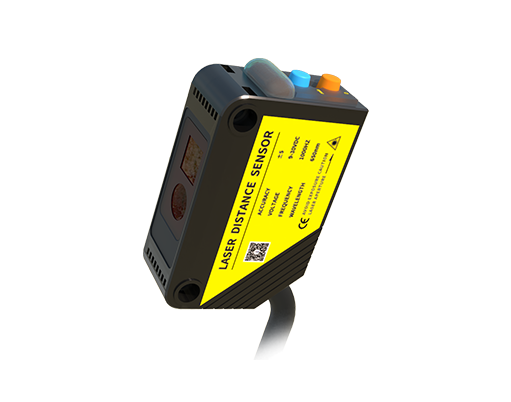
Key advantages of laser sensors include long-range detection—extending up to several hundred meters—and high-speed response times, often in microseconds. This enables real-time monitoring critical for dynamic scenarios. However, challenges persist, such as sensitivity to extreme weather (e.g., heavy rain or snow) and higher costs compared to infrared or ultrasonic alternatives. To mitigate this, modern designs incorporate rugged housings with IP67 ratings for dust and water resistance, alongside smart algorithms that adapt to environmental changes. Integration with IoT platforms allows sensors to transmit data to centralized control systems, enabling automated responses like activating cameras or alarms.

Looking ahead, trends in laser sensor technology focus on miniaturization and enhanced connectivity. Emerging developments include multi-wavelength lasers that improve material discrimination and AI-driven analytics for anomaly detection. As industries prioritize safety and efficiency, the adoption of laser-based monitoring is poised to grow, particularly in smart cities and autonomous systems. For engineers and system integrators, selecting the right sensor involves balancing factors like range, accuracy, power consumption, and environmental robustness. By leveraging laser sensors, organizations can achieve a proactive monitoring framework that ensures security, optimizes operations, and drives innovation in an increasingly automated world.