In the realm of industrial automation and control systems, proximity sensors play a pivotal role in enabling non-contact detection of objects. Among the diverse range of available sensors, the GOPX LM12 proximity switch sensor stands out as a reliable and versatile component for numerous applications. This article delves into the technical specifications, operational principles, typical use cases, and key considerations for integrating the GOPX LM12 into your electrical and automation projects.
The GOPX LM12 is an inductive proximity sensor, a type widely favored for its robustness and ability to detect metallic objects without physical contact. It typically operates on a standard DC voltage range, such as 10-30V DC, making it compatible with common industrial power supplies. The "LM12" designation often refers to its cylindrical housing with a 12mm diameter, a common form factor that allows for easy installation in confined spaces. The sensing face is located at the end of the cylinder, and its sensing range, a critical parameter, is usually specified by the manufacturer (e.g., 2mm or 4mm). This nominal sensing distance indicates the standard operating point for detecting a standard mild steel target.
Operation is based on the principle of electromagnetic induction. The sensor contains an oscillator circuit that generates a high-frequency electromagnetic field at its active face. When a metallic object enters this field, eddy currents are induced in the target. This causes a change in the oscillation amplitude or frequency within the sensor. An integrated evaluation circuit detects this change and triggers a solid-state switching output. The GOPX LM12 commonly features a PNP (sourcing) or NPN (sinking) transistor output configuration, which determines how the output signal interfaces with the controller (like a PLC). The choice between PNP and NPN is fundamental and depends on the input circuit of the connected control system. Furthermore, many models offer a Normally Open (NO) or Normally Closed (NC) switching function, providing flexibility in control logic design.
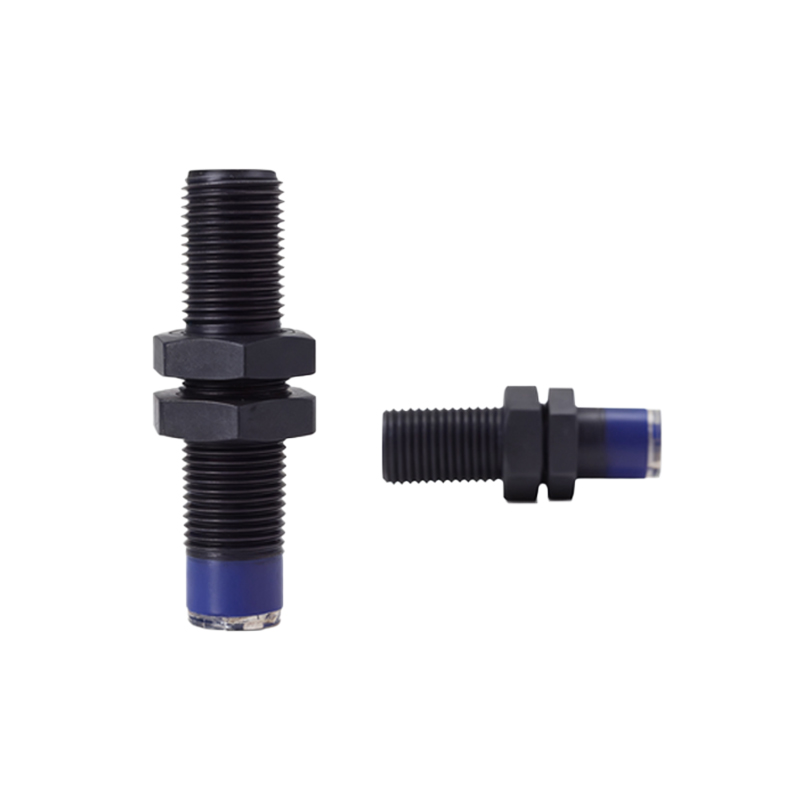
A significant advantage of the GOPX LM12 inductive sensor is its durability. Encased in a robust housing, often made of nickel-plated brass or stainless steel, it is resistant to dust, moisture, and mechanical impacts. Many variants boast an IP67 or higher ingress protection rating, meaning they are protected against temporary immersion and are dust-tight, suitable for harsh industrial environments like machining centers, assembly lines, and material handling systems. Its compact M12 size facilitates installation using standard locknuts, simplifying mounting on machinery.
Typical applications for the GOPX LM12 are extensive across factory automation. It is frequently used for position detection, such as verifying the presence of a metal part on a conveyor, confirming the end-of-travel of a cylinder (by detecting its piston), or counting metallic objects. In packaging machinery, it can detect foil lids or metal components. In automotive assembly, these sensors monitor the position of robotic arms or confirm part placement. Their non-contact nature ensures no wear and tear on the sensor or the target, leading to high reliability and long service life compared to mechanical limit switches.
When selecting and applying the GOPX LM12 proximity sensor, several technical factors must be meticulously considered. First, ensure the target material is detectable; inductive sensors are primarily for metals, with different correction factors for steel, aluminum, and copper. The sensing distance can vary with the target material and size. Second, the output configuration (PNP/NPN, NO/NC) must match the electrical requirements of your PLC or controller. Third, consider the environmental conditions: temperature range, exposure to chemicals, or potential for welding spatter, which might necessitate a specialized variant. Electrical characteristics like switching frequency (response speed), current rating, and short-circuit protection are also vital for system stability. Finally, proper installation is crucial. Maintain the recommended clearance around the sensor to avoid side-interference from adjacent metal structures, and ensure the target approaches the sensing face perpendicularly for optimal performance.
In summary, the GOPX LM12 proximity switch sensor represents a fundamental building block in modern industrial control. Its combination of a compact M12 form factor, reliable inductive sensing technology, and robust construction makes it an excellent choice for engineers and technicians designing or maintaining automated systems. By understanding its specifications, operating principle, and application guidelines, you can effectively leverage this sensor to enhance machine efficiency, safety, and reliability. Always consult the specific manufacturer's datasheet for the exact technical parameters, wiring diagrams, and installation instructions for your particular GOPX LM12 model to ensure optimal integration and performance.