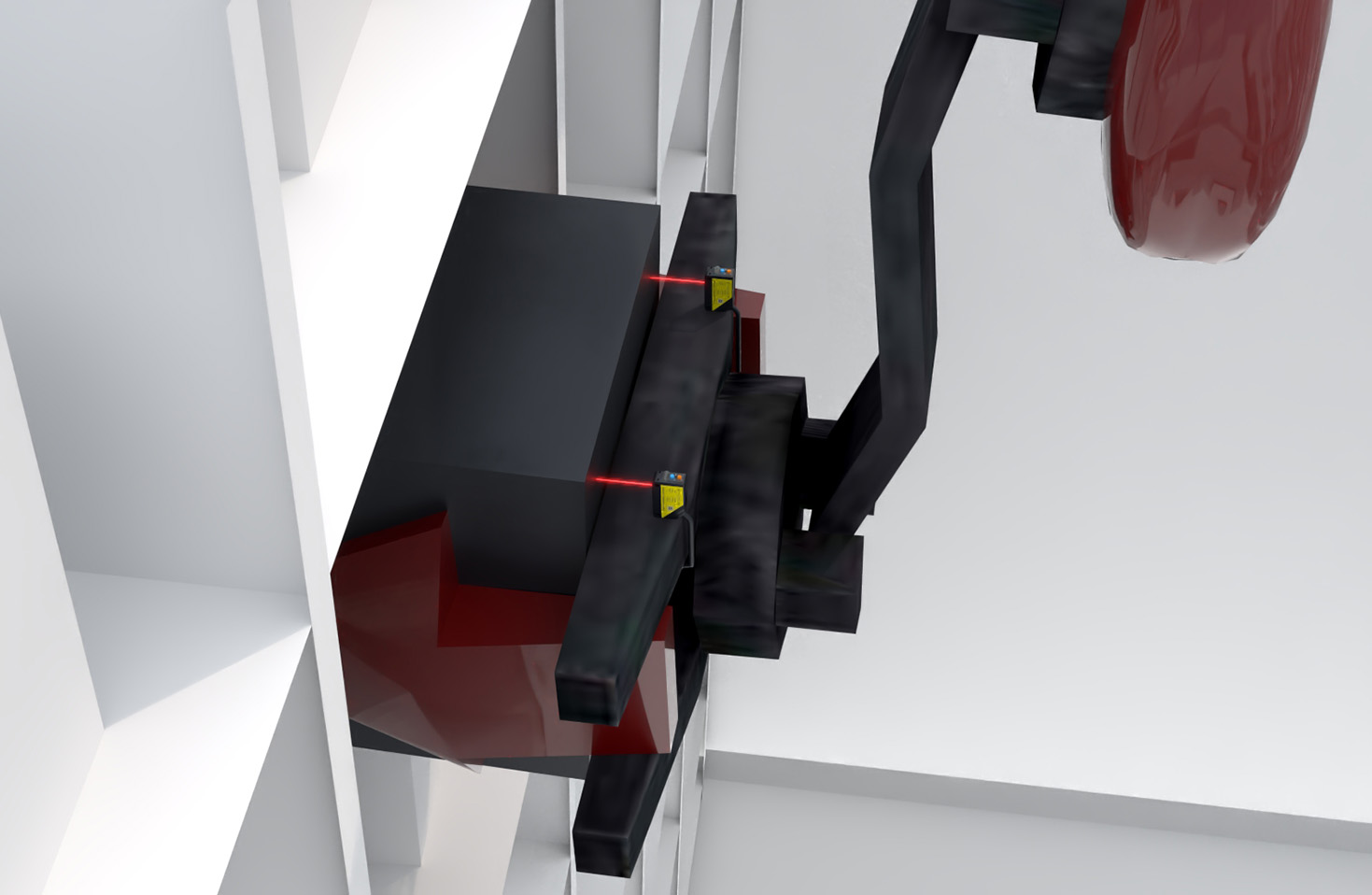
In the relentless pursuit of manufacturing excellence and quality control, precision measurement is not merely a requirement; it is the foundational pillar. Among the array of sophisticated metrology tools, the laser displacement sensor achieving a resolution of 0.0001 units—be it millimeters, inches, or another scale—stands as a monumental leap forward. This article delves into the technological sophistication, operational principles, and transformative industrial applications of these ultra-high-precision sensors.
At its core, a laser displacement sensor operating at a 0.0001 resolution utilizes the principle of optical triangulation or, in more advanced iterations, interferometry. A focused laser beam is projected onto the target surface. The reflected light is captured by a high-resolution CMOS or CCD array. Any minute change in the distance to the target causes a proportional shift in the position of the laser spot on the receiver. The sensor's internal processor, powered by advanced algorithms, calculates this displacement with extraordinary accuracy. Achieving a stable 0.0001 resolution demands mastery over several critical factors: an ultra-stable laser diode with minimal wavelength drift, a high-quality optical system free from aberrations, a low-noise, high-speed receiver circuit, and sophisticated signal processing that filters out environmental vibrations and thermal effects.
The engineering behind such precision is profound. Thermal management is paramount, as even microscopic expansion of components can induce error. Sensors are often housed in thermally stable materials and may incorporate active temperature compensation circuits. Furthermore, the choice of laser—typically a red or blue laser depending on the material surface—affects the speckle noise and the quality of reflection. For challenging surfaces like transparent materials or shiny metals, specialized models with modulated light or coaxial optical paths are employed to ensure reliable data.
The applications for a 0.0001 laser displacement sensor are vast and critical across high-tech industries. In semiconductor manufacturing, they are indispensable for measuring wafer warpage, etch depth, and the precise thickness of deposited films, where nanometer-level tolerances are routine. In precision machining and aerospace, these sensors verify the dimensional accuracy of turbine blades, fuel injection nozzles, and other mission-critical components, ensuring performance and safety. Within the realm of automotive production, they facilitate the ultra-precise assembly of powertrain components and the inspection of high-precision gears and bearings.

Beyond traditional manufacturing, they enable cutting-edge research and development. In micro-electro-mechanical systems (MEMS) production, they measure and profile microscopic structures. They are also crucial in the development of advanced batteries, measuring electrode coating uniformity, and in pharmaceutical industries, for monitoring pill thickness and coating consistency with unparalleled accuracy.
Implementing a sensor of this caliber requires careful consideration. Environmental factors such as ambient light, dust, and temperature fluctuations must be controlled or compensated for. Proper mounting to minimize vibration and selecting the correct sensor model for the target's surface properties are essential steps. The data output, often through high-speed digital interfaces like Ethernet/IP or EtherCAT, must be integrated into quality management systems for real-time statistical process control (SPC), allowing for immediate corrective action.
In conclusion, the 0.0001 laser displacement sensor represents the zenith of non-contact measurement technology. It is no longer just a tool for inspection but a proactive enabler of Industry 4.0, feeding big data analytics and closed-loop control systems. By providing reliable, micron- or sub-micron level data at high speeds, it empowers engineers to push the boundaries of what is manufacturable, ensuring quality, reducing waste, and driving innovation. As materials become more advanced and tolerances tighter, the role of such hyper-precise sensing will only become more central to industrial progress.