In the rapidly evolving landscape of industrial automation, the demand for reliable, high-performance sensing technology has never been greater. Among the most significant advancements in this field is the development of ultra-long range omnidirectional proximity sensors. These sophisticated devices are transforming how industries monitor, control, and secure their operations, offering unparalleled detection capabilities across vast distances and multiple axes. Unlike traditional proximity sensors, which are often limited by directionality and range constraints, omnidirectional sensors provide 360-degree coverage, making them indispensable in complex environments such as large-scale manufacturing plants, logistics hubs, and hazardous area monitoring.
The core technology behind these sensors typically involves advanced modulation techniques, such as frequency-modulated continuous wave (FMCW) radar or LiDAR-based systems, combined with sophisticated signal processing algorithms. By emitting energy waves—whether radio, infrared, or laser—and analyzing the reflected signals, these sensors can detect objects, measure distances, and even assess velocity without physical contact. The "ultra-long range" designation generally refers to detection capabilities extending from several tens of meters to over a hundred meters, depending on the specific technology and environmental conditions. This extended range is achieved through high-power transmitters, sensitive receivers, and noise-reduction technologies that filter out interference from ambient sources.
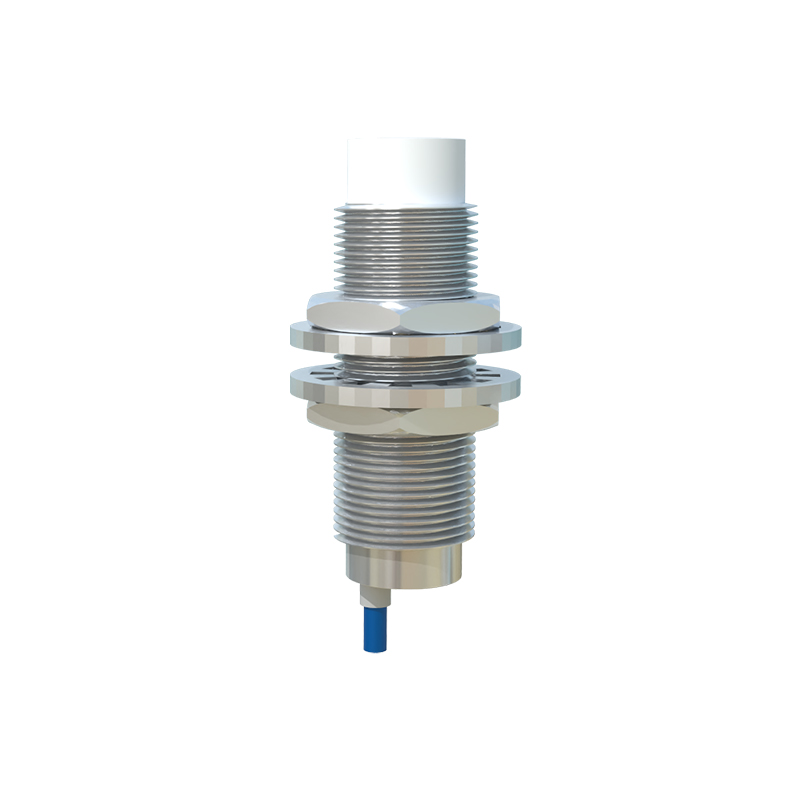
One of the key advantages of omnidirectional proximity sensors is their ability to provide comprehensive situational awareness. In automated guided vehicle (AGV) systems, for instance, these sensors enable vehicles to navigate dynamically crowded warehouses by detecting obstacles in all directions, thereby preventing collisions and optimizing routing. Similarly, in perimeter security applications, they can monitor large outdoor areas for unauthorized intrusions, offering a more flexible and cost-effective alternative to traditional camera or fence-based systems. The sensors' immunity to environmental factors like dust, fog, or varying light conditions further enhances their reliability in harsh industrial settings.
Integration with the Industrial Internet of Things (IIoT) has amplified the impact of these sensors. By connecting them to centralized control systems via wireless networks or industrial Ethernet, data on object presence, location, and movement can be analyzed in real-time. This facilitates predictive maintenance, where sensor data can forecast equipment failures before they occur, and adaptive automation, where machinery adjusts its operations based on sensor inputs. For example, in smart manufacturing lines, omnidirectional sensors can track components across long assembly paths, ensuring seamless coordination between robots and conveyors.
Despite their benefits, deploying ultra-long range omnidirectional sensors presents challenges. Power consumption can be higher due to the continuous emission and processing of signals, necessitating efficient energy management solutions. Additionally, calibration and alignment are critical to avoid blind spots, especially in environments with reflective surfaces or electromagnetic interference. Manufacturers are addressing these issues through innovations like low-power sleep modes, adaptive beamforming, and machine learning algorithms that improve accuracy over time.
Looking ahead, the convergence of artificial intelligence and sensor technology promises even greater capabilities. Future iterations may feature enhanced discrimination between object types, improved resistance to signal jamming, and self-configuring networks that optimize coverage autonomously. As industries strive for higher efficiency and safety standards, ultra-long range omnidirectional proximity sensors will play a pivotal role in enabling next-generation automation, from autonomous mining operations to advanced traffic management systems. Their ability to provide reliable, all-encompassing detection makes them not just a tool, but a foundational component of the intelligent industrial ecosystem.