Proximity sensors are essential components in modern industrial automation, enabling non-contact detection of objects without physical touch. These devices operate based on various physical principles, each suited to specific applications and environmental conditions. Understanding how proximity sensors work requires exploring their underlying technologies, which include inductive, capacitive, ultrasonic, and photoelectric methods.
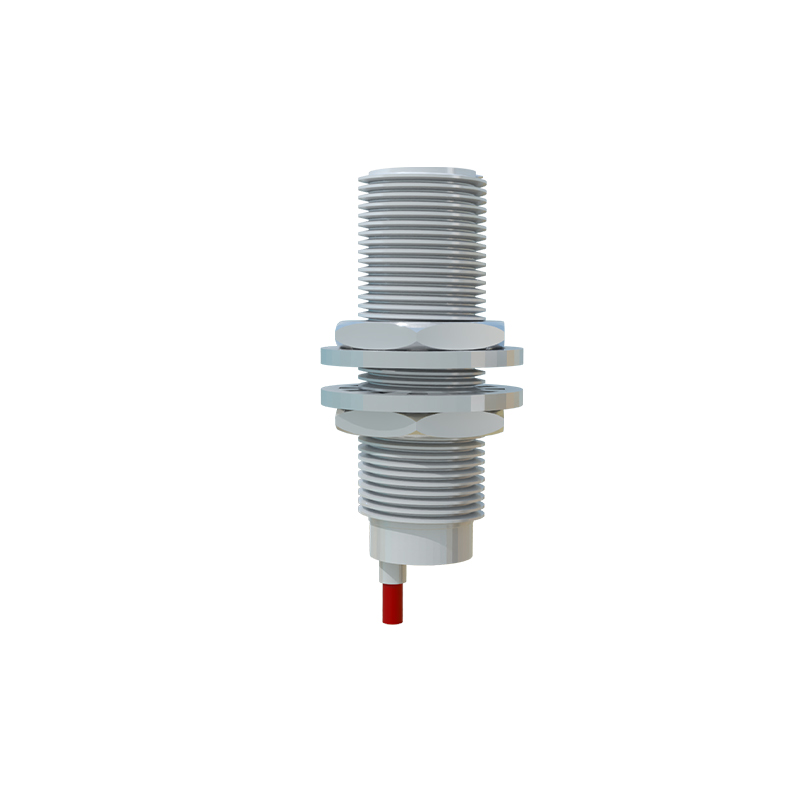
Inductive proximity sensors are widely used for detecting metallic objects. They consist of a coil wound around a ferrite core, an oscillator, a signal conditioner, and an output circuit. When an alternating current passes through the coil, it generates an electromagnetic field. If a metallic object enters this field, eddy currents are induced in the object, causing a change in the oscillation amplitude. The sensor's circuitry detects this change and triggers an output signal, such as a switch closure or voltage change. These sensors are ideal for harsh environments with dust, oil, or moisture, as they only respond to metals and ignore non-metallic materials. Common applications include position sensing in machinery, conveyor systems, and robotic arms.
Capacitive proximity sensors can detect both metallic and non-metallic objects, including liquids, plastics, and wood. They operate by measuring changes in capacitance between the sensor's electrode and the target object. The sensor generates an electrostatic field, and when an object enters this field, it alters the capacitance, which is monitored by an internal circuit. Once the change exceeds a set threshold, the sensor activates its output. These sensors are useful in level detection for tanks, material handling, and packaging industries, where diverse materials need sensing. However, they may be affected by environmental factors like humidity or temperature variations.
Ultrasonic proximity sensors use sound waves beyond human hearing (typically 20 kHz to 200 kHz) to detect objects. They emit ultrasonic pulses and measure the time taken for echoes to return after hitting an object. By calculating the distance based on the speed of sound, these sensors can determine presence, distance, or even object size. They are effective for detecting transparent or irregularly shaped items, such as glass bottles or liquid levels, and work well in dusty or foggy conditions where optical sensors might fail. Applications include obstacle detection in automated guided vehicles (AGVs) and fill-level control in bottling plants.
Photoelectric proximity sensors rely on light beams, usually infrared or laser, to sense objects. They consist of an emitter that sends light and a receiver that detects reflected or interrupted beams. There are three main types: through-beam (separate emitter and receiver), retro-reflective (uses a reflector), and diffuse (reflects light off the object). When an object disrupts the light path, the receiver triggers an output. These sensors offer long-range detection and high precision, making them suitable for counting parts, detecting transparent materials, or ensuring safety in automated systems. However, they can be sensitive to ambient light or dirty lenses.
In summary, proximity sensors function by converting physical interactions—like changes in electromagnetic fields, capacitance, sound waves, or light—into electrical signals. Key factors in selecting a sensor include detection range, material type, environmental conditions, and response speed. For instance, inductive sensors excel in metal detection, while capacitive sensors handle diverse materials, and ultrasonic or photoelectric sensors provide versatility for non-contact applications. Regular maintenance, such as cleaning and calibration, ensures reliable operation. As Industry 4.0 advances, these sensors play a crucial role in smart factories, enhancing efficiency, safety, and automation. By integrating with PLCs and IoT systems, they enable real-time monitoring and predictive maintenance, driving innovation in sectors from automotive manufacturing to food processing.
