Laser distance sensors have become indispensable tools across various industrial sectors, offering unparalleled precision and reliability. These devices operate by emitting a laser beam towards a target object and measuring the time it takes for the reflection to return, a method known as time-of-flight. This principle ensures high accuracy, often within sub-millimeter ranges, making them ideal for applications where exact measurements are critical. One of the primary advantages is their non-contact nature, which eliminates wear and tear on both the sensor and the measured object. This feature is particularly beneficial in environments involving delicate or moving components, such as in automotive assembly lines or semiconductor manufacturing.
In addition to precision, laser distance sensors provide exceptional speed, capable of taking thousands of measurements per second. This rapid data acquisition supports real-time monitoring and control systems, enhancing efficiency in dynamic processes like robotics and conveyor belt operations. Their ability to function in harsh conditions—such as extreme temperatures, dust, or vibration—further underscores their robustness. Unlike traditional mechanical sensors, lasers are less susceptible to environmental interference, ensuring consistent performance in challenging settings like construction sites or outdoor logistics.
Another key benefit is the versatility in integration. Modern laser sensors come with various interfaces, including analog outputs, digital protocols like IO-Link, and Ethernet connectivity, allowing seamless incorporation into existing industrial networks. This adaptability facilitates smart manufacturing initiatives, where sensors contribute to data-driven decision-making and predictive maintenance. Moreover, their compact design enables installation in confined spaces, expanding usability across diverse machinery and equipment.
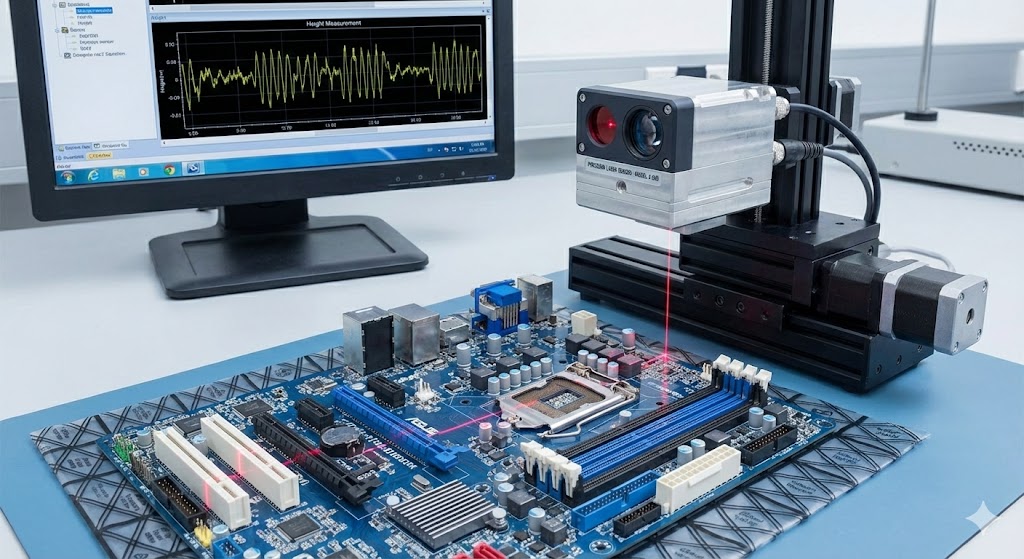
Cost-effectiveness over the long term also stands out as a significant advantage. While the initial investment may be higher than some alternatives, the reduced maintenance needs and minimal downtime lead to substantial savings. By preventing errors and optimizing processes, these sensors improve product quality and throughput, directly impacting profitability. Industries such as aerospace, pharmaceuticals, and agriculture have leveraged these benefits to achieve higher standards and compliance with regulatory requirements.
Looking ahead, advancements in laser technology continue to push boundaries, with innovations like enhanced resolution and AI-powered analytics. As industries evolve towards greater automation, the role of laser distance sensors is set to expand, driving innovation in measurement and control systems. Their combination of accuracy, speed, and durability makes them a cornerstone of modern engineering, empowering businesses to meet the demands of an increasingly competitive landscape.
