In the realm of industrial automation and smart electronics, proximity metal sensor chips stand as fundamental components, enabling countless applications from safety systems to consumer devices. These sophisticated integrated circuits (ICs) detect the presence or absence of metallic objects without physical contact, primarily through inductive sensing principles. As an electrical engineer, understanding the architecture, operational parameters, and application nuances of these devices is crucial for effective system design and integration.
At its core, a proximity metal sensor chip generates an oscillating electromagnetic field via a built-in oscillator circuit connected to an external coil. When a metallic object enters this field, eddy currents are induced on the surface of the metal. These currents dissipate energy, which in turn causes a measurable change in the oscillation amplitude or frequency within the sensor chip. The onboard signal conditioning circuitry—comprising amplifiers, filters, and comparators—processes this change. Finally, a detection circuit triggers a clean, digital output signal, typically an open-collector or push-pull output, indicating the presence of the target. Modern chips often integrate all these stages, including the oscillator and sometimes even the coil driver, into a single monolithic silicon die, offering remarkable reliability and miniaturization.
Key performance specifications define the selection process for an engineer. Sensing distance, often a few millimeters to several centimeters, is paramount and depends on the coil size, oscillator frequency (typically ranging from 100 kHz to several MHz), and the target metal's properties. Ferrous metals like iron and steel generally yield a longer detection range compared to non-ferrous metals like aluminum or copper due to their higher magnetic permeability. Another critical parameter is the switching frequency, which dictates how quickly the sensor can detect successive objects—a vital factor in high-speed counting or sorting applications. Engineers must also consider environmental robustness: operating temperature range, immunity to electrical noise (EMI), and protection against voltage transients are non-negotiable for industrial settings. Many contemporary chips feature built-in diagnostics, short-circuit protection, and adjustable hysteresis to prevent output chattering in noisy environments.
The application landscape for these chips is vast and varied. In factory automation, they are ubiquitous in position sensing for cylinders, end-of-travel detection on conveyors, and part presence verification in assembly lines. The automotive industry relies on them for gear tooth sensing, brake wear detection, and non-contact switch applications. In consumer electronics, they enable features like automatic screen turn-off in smartphones when held to the ear or lid closure detection in laptops. A particularly demanding application is in safety systems, such as detecting the closure of protective guards on machinery, where fail-safe operation is mandated.
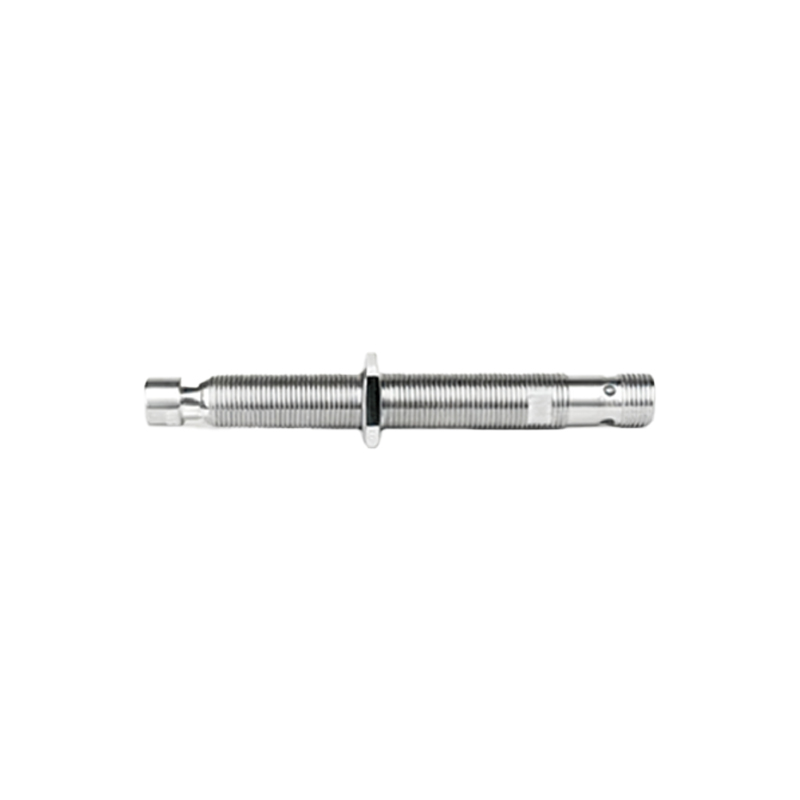
Designing with proximity sensor chips requires careful attention to several practical aspects. The design and placement of the external sensing coil are as critical as the chip itself. The coil, usually a flat spiral or wound type, must be sized appropriately for the required sensing distance and target. Its inductance and quality factor (Q) directly impact performance and stability. Shielding is often necessary to achieve directional sensing and to minimize the effects of adjacent metal, a phenomenon known as "side-metal" or "flush-mounting" interference. The electrical interface is straightforward but demands precision: stable, low-ripple DC power supply lines are essential, and output load connections must adhere to the chip's current sinking or sourcing specifications. For analog-output variants providing distance-proportional signals, proper ADC interfacing and calibration are necessary.
Looking forward, the evolution of proximity metal sensor ICs is aligned with broader industry trends. Integration continues to advance, with newer chips incorporating microcontrollers (MCUs) for digital signal processing, enabling smarter sensors with teach-in functions, IO-Link communication for Industry 4.0 connectivity, and enhanced noise discrimination. There is also a push towards lower power consumption for battery-operated IoT devices and higher operating frequencies for detecting smaller metallic targets or specific alloys. As systems become more intelligent, the humble proximity sensor chip is transforming from a simple binary switch into a smart node providing valuable diagnostic and parametric data, solidifying its indispensable role in the connected, automated world.