For electrical engineers, project managers, and procurement specialists, understanding the cost structure of laser sensors is crucial for accurate budgeting and component selection. The pricing of laser sensors is not a one-size-fits-all figure; it varies dramatically based on a complex interplay of technical specifications, performance requirements, and application context. This guide delves into the key factors influencing laser sensor pricing and provides a realistic overview of current market rates.
The primary determinant of cost is the underlying measurement principle and technology. Basic laser photoelectric sensors, used for simple presence detection, represent the most economical entry point. These diffuse or through-beam sensors can range from $50 to $300 per unit, depending on housing material (e.g., metal vs. plastic), sensing range, and connection type. They are ideal for conveyor belt counting or part detection in non-demanding environments.
A significant step up in both capability and cost are laser distance sensors and laser displacement sensors. These devices, often based on triangulation or time-of-flight (ToF) principles, provide precise dimensional measurements. Prices here are heavily influenced by resolution, accuracy, and measuring range. A standard 2D laser displacement sensor with a 10mm range and micron-level resolution can cost between $500 and $1,500. Long-range ToF sensors for measuring distances up to several hundred meters start around $800 and can exceed $3,000 for high-accuracy industrial models.
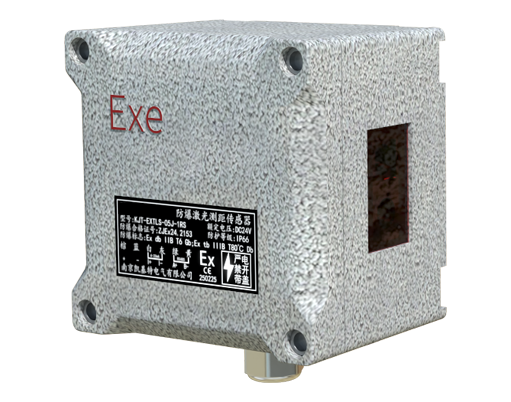
Laser profile scanners (2D/3D) and line lasers used for contour inspection, groove measurement, or 3D profiling command premium prices. These systems generate a line or a cloud of data points. A basic 2D profile sensor might start at $2,000, while high-speed, high-resolution 3D laser scanners for robotic guidance or quality inspection can easily range from $5,000 to $20,000+, often requiring additional software licenses and calibration tools.
Beyond the core technology, several critical specifications directly impact the price:
* Accuracy and Resolution: A sensor with ±0.01% FS accuracy costs substantially more than one with ±1% FS.
* Measurement Speed (Sampling Rate): High-speed applications (kHz range) for vibration or fast-moving objects require more sophisticated electronics, increasing cost.
* Laser Class and Wavelength: Class 1 (inherently safe) sensors are typically more expensive than Class 2. Specialized wavelengths (e.g., blue laser for red-hot metals) also add cost.
* Environmental Robustness: IP67/IP69K ratings, ruggedized metal housings, and certifications for hazardous areas (ATEX, IECEx) contribute to a higher price tag.
* Outputs and Connectivity: Standard analog (0-10V, 4-20mA) or digital (IO-Link, RS-422) outputs are common. Advanced models with Ethernet/IP, PROFINET, or EtherCAT interfaces add $100 to $500 to the base price.
* Brand and Support: Established brands like Keyence, Omron, SICK, or Micro-Epsilon command a price premium due to proven reliability, extensive application support, and global service networks. Equivalent-spec sensors from generic or regional manufacturers may offer cost savings of 20-40%.
Additional costs are often overlooked. Consider mounting accessories, calibration fixtures, protective windows (for dirty environments), and specialized cables. For complex systems, software for configuration, data analysis, and system integration can be a recurring or upfront cost. Always factor in potential engineering time for setup and integration.
For budgeting purposes, here is a simplified tiered overview:
* Economy Tier ($50 - $500): Basic photoelectric sensors, short-range analog output distance sensors. Suitable for simple automation tasks.
* Mid-Range Tier ($500 - $3,000): High-accuracy displacement sensors, mid-range profile sensors, long-range ToF sensors. The workhorses for precision mechanical engineering and industrial metrology.
* High-Performance Tier ($3,000 - $20,000+): High-speed 2D/3D scanners, specialized sensors for extreme environments, and complete turnkey measurement systems.
In conclusion, when asking "how much does a laser sensor cost?", the correct engineering response is, "It depends on the application." A thorough analysis of the required performance parameters is the first and most critical step. Engage with suppliers early, providing detailed specifications, to receive accurate quotations. Remember that the lowest upfront cost may not translate to the lowest total cost of ownership; reliability, accuracy, and support are key value drivers in industrial settings. Always request samples for evaluation in your specific application to validate performance before large-scale procurement.