In the realm of industrial automation and electrical engineering, proximity sensors are indispensable components for detecting the presence or absence of objects without physical contact. Among the various types, normally open (NO) proximity sensors are widely utilized due to their specific operational characteristics. Understanding how to identify whether a proximity sensor is normally open is crucial for proper system design, troubleshooting, and maintenance. This article delves into the key methods and principles to determine the NO configuration in proximity sensors, adhering to industry standards and practical applications.
Firstly, it is essential to grasp the fundamental concept of a normally open proximity sensor. In its default state—when no target object is within the sensing range—the output circuit of an NO sensor remains open, meaning no electrical current flows through it. Upon detecting a target, the sensor closes the circuit, allowing current to pass and signaling the presence of the object. This behavior contrasts with normally closed (NC) sensors, where the circuit is closed in the absence of a target and opens when an object is detected. The distinction is critical for safety and control logic in systems such as conveyor belts, robotic arms, and machinery guards.
To identify a normally open proximity sensor, engineers typically rely on several approaches. One of the most straightforward methods is to examine the sensor’s datasheet or technical documentation. Manufacturers clearly label the output type as NO or NC, along with specifications like sensing distance, voltage ratings, and output configurations (e.g., PNP or NPN). For instance, a datasheet might state "Output: Normally Open (NO), PNP" to indicate the sensor’s behavior. Always verify this information before installation to avoid wiring errors that could lead to system malfunctions.
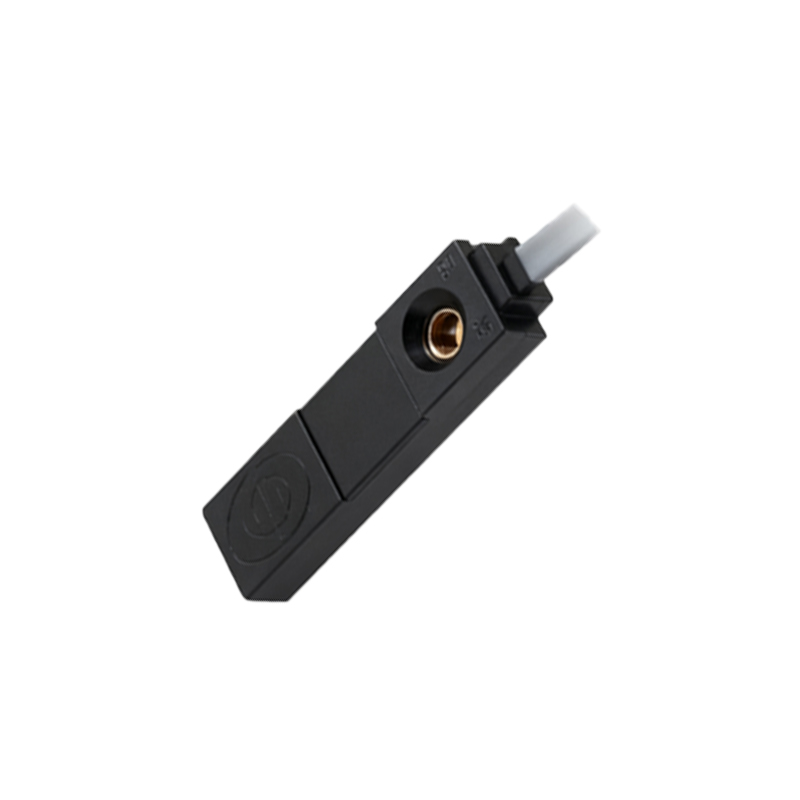
In practice, visual inspection of the sensor body can also provide clues. Many proximity sensors feature markings or symbols on their housing to denote the output type. Look for abbreviations such as "NO" or "NC" engraved near the wiring terminals or on a label. Additionally, electrical symbols—like an open switch for NO or a closed switch for NC—may be printed on the sensor. However, not all sensors include such markings, so this method should be supplemented with other techniques.
Electrical testing with a multimeter is a reliable hands-on approach to confirm the NO status. Begin by disconnecting the sensor from the power source to ensure safety. Set the multimeter to the continuity or resistance mode. Connect the probes to the output wires or terminals of the sensor. In the absence of a target, a normally open sensor should show infinite resistance (or no continuity), indicating an open circuit. When a target object is brought within the sensing range, the multimeter should display low resistance (or continuity), confirming that the circuit has closed. This test directly validates the sensor’s operational logic and helps identify faults like stuck contacts or wiring issues.
Another method involves observing the sensor’s behavior in a live circuit. Wire the sensor according to the manufacturer’s instructions, typically connecting it to a power supply and a load (e.g., a relay or PLC input). In a normally open configuration, the load should remain de-energized when no target is present. As a target approaches, the load activates, indicating that the sensor has switched on. This real-time observation aligns with control system expectations and is useful for debugging during commissioning.
It is also important to consider the sensor’s technology type—inductive, capacitive, or photoelectric—as this can influence identification. For example, inductive proximity sensors, commonly used for metal detection, often have standardized NO/NC outputs. Capacitive sensors, suitable for non-metallic materials, may offer configurable outputs. Always refer to the specific model’s manual, as some modern sensors allow users to switch between NO and NC modes via programming or DIP switches.
In summary, identifying a normally open proximity sensor requires a combination of reviewing documentation, inspecting physical markings, performing electrical tests, and observing operational behavior. Engineers must prioritize accuracy to ensure compatibility with control systems and safety protocols. By mastering these techniques, professionals can enhance system reliability, reduce downtime, and optimize automation processes in diverse industrial settings.