Metal proximity sensors are indispensable components in modern industrial automation, offering non-contact detection of metallic objects. Their robust design and reliable performance make them a cornerstone in manufacturing, packaging, material handling, and automotive assembly lines. Understanding their core features is crucial for selecting the right sensor for a specific application.
One of the most significant features is their non-contact operation. Unlike mechanical limit switches, these sensors detect targets without physical touch. This eliminates mechanical wear and tear, dramatically increasing operational lifespan and reducing maintenance costs. The absence of physical contact also allows for high-speed detection, which is essential in fast-paced production environments where milliseconds count.
High switching frequency and repeat accuracy are paramount. Modern inductive proximity sensors can achieve switching frequencies up to several kilohertz, enabling them to detect objects on rapidly moving conveyor belts with precision. Their repeatability, often within micrometers, ensures consistent positioning and triggering, which is vital for quality control and process reliability.
Environmental robustness is a defining characteristic. These sensors are typically housed in rugged casings made of stainless steel, nickel-plated brass, or PBT plastic, offering high resistance to impacts, vibrations, and harsh conditions. Many models boast high Ingress Protection (IP) ratings (e.g., IP67, IP69K), making them resistant to dust, oil, coolants, and high-pressure washdowns. This durability allows them to perform reliably in demanding settings like machine tools, foundries, and food processing plants.
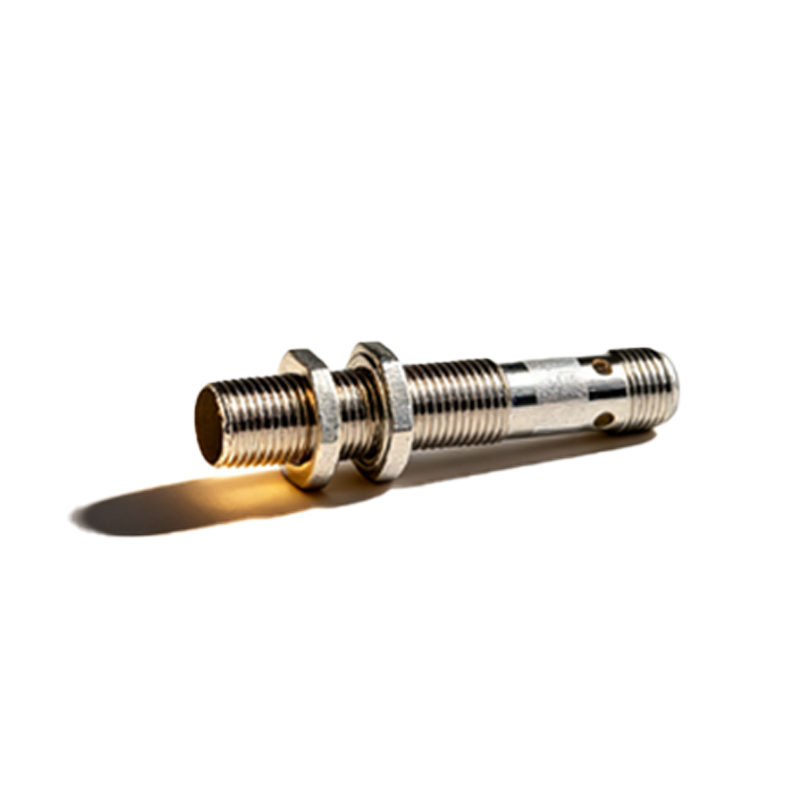
The operating principle based on electromagnetic induction contributes to several key traits. The sensor generates an oscillating electromagnetic field. When a metallic object enters this field, eddy currents are induced in the target, causing a change in the oscillation amplitude. This change is detected by the sensor's circuitry, triggering a solid-state output switch. This principle makes them inherently target-specific, primarily sensitive to ferrous (iron-based) and non-ferrous metals (aluminum, copper, brass), with sensing ranges adjusted for different material types.
Output configurations provide flexibility. They are available with various output types, including DC NPN/PNP (sourcing or sinking), Analog (4-20mA, 0-10V), and IO-Link for smart sensor capabilities. The solid-state outputs (transistor-based) enable fast, bounce-free switching compared to electromechanical relays. Shielded (flush-mountable) and unshielded (non-flush) designs offer further application versatility. Shielded sensors can be mounted flush in metal without affecting their sensing field, while unshielded models provide a longer sensing range but require non-metallic surroundings.
Immunity to environmental factors is a critical advantage. High-quality metal proximity sensors are designed to be unaffected by ambient light, acoustic noise, or most non-metallic materials (like plastic, wood, or liquids) in their vicinity. This ensures stable operation without false triggers. Furthermore, features like short-circuit protection, reverse polarity protection, and overload protection are standard in many models, safeguarding both the sensor and the control system from wiring errors or electrical faults.
The advent of IO-Link communication has added a new dimension of functionality. IO-Link enabled proximity sensors go beyond simple switching; they can transmit detailed diagnostic data, such as operating temperature, switch cycle count, signal strength, and even parameter settings, to a central controller. This facilitates predictive maintenance, remote configuration, and seamless integration into Industry 4.0 and smart factory frameworks.
Finally, a wide range of form factors and sensing ranges caters to diverse needs. Sensors come in cylindrical (e.g., M8, M12, M18, M30 threads), rectangular, and ring-shaped designs. Sensing distances vary from a few millimeters for precise positioning to several tens of millimeters for larger object detection. Selecting the appropriate size, shape, and range is essential for optimal installation and performance within the spatial constraints of machinery.
In summary, metal proximity sensors combine non-contact sensing, high speed, exceptional durability, environmental immunity, and evolving smart features. Their reliable and versatile nature makes them a fundamental and powerful tool for enhancing efficiency, safety, and intelligence in automated industrial systems.