Laser edge detection sensors, commonly referred to as laser web guide sensors or laser edge sensors, are pivotal components in modern industrial automation, particularly in continuous process manufacturing such as printing, converting, textiles, and paper production. Their primary function is to detect the position of a material's edge or guide line with high precision, enabling real-time correction of material alignment on production lines. This ensures consistent product quality, reduces material waste, and enhances overall operational efficiency.
The fundamental operating principle of these sensors is based on triangulation measurement using a laser beam. A typical sensor consists of three core components: a laser diode emitter, a receiving element (usually a position-sensitive detector or a CMOS/CCD array), and a signal processing unit. The laser diode projects a focused, visible or infrared laser line or spot onto the target material's edge. The diffuse reflection from the material's surface is captured by the receiving element. The key to edge detection lies in the contrast between the material and its background (often a roller or gap). When the laser spot strikes the material, the reflected light intensity differs significantly from when it strikes the background. The receiving element detects this sharp change in light intensity or the positional shift of the reflected spot.
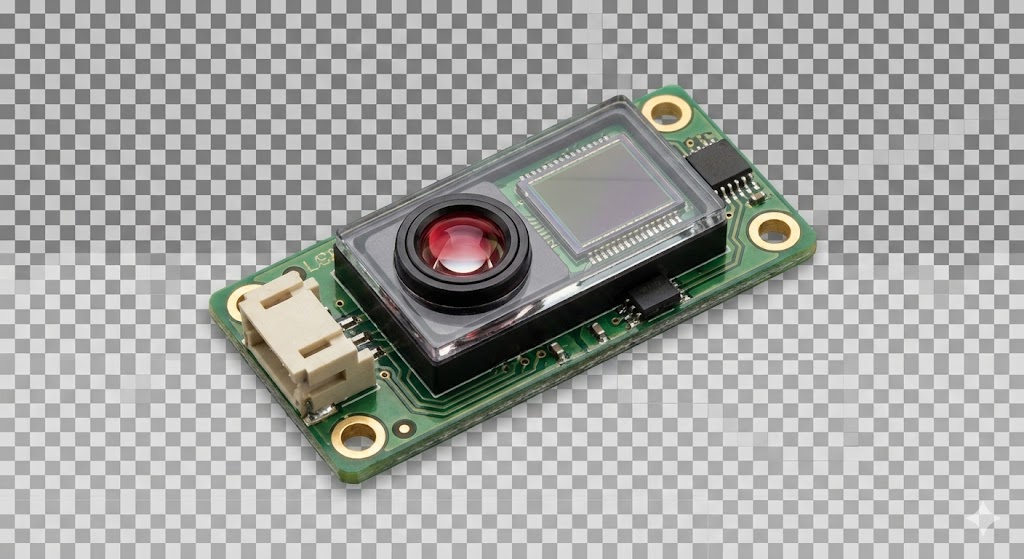
Using the principle of optical triangulation, the sensor's processor calculates the exact lateral position of the edge. As the material edge moves, the angle or position of the reflected beam on the detector changes. The processor analyzes this data and generates a precise analog or digital output signal proportional to the edge position deviation from a preset reference point. This output is then fed to a controller, which actuates a guiding mechanism—such as a pneumatic cylinder, electric actuator, or steering roller—to shift the web material back into the correct alignment.
Advanced laser edge sensors incorporate features like automatic background suppression, which allows them to adapt to different material colors and backgrounds without manual recalibration. Some models utilize dual-laser beams to create a reference plane, improving stability and immunity to environmental vibrations. The resolution of these sensors can reach micrometer levels, with response times in the millisecond range, making them suitable for high-speed production lines.
Applications are extensive. In printing, they ensure precise color registration by guiding the substrate. In plastic film extrusion or metal foil production, they prevent telescoping of rolls and edge damage. In non-woven fabric lines, they maintain uniform width. The benefits are substantial: minimizing trim waste, reducing downtime due to web breaks or misalignment, and ensuring compliance with tight tolerances required in industries like lithium-ion battery electrode coating or optical film manufacturing.
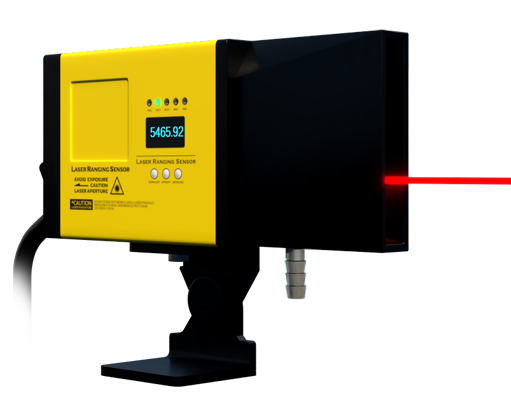
When selecting a laser edge sensor, engineers must consider factors such as material type (opaque, translucent, reflective), web speed, required accuracy, environmental conditions (dust, humidity, ambient light), and the mounting distance. Proper installation away from vibration sources and periodic lens cleaning are essential for maintaining optimal performance.
In conclusion, laser edge detection sensors are sophisticated electro-optical instruments that translate simple optical contrasts into precise positional data. Their integration into control loops exemplifies the synergy between precision measurement and mechanical actuation in industrial automation, driving quality and efficiency in continuous manufacturing processes. As technology advances, trends include integration with Industrial IoT for predictive maintenance and the use of smarter algorithms for even more robust detection in challenging applications.