In the realm of industrial automation and control systems, proximity sensors stand as fundamental components for non-contact object detection. Among the diverse range available, sensors with sensing distances spanning from 5mm to 50mm represent a critical and versatile category. These devices are engineered to detect the presence or absence of metallic or, in some cases, non-metallic objects without any physical contact, thereby ensuring reliability, longevity, and precision in demanding environments. This guide delves into the technology, selection criteria, and applications of 5-50mm proximity switches, providing essential insights for engineers and system integrators.
The operational principle of these sensors is primarily based on electromagnetic fields or capacitive changes. Inductive proximity sensors, the most common type for metallic target detection, generate an oscillating electromagnetic field from a coil in the sensing face. When a conductive metal object enters this field, eddy currents are induced, causing a change in the oscillation amplitude. This change is detected by the sensor's circuitry, which subsequently triggers a solid-state output switch. The rated sensing distance, or Sn, defines the nominal range—for instance, 5mm, 10mm, 18mm, 30mm, or 50mm—under standardized conditions. It is crucial to note that the actual sensing distance can be affected by factors such as target material, size, temperature, and supply voltage. For non-metallic objects like liquids, plastics, or wood, capacitive proximity sensors are employed. These detect changes in the capacitance between the sensor and the target, making them suitable for a broader range of materials but typically within shorter ranges compared to their inductive counterparts.
Selecting the appropriate sensor from the 5-50mm spectrum requires careful consideration of several technical parameters beyond just the sensing distance. First, the housing material and design are paramount. Cylindrical threaded barrels (e.g., M8, M12, M18, M30) are standard, offering robust mounting in machined holes. Stainless steel or nickel-plated brass housings provide excellent resistance to corrosion, chemicals, and mechanical impact. The protection rating, denoted by IP (Ingress Protection) codes like IP67 or IP69K, indicates the level of protection against dust and water ingress, which is vital for washdown areas or outdoor use. Electrical characteristics are equally critical. Operating voltage ranges (commonly 10-30V DC or 20-250V AC), output type (PNP/NPN, NO/NC), and current capacity must match the control system's requirements. Furthermore, switching frequency defines how quickly the sensor can detect objects passing by, a key factor in high-speed counting or sorting applications. For environments with significant electromagnetic interference (EMI) or when multiple sensors are mounted closely, shielded versions are recommended to prevent mutual interference, whereas unshielded types offer a slightly extended sensing range.
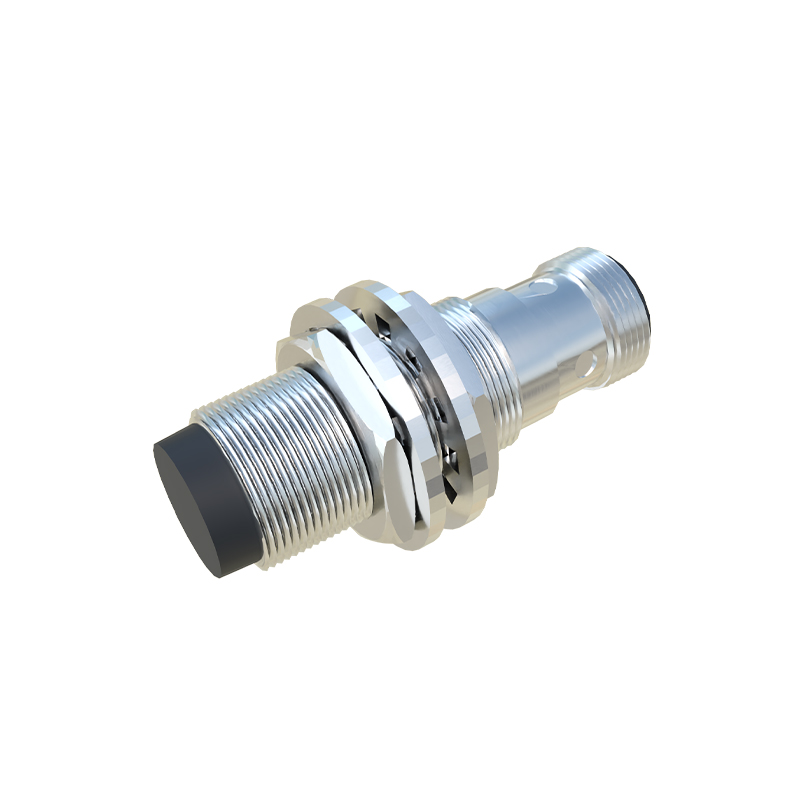
The application landscape for 5-50mm proximity sensors is vast and integral to modern manufacturing. In automotive assembly lines, 18mm or 30mm inductive sensors reliably detect piston positions, robotic arm endpoints, or the presence of metal components on conveyors, ensuring precise sequencing. Packaging machinery utilizes 5mm or 10mm sensors for precise bottle cap detection, fill level control using capacitive sensors, or registration mark sensing. Within material handling, 30mm or 50mm sensors monitor the position of pallets, crane hooks, or automated guided vehicles (AGVs). In metalworking and CNC machining, they serve as limit switches for tool changers, spindle positioning, and part clamping verification. The food and beverage industry often employs sensors with high IP ratings and FDA-compliant materials for detecting containers or monitoring valve positions. The 50mm sensing range is particularly valuable for applications requiring a larger air gap due to mechanical tolerances, thermal expansion, or safety clearances.
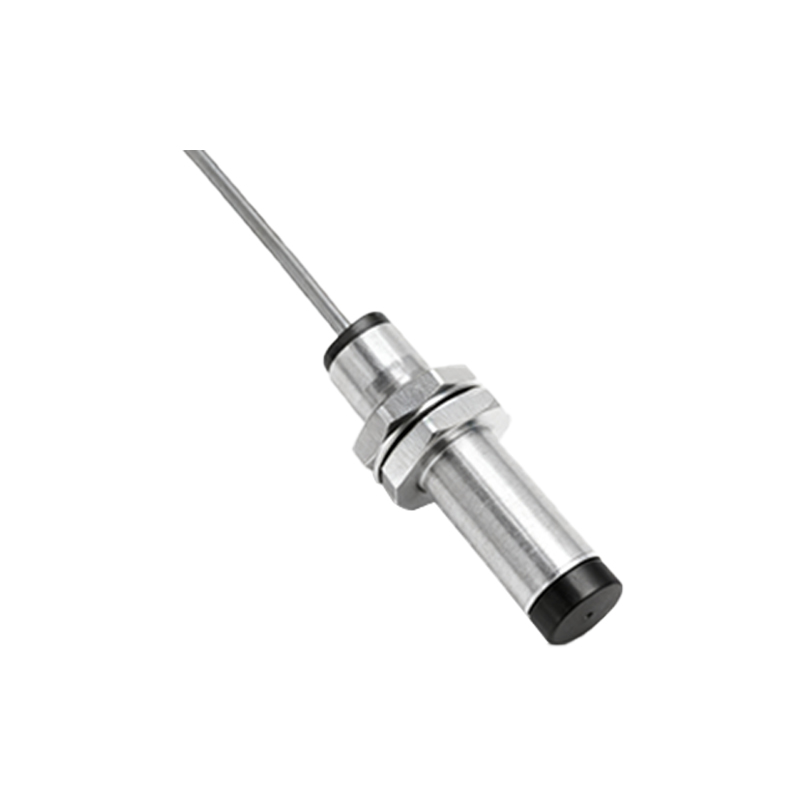
Installation and maintenance practices significantly influence sensor performance and lifespan. Correct mounting is essential; the sensor should be positioned so that the target approaches the sensing face axially for optimal performance. Adequate clearance around the sensor body, as specified in datasheets, prevents false triggers from adjacent metal structures. Regular maintenance involves checking for physical damage, buildup of debris or metallic swarf on the sensing face, and verifying electrical connections. Environmental factors like extreme temperatures, strong magnetic fields, or direct exposure to cutting fluids must be considered during the initial selection phase. Modern sensors also incorporate advanced features like IO-Link communication, which enables parameter setting, condition monitoring, and diagnostic data transmission, paving the way for Industry 4.0 predictive maintenance strategies.
In conclusion, proximity sensors in the 5-50mm range are indispensable workhorses in industrial automation. Their ability to provide accurate, wear-free detection across a multitude of materials and harsh conditions makes them a cornerstone of efficient and reliable system design. A thorough understanding of their operating principles, specifications, and application nuances