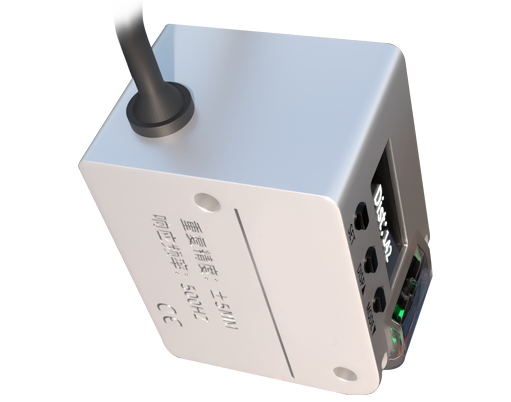
In modern industrial automation and condition monitoring, laser sensor vibration systems have emerged as critical tools for ensuring operational reliability, predictive maintenance, and quality control. These systems utilize laser Doppler vibrometry or triangulation principles to measure surface vibrations with non-contact precision, offering significant advantages over traditional contact-based sensors like accelerometers. By projecting a laser beam onto a target surface and analyzing the reflected light, laser vibration sensors can detect minute displacements, velocities, and frequencies without influencing the measured object—a key benefit for delicate or high-speed machinery.
The core technology behind laser vibration sensing often involves interferometry, where changes in the laser beam's phase or frequency correlate directly with vibration characteristics. For instance, in a Laser Doppler Vibrometer (LDV), the Doppler shift of the reflected laser light is measured to calculate velocity and displacement. This allows for real-time, high-resolution data acquisition across a wide frequency range, from sub-Hertz to several megahertz, making it suitable for applications from structural health monitoring to acoustic analysis. Industrial deployments include monitoring turbine blades, evaluating bearing conditions in rotating equipment, and inspecting printed circuit board assemblies for resonant frequencies that could lead to failure.

One of the standout features of laser-based systems is their ability to perform remote measurements in hazardous or inaccessible environments. In power generation plants, for example, sensors can assess vibration in high-temperature zones without physical contact, enhancing safety and reducing downtime. Similarly, in aerospace, laser vibrometers test aircraft components under simulated flight conditions to identify fatigue or defects. The data gathered not only supports predictive maintenance by alerting teams to anomalies before catastrophic failures but also aids in design optimization by revealing dynamic behaviors during prototyping.
Integration with Industry 4.0 frameworks further amplifies the value of laser vibration systems. When coupled with IoT platforms and AI-driven analytics, sensor data can be streamed for continuous monitoring, trend analysis, and automated decision-making. This enables a shift from scheduled maintenance to condition-based strategies, cutting costs and extending equipment lifespan. However, challenges such as environmental interference (e.g., ambient light or dust), surface reflectivity issues, and initial setup costs require careful consideration during implementation. Calibration and alignment are crucial for accuracy, especially in multi-point measurement setups.
Looking ahead, advancements in compact laser diodes, fiber-optic sensors, and machine learning algorithms are poised to make these systems more accessible and intelligent. Miniaturized sensors could enable embedded monitoring in consumer electronics or automotive systems, while enhanced software may allow for real-time 3D vibration mapping. As industries prioritize efficiency and sustainability, laser sensor vibration technology will continue to evolve, offering unparalleled insights into mechanical dynamics and fostering innovation across manufacturing, energy, and beyond.