Laser sensors are pivotal components in modern industrial automation, robotics, and measurement systems, prized for their high precision, fast response, and non-contact operation. However, their performance can be significantly compromised by signal interference, leading to inaccurate readings, operational failures, or system downtime. Signal interference in laser sensors refers to any unwanted disturbance that obscures or alters the intended laser signal, typically categorized into electromagnetic interference (EMI), optical interference, and environmental factors.
Electromagnetic interference is a prevalent issue, especially in industrial settings dense with electrical machinery. EMI originates from sources like motors, variable frequency drives, welding equipment, and radio frequency transmitters. These devices generate electromagnetic fields that can couple into the sensor's circuitry or signal cables, inducing noise. This noise manifests as erratic signal fluctuations or offsets. To combat EMI, employing shielded cables—with the shield properly grounded at one end—is essential. Additionally, routing sensor cables away from high-power lines, using ferrite cores on cables to suppress high-frequency noise, and ensuring sensors comply with EMI immunity standards (e.g., IEC 61000-6-2) can markedly reduce susceptibility. For highly sensitive applications, selecting sensors with robust internal filtering or differential signal outputs offers further protection.
Optical interference arises when external light sources affect the laser's detection. Ambient light, particularly from sunlight, LEDs, or other lasers, can saturate the sensor's photodetector or create background noise. This is especially critical for sensors operating in the visible or near-infrared spectra. Countermeasures include using sensors with modulated laser signals, where the detector is synchronized to the specific frequency of the emitted laser, effectively filtering out constant or non-synchronized ambient light. Optical filters that only transmit the laser's wavelength can be installed over the receiver. Physical shielding, such as tubes or housings around the sensor head, blocks stray light. For outdoor applications, sensors with high-power lasers or narrow-band filters are preferable to overcome intense sunlight.
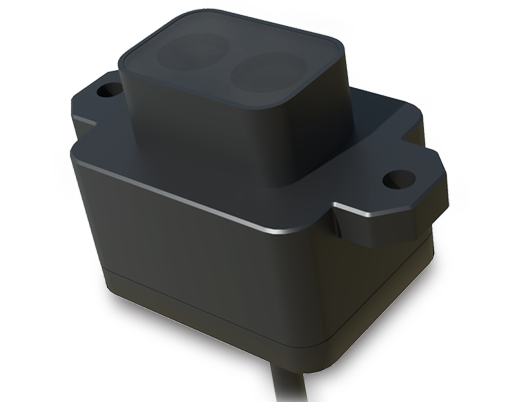
Environmental factors constitute another major interference source. Airborne particles like dust, smoke, or steam can scatter or absorb the laser beam, attenuating the signal. Temperature fluctuations may cause thermal drift in the sensor's electronic components or alter the laser's wavelength. Vibration can misalign optical elements. Addressing these requires both sensor selection and environmental control. Choosing sensors with higher laser power or longer wavelengths (e.g., infrared) improves penetration through particulates. Enclosures with air purging or cleaning systems keep optical windows clear. Temperature-compensated sensors or operating within specified temperature ranges ensures stability. Secure mounting on vibration-damped platforms maintains alignment.
System design and installation practices are equally crucial. Ensuring a stable power supply with proper filtering prevents conducted noise from entering the sensor. Grounding the sensor and associated equipment to a common ground point avoids ground loops, which are a common source of low-frequency interference. In networked systems, using optical isolation for communication interfaces can prevent noise propagation. Regular maintenance, including cleaning optical surfaces and checking cable integrity, preempts degradation.

Advanced sensors incorporate digital signal processing (DSP) algorithms to distinguish true signals from noise. Techniques like averaging multiple readings, adaptive thresholding, or Fourier analysis to filter out known interference frequencies enhance reliability. When integrating sensors into a larger system, conducting an interference audit—identifying potential sources and testing sensor performance under actual operating conditions—is a proactive step.

In summary, mitigating laser sensor signal interference demands a holistic approach combining proper sensor selection, strategic installation, environmental management, and sometimes advanced signal processing. Understanding the specific interference types in an application allows for targeted solutions, ensuring the sensor delivers the accuracy and reliability required for critical industrial tasks. As technology evolves, sensors with higher immunity and smarter processing will continue to advance, but foundational mitigation practices remain indispensable.