In industrial automation and control systems, proximity sensors and photoelectric sensors are indispensable components for object detection, positioning, and counting. Their reliability is paramount for ensuring continuous production flow, machine safety, and overall system integrity. However, a common and frustrating issue faced by maintenance engineers and system integrators is the intermittent failure of these sensors. Unlike a complete, permanent failure, intermittent malfunctions are characterized by sporadic, unpredictable loss of detection or false triggering. Diagnosing these issues requires a systematic approach, moving beyond simply swapping out the sensor. This article delves into the root causes of such intermittent behavior and provides a structured troubleshooting methodology.
The operational principle of these sensors is key to understanding potential failure points. Inductive proximity sensors generate an electromagnetic field and detect the eddy current losses caused by metallic targets. Capacitive sensors detect changes in capacitance, often used for non-metallic materials. Photoelectric sensors, on the other hand, operate by emitting a beam of light (visible, infrared, or laser) and detecting its presence, absence, or reflection. Intermittent failures can stem from issues within the sensor itself, its environment, the target, or the supporting electrical and mechanical infrastructure.
Primary Causes of Intermittent Sensor Failures:
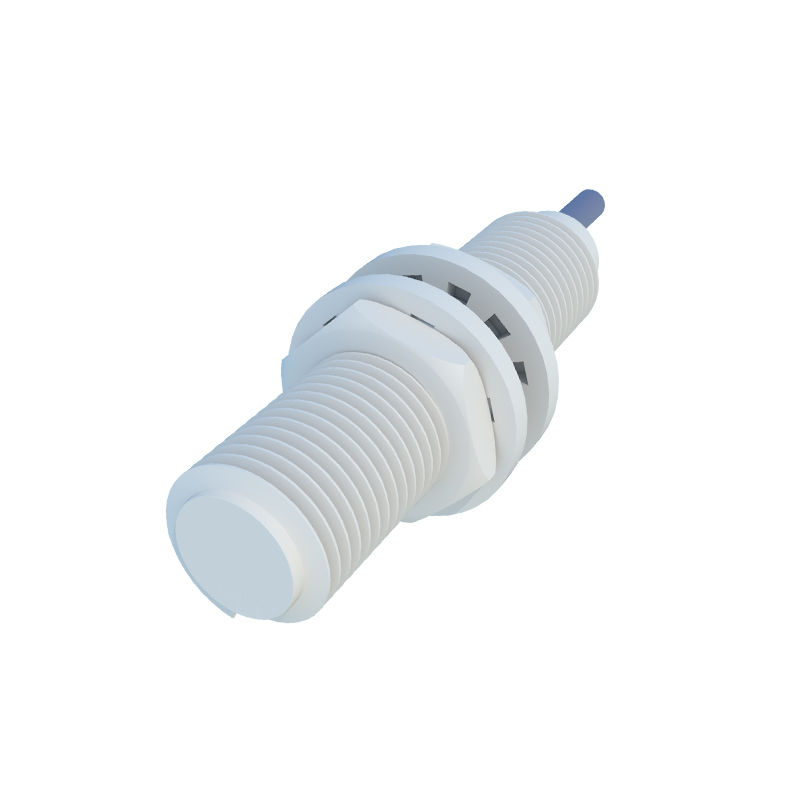
1. Environmental Contaminants: This is arguably the most frequent culprit. Dust, oil mist, coolant, metal shavings, or other airborne debris can accumulate on the lens of a photoelectric sensor, gradually attenuating the light beam until detection becomes unreliable. For proximity sensors, metallic dust or chips can adhere to the sensing face, potentially altering the electromagnetic field and causing false actuation or reduced sensing distance. The intermittent nature arises as contaminants build up, get partially dislodged, or as environmental conditions (e.g., machine start-up creating a cloud of dust) change.
2. Electrical Noise and Interference: Industrial environments are electrically noisy. Variable Frequency Drives (VFDs), welding equipment, large motors starting, and even radio transmissions can generate electromagnetic interference (EMI). This noise can be inductively or capacitively coupled into sensor cables or even directly into the sensor's electronics, causing momentary false signals or signal loss. Poor grounding or shielding exacerbates this problem. The intermittency correlates with the operation of other machinery on the line.
3. Power Supply Instability: Sensors require a stable DC voltage (commonly 10-30V DC). Voltage sags, spikes, or ripple from an overloaded or failing power supply can cause the sensor's internal circuitry to behave erratically. A brownout condition might cause the sensor to drop out momentarily. These fluctuations are often linked to the switching of other high-current loads on the same circuit.
4. Mechanical Factors: Vibration can loosen electrical connections at the sensor's terminal block, cable gland, or in junction boxes. A loose wire will make and break contact intermittently, leading to signal loss. Excessive vibration can also physically damage internal components over time. For photoelectric sensors, misalignment due to vibration or mechanical impact is a common issue. The beam may be at the very edge of the receiver's acceptance angle, causing it to drift in and out of detection.
5. Inadequate Sensing Margin: Operating a sensor at the absolute limit of its specified range, or with a target that is at the threshold of its minimum detectable size or reflectivity, leaves no safety margin. Minor variations in temperature (which can affect LED output and receiver sensitivity), supply voltage, or target position can then push the system over the edge into failure. A sensor might work perfectly at 70°F but fail intermittently when the plant heats up to 95°F.
6. Sensor Degradation and Internal Faults: While less common as a sole cause of intermittency, internal component aging can play a role. Electrolytic capacitors can dry out, solder joints can develop hairline cracks due to thermal cycling, and the light-emitting diode (LED) in a photoelectric sensor can gradually lose output. These processes can lead to performance that degrades in an irregular pattern.
Structured Troubleshooting Approach:
1. Observe and Document: Note the exact symptoms and pattern. Does the failure coincide with the operation of a specific machine? Does it happen at startup, during high humidity, or at certain temperatures? Use the machine's cycle time or a data logger to correlate events.
2. Inspect Physically: Power down and lock out the equipment. Visually inspect the sensor for contamination, damage, or moisture ingress. Check the tightness of all mechanical fasteners and electrical connections. For photoelectric sensors, clean the lens with a soft, lint-free cloth and appropriate cleaner.
3. Check Sensing Conditions: Verify the target is consistent and well within the sensor's specifications