In today's rapidly evolving industrial landscape, precision and efficiency are paramount. Laser distance sensors have emerged as a critical technology, enabling unprecedented accuracy in measurement and control across various sectors. These sensors utilize laser beams to determine the distance to an object by measuring the time it takes for the light to reflect back, or through phase-shift and triangulation methods. This article delves into the technical principles, recent advancements, and diverse applications of laser distance sensors, highlighting their transformative impact on modern engineering and automation.
The core technology behind laser distance sensors is based on the principle of time-of-flight (ToF) or phase measurement. In ToF sensors, a laser pulse is emitted towards a target, and the sensor calculates the distance by measuring the time delay of the reflected pulse. This method is highly effective for long-range measurements, often exceeding hundreds of meters, with sub-millimeter accuracy. Alternatively, phase-shift sensors modulate the laser beam's intensity and compare the phase difference between the emitted and reflected signals, offering superior precision for shorter distances. Triangulation-based sensors, on the other hand, use a laser diode, a lens, and a position-sensitive detector to calculate distance based on the angle of the reflected beam, making them ideal for close-range applications requiring high resolution.
Recent advancements in laser distance sensor technology have focused on enhancing performance, miniaturization, and integration with digital systems. The development of high-power, low-noise laser diodes has improved signal-to-noise ratios, allowing for more reliable measurements in challenging environments, such as those with high ambient light or dust. Additionally, the integration of microprocessors and advanced algorithms has enabled real-time data processing, error compensation, and adaptive calibration, reducing the need for manual intervention. Wireless connectivity options, including Bluetooth and Wi-Fi, have further expanded the sensors' usability in IoT (Internet of Things) setups, facilitating remote monitoring and control. Moreover, the advent of MEMS (Micro-Electro-Mechanical Systems) technology has led to the creation of compact, cost-effective sensors that can be embedded into portable devices and robotics.
The applications of laser distance sensors are vast and continually expanding. In manufacturing, they are used for quality control, such as verifying component dimensions, detecting surface defects, and ensuring proper alignment in assembly lines. The automotive industry relies on these sensors for collision avoidance systems, parking assistance, and autonomous vehicle navigation, where precise distance measurement is crucial for safety. In construction and civil engineering, laser distance sensors aid in surveying, leveling, and monitoring structural deformations, improving accuracy and reducing project timelines. Logistics and warehousing benefit from their use in inventory management, palletizing, and automated guided vehicles (AGVs), optimizing space utilization and operational efficiency. Furthermore, in the field of robotics, these sensors enable precise object detection, grasping, and navigation, enhancing the capabilities of industrial and service robots.

Despite their advantages, laser distance sensors face challenges related to environmental factors. For instance, transparent or highly reflective surfaces can cause inaccurate readings due to poor signal reflection. To mitigate this, manufacturers have developed sensors with adjustable power settings and multi-echo technology, which can distinguish between primary and secondary reflections. Additionally, harsh conditions like extreme temperatures, humidity, or vibrations may affect performance, necessitating robust housing and protective coatings. Ongoing research aims to address these limitations through material innovations and adaptive sensing techniques.
Looking ahead, the future of laser distance sensors is promising, with trends pointing towards greater integration with AI (Artificial Intelligence) and machine learning. By combining sensor data with predictive analytics, industries can achieve proactive maintenance, anomaly detection, and optimized processes. For example, in smart factories, laser sensors could feed real-time data into digital twins, creating virtual replicas of physical systems for simulation and improvement. The push for sustainability is also driving the development of energy-efficient sensors with longer lifespans, aligning with global efforts to reduce electronic waste. As technology continues to advance, laser distance sensors will likely become even more ubiquitous, underpinning innovations in areas like augmented reality, healthcare diagnostics, and environmental monitoring.
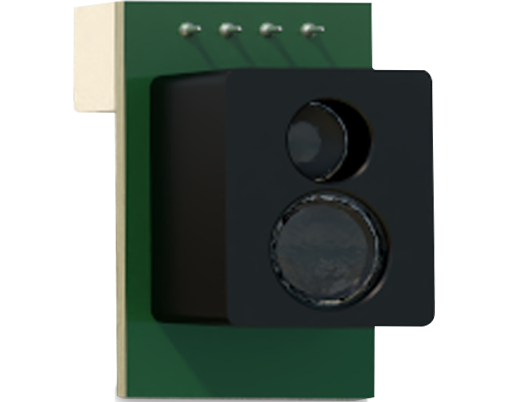
In conclusion, laser distance sensors represent a cornerstone of modern industrial automation, offering unparalleled precision and versatility. Their evolution from simple measuring tools to sophisticated, connected devices underscores the dynamic nature of technological progress. By understanding their principles, embracing recent innovations, and exploring new applications, engineers and industry professionals can harness the full potential of these sensors to drive efficiency, safety, and innovation. As we move towards an increasingly automated world, the role of laser distance sensors will only grow, solidifying their status as indispensable tools in the electrical and engineering domains.
