In the realm of industrial automation and precision control, laser sensor actuators represent a critical fusion of sensing and actuation technologies. These devices combine the high-accuracy measurement capabilities of laser sensors with the responsive physical movement of actuators, enabling closed-loop control systems that are both intelligent and highly precise. This article delves into the operational principles, diverse applications, and key considerations for selecting and implementing laser sensor actuators in various industrial settings.
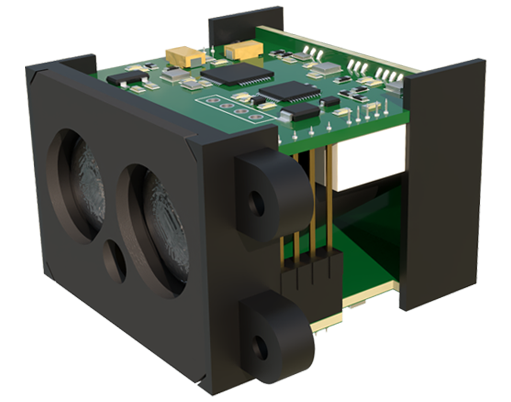
At its core, a laser sensor actuator integrates two primary components: a laser-based displacement or proximity sensor and a mechanical or electro-mechanical actuator. The sensor component typically employs a laser diode to emit a focused beam of light. The reflection of this beam from a target object is analyzed to determine parameters such as distance, position, thickness, or presence with micron-level accuracy. Common sensing principles include triangulation, time-of-flight (ToF), and confocal measurement. This real-time data is fed to a controller, which processes the information and sends a command signal to the actuator component.
The actuator is the "muscle" of the system, converting the controller's electrical signal into precise physical motion. Actuator types used in these integrated systems vary widely, including piezoelectric actuators for nanometer-scale movements, servo motors for high-speed positioning, linear motors for direct drive applications, and pneumatic actuators for high-force tasks. The synergy between the instantaneous feedback from the laser sensor and the controlled movement of the actuator creates a dynamic system capable of self-correction and adaptation to changing conditions.
The applications for laser sensor actuators are vast and span numerous industries. In semiconductor manufacturing, they are indispensable for wafer alignment, lithography stage positioning, and wire bonding, where sub-micron precision is non-negotiable. The automotive industry utilizes them for robotic welding seam tracking, paint thickness measurement and control, and automated quality inspection of critical components. Within precision assembly lines, these systems ensure parts are placed with exact tolerances. Furthermore, they are pivotal in 3D scanning and metrology systems, where the actuator moves the sensor to capture detailed topographic data of complex objects.
Selecting the appropriate laser sensor actuator for a specific application requires careful evaluation of several technical parameters. First, consider the required measurement range and resolution. A high-resolution sensor paired with a high-precision actuator is necessary for micro-assembly, while longer-range systems suit larger-scale positioning. Second, evaluate the speed and frequency response. The system's bandwidth must be high enough to measure and react to changes in the process in real-time. Third, environmental factors are crucial. The device must be rated to withstand industrial conditions such as dust, coolant, vibration, and temperature fluctuations. Robust housing and appropriate ingress protection (IP) ratings are essential.
Fourth, the type of communication interface (e.g., EtherCAT, PROFINET, IO-Link, analog voltage) must be compatible with the existing factory control network. Fifth, consider the mechanical specifications of the actuator, including stroke length, force output, stiffness, and mounting configuration. Finally, ease of integration and programming should not be overlooked. Modern laser sensor actuators often come with sophisticated software suites for configuration, calibration, and diagnostics, simplifying setup and maintenance.
The future of laser sensor actuators is closely tied to advancements in Industry 4.0 and smart manufacturing. Integration with Industrial Internet of Things (IIoT) platforms allows for predictive maintenance, where data from the sensor can forecast actuator wear or calibration drift. Furthermore, the incorporation of artificial intelligence and machine learning algorithms can enable these systems to optimize their own performance, identify complex patterns, and make autonomous adjustments for unprecedented levels of efficiency and quality control.
In conclusion, laser sensor actuators are sophisticated mechatronic systems that form the backbone of modern automated processes demanding high precision. By understanding their working principles, recognizing their broad application potential, and methodically evaluating selection criteria based on technical needs and operational environment, engineers can effectively harness their capabilities to enhance productivity, improve product quality, and drive innovation in manufacturing and beyond. Their continued evolution promises even greater integration, intelligence, and reliability for the factories of the future.