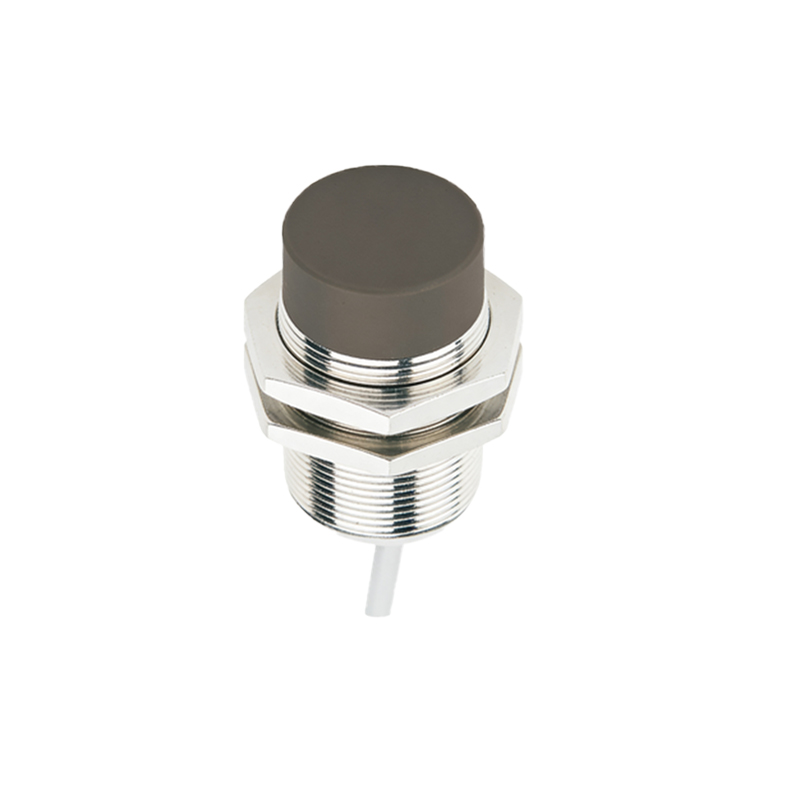
In the realm of industrial automation, precision, reliability, and durability are non-negotiable. The CM30 proximity sensor stands as a quintessential component engineered to meet these rigorous demands. This inductive proximity sensor, designed for non-contact detection of metallic objects, has become a staple in diverse applications ranging from assembly lines and packaging machinery to robotic systems and material handling equipment. Its robust construction and advanced sensing technology make it an indispensable tool for engineers and technicians seeking to optimize operational efficiency and minimize downtime.
The CM30 series typically operates on a standard DC voltage range, commonly 10-30V DC, ensuring compatibility with most industrial control systems. Its sensing distance, often up to 30mm depending on the specific model and target material, provides a reliable buffer zone for detecting objects without physical contact. This non-contact nature is a key advantage, eliminating mechanical wear and tear, which significantly extends the sensor's service life compared to mechanical limit switches. The housing is usually constructed from nickel-plated brass or stainless steel, offering excellent resistance to corrosion, oils, and coolants prevalent in harsh industrial environments. This IP67 or higher ingress protection rating guarantees reliable performance even when exposed to dust and temporary immersion in water.
One of the critical technical aspects of the CM30 is its output configuration. It is commonly available in both NPN (sinking) and PNP (sourcing) transistor outputs, as well as NO (Normally Open) and NC (Normally Closed) switching modes. This flexibility allows for seamless integration into various PLC (Programmable Logic Controller) input modules and control circuits worldwide. The switching frequency, often in the range of several hundred Hz, enables the detection of rapidly moving objects on high-speed production lines. Furthermore, many models feature a built-in LED status indicator, providing immediate visual confirmation of the sensor's operational state and output switching, which is invaluable for quick diagnostics and troubleshooting.

Installation and alignment are straightforward with the CM30's standardized cylindrical M30 housing. However, careful consideration must be given to its mounting environment. To ensure optimal performance and avoid false triggers, it is recommended to maintain a minimum clearance between multiple sensors and between the sensor and surrounding metal objects, as specified in the datasheet. This prevents mutual interference, a phenomenon known as "shielding," which can reduce the effective sensing range. For sensing different metals, such as steel, aluminum, or copper, users should note that the nominal sensing distance is typically defined for mild steel. For other metals, a correction factor must be applied, as non-ferrous metals generally result in a reduced sensing range.
When selecting a CM30 proximity sensor for a specific application, engineers must evaluate several parameters beyond just the sensing distance. The operating voltage, output type (NPN/PNP), temperature range (commonly -25°C to 70°C), and connection method (pre-wired cable or quick-disconnect) are all crucial decision factors. For instance, in washdown areas in food and beverage processing, a stainless-steel variant with a high IP rating is essential. In applications involving fast-moving small parts, a sensor with a high switching frequency and a shielded face (flush-mountable) design is preferable to detect targets precisely without being influenced by adjacent metallic structures.
Maintenance requirements for the CM30 are minimal, thanks to its solid-state design. Routine checks should involve inspecting the housing for physical damage, ensuring connections are tight and free from corrosion, and verifying that the sensing face is clean from debris, metal chips, or buildup that could impair functionality. In the event of a malfunction, systematic troubleshooting should begin with checking the power supply, verifying the load, and using the LED indicator to diagnose the issue. Common problems often stem from wiring errors, insufficient power, or an incorrect sensing target, rather than sensor failure.
In conclusion, the CM30 proximity sensor exemplifies the synergy of robust mechanical design and precise electronic sensing. Its versatility, reliability, and ease of integration make it a fundamental building block in modern industrial control systems. By understanding its operating principles, specifications, and application nuances, automation professionals can leverage the CM30 to enhance machine safety, improve production accuracy, and achieve higher levels of operational intelligence. As Industry 4.0 continues to evolve, components like the CM30 will remain at the core, providing the essential data points for smarter, more connected factories.