In modern warehouse management, efficiency and accuracy are paramount. Shelf-mounted laser sensors have emerged as a critical technology for enhancing inventory control, automating processes, and ensuring safety. These sensors, typically installed on the sides of storage racks, utilize laser beams to detect the presence, position, and sometimes even the dimensions of objects on shelves. Unlike traditional photoelectric or ultrasonic sensors, laser sensors offer high precision, long-range detection, and minimal interference from environmental factors such as dust or varying light conditions.
The core principle involves emitting a focused laser beam across a shelf aisle. When an object, such as a pallet or bin, interrupts this beam, the sensor triggers a signal. This data is integrated into Warehouse Management Systems (WMS) or Inventory Management Software, providing real-time visibility into stock levels. For instance, in high-density storage systems, these sensors can instantly identify empty slots, guide automated retrieval systems, and prevent misplaced items. Advanced models can even perform profile scanning to detect overhanging loads that might pose safety risks.
Key applications include automated storage and retrieval systems (AS/RS), where sensors ensure precise positioning of cranes and shuttles, reducing load handling errors. In dynamic picking environments, they verify that the correct item has been selected, minimizing fulfillment mistakes. Furthermore, in cold storage or harsh industrial settings, laser sensors with robust enclosures (IP67 ratings or higher) maintain reliable operation where other sensors might fail.
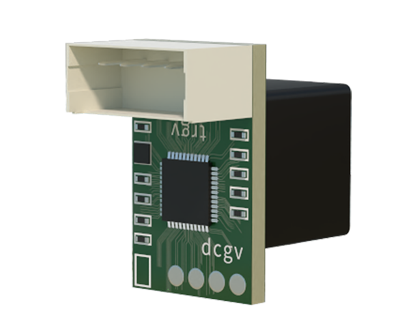
Integration with IoT platforms allows these sensors to contribute to predictive analytics. By monitoring frequency of access or detecting anomalies in storage patterns, they help forecast demand, schedule maintenance, and optimize layout. For example, consistently uninterrupted beams in a zone might indicate low-turnover stock, suggesting a need for reorganization.
When selecting a shelf-mounted laser sensor, engineers consider several factors: sensing range, which can vary from a few centimeters to over tens of meters; response time, critical for high-speed operations; beam type (visible or invisible); and connectivity options (e.g., IO-Link, Ethernet/IP). Alignment is crucial—mounting brackets often include fine-adjustment features to ensure accurate beam positioning despite vibration or thermal expansion in rack structures.

Maintenance is generally minimal, but regular cleaning of lenses and checks for physical obstructions are recommended. Modern sensors often include self-diagnostic functions, alerting operators to issues like lens contamination or power fluctuations.
In summary, shelf-mounted laser sensors are indispensable for achieving lean, automated warehouses. They bridge the gap between physical inventory and digital control systems, driving accuracy, safety, and operational throughput. As warehouses evolve toward greater automation and data-driven decision-making, the role of these precise, reliable sensors will only expand, forming the backbone of smart logistics infrastructure.