In modern industrial automation, achieving high-precision material handling and processing is paramount. Laser sensors have emerged as a critical technology for edge detection and following applications, offering unparalleled accuracy, speed, and reliability. Unlike traditional mechanical guides or vision systems that may struggle with varying surface conditions or lighting, laser sensors operate on a consistent principle of triangulation or time-of-flight measurement, providing a stable reference point regardless of environmental factors.
The core function of laser sensor edge following, often termed "edge tracking" or "contour following," involves a sensor emitting a focused laser beam onto the target material's edge. The reflected light is captured by a receiver within the sensor. By calculating the position of the reflected spot, the sensor determines the precise distance to the edge. This real-time distance data is continuously fed to a programmable logic controller (PLC) or motion controller. The controller then dynamically adjusts the position of a machine tool, conveyor, or robotic arm to maintain a consistent offset from the detected edge. This closed-loop system enables machines to accurately cut, weld, apply adhesive, or assemble components by faithfully tracing irregular or curved contours.
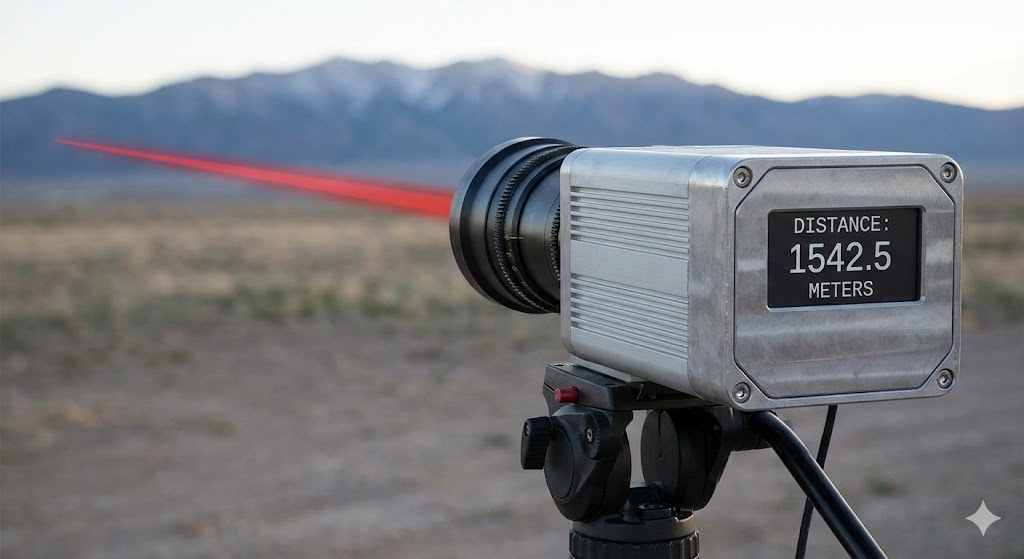
The advantages of using laser sensors for this purpose are substantial. First and foremost is precision, with high-end models capable of resolution in the micrometer range, ensuring flawless operation in applications like CNC routing of composite materials or fabric cutting. Speed is another key benefit; laser sensors can perform thousands of measurements per second, allowing for high-throughput production without sacrificing accuracy. Furthermore, they are non-contact sensors, eliminating wear and tear on both the sensor and the workpiece, which is crucial for delicate materials. Their robustness allows them to perform reliably in harsh industrial environments with dust, vibrations, or temperature fluctuations that would compromise other sensing methods.
Typical applications span numerous industries. In metal fabrication, laser sensors guide plasma cutters along sheet metal edges. In the textile industry, they ensure precise cutting patterns for multiple layers of fabric. In woodworking, they guide saws for optimal board edging. Packaging machinery uses them to align films and labels, while printing presses employ them for web guiding to prevent misalignment. The automotive sector relies on them for precise application of sealants and for robotic welding paths along car body panels.

Implementing a laser edge-following system requires careful consideration of several factors. Sensor selection is critical and depends on the material's surface properties (color, reflectivity, texture), the required measurement range, and the environmental conditions. Dark, matte, or transparent surfaces may require sensors with specialized algorithms or different wavelengths to ensure a reliable return signal. The mounting position and angle of the sensor relative to the workpiece must be optimized to avoid shadowing or erroneous reflections. Integration with the control system is also vital; the sensor's output must be correctly scaled and filtered, and the control algorithm (often a proportional-integral-derivative or PID loop) must be tuned for the specific mechanics of the machine to achieve smooth, responsive, and stable following without oscillation.
In conclusion, laser sensor-based edge following is a cornerstone technology for advanced manufacturing. It translates digital design data into precise physical motion, enabling automation systems to handle complex, variable tasks with consistency and efficiency unmatched by manual operation or less sophisticated guidance systems. As industries continue to push for greater flexibility, smaller batch sizes, and higher quality, the role of precise, reliable laser sensing in edge guidance will only become more central to smart factory operations and the broader evolution of Industry 4.0.