In the realm of industrial automation and control systems, the reliability and precision of sensing technology are paramount. Among the various sensor types, the three-wire proximity sensor stands out as a fundamental and widely adopted component. This article delves into the operational principles, key characteristics, wiring configurations, and practical application considerations of these indispensable devices.
At its core, a three-wire proximity sensor is a non-contact electronic device designed to detect the presence or absence of a target object without physical contact. It operates on the principle of electromagnetic field disturbance or capacitive change, depending on its type. The most common variants are inductive sensors, used for detecting metallic objects, and capacitive sensors, capable of detecting both metallic and non-metallic materials like plastic, wood, or liquids. The "three-wire" designation refers to its standard electrical connection scheme: one wire for the positive DC supply voltage (typically labeled brown or +V), one wire for the negative or ground return (typically blue or 0V), and one wire for the output signal (typically black, white, or another color).
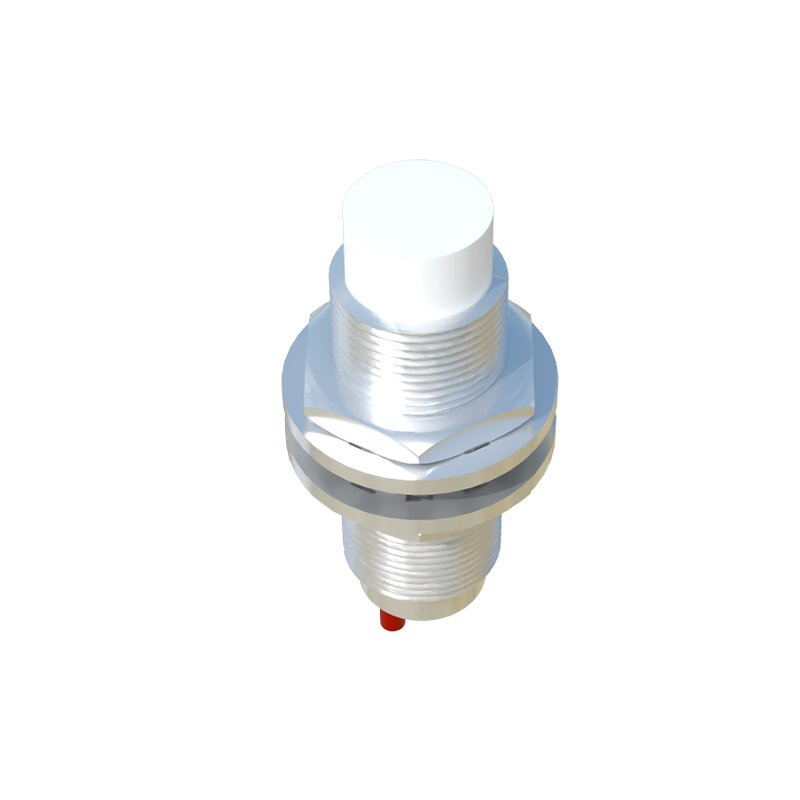
The internal circuitry of a three-wire sensor is actively powered, meaning it requires a continuous supply voltage to operate. This is a key distinction from two-wire sensors. The output stage typically features a solid-state switching element, such as a transistor (PNP or NPN configuration), which acts as a switch for the load connected to the output wire. In a PNP (sourcing) configuration, the output provides a positive voltage to the load when the target is detected. Conversely, in an NPN (sinking) configuration, the output provides a path to ground for the load. The choice between PNP and NPN is crucial and depends on the control system's input card requirements (sinking or sourcing).
Wiring a three-wire sensor is straightforward but requires attention to detail. The power supply wires (positive and negative/ground) must be connected to a stable DC power source, commonly 10-30V DC, ensuring the voltage matches the sensor's specifications. The output wire is connected to the input of a programmable logic controller (PLC), a relay, or another control device. It is imperative to observe correct polarity. Incorrect wiring can lead to immediate sensor failure or erratic operation. Many modern sensors incorporate protective features like short-circuit protection, reverse polarity protection, and overload protection, enhancing their durability in harsh industrial environments.
The advantages of three-wire proximity sensors are numerous. They offer high switching speeds, often in the kilohertz range, making them suitable for high-speed counting and positioning tasks. Their non-contact nature ensures no wear and tear from mechanical contact, leading to exceptionally long service life and minimal maintenance. They are highly resistant to environmental contaminants like dust, oil, and moisture, especially those housed in robust, sealed metallic or polymer bodies with ingress protection (IP) ratings like IP67. Furthermore, they provide stable and repeatable sensing distances, which are less susceptible to target surface conditions compared to mechanical limit switches.
When selecting and applying a three-wire proximity sensor, several factors must be considered. The sensing range, or the maximum distance at which the sensor can reliably detect a standard target, is a primary specification. The target material and size also influence performance; inductive sensors, for instance, have reduced range for non-ferrous metals compared to steel. Environmental conditions such as temperature extremes, presence of welding spatter, or strong electromagnetic fields must be accounted for, potentially necessitating specialized models. Proper mounting, ensuring the sensor is not subjected to physical stress and that metal-to-metal mounting is avoided for inductive types (unless specifically designed for it), is critical for optimal performance.
In practical applications, three-wire proximity sensors are ubiquitous. They are used for object detection on conveyor lines, part presence verification in assembly machines, end-of-travel detection in actuators and cylinders, rotary speed monitoring, and liquid level sensing (with capacitive types). Their robustness and reliability make them the go-to choice for demanding sectors like automotive manufacturing, packaging, material handling, and machine tooling.
In conclusion, the three-wire proximity sensor is a versatile, reliable, and essential workhorse in modern industrial automation. Understanding its operating principles, electrical characteristics, and application nuances enables engineers and technicians to design more efficient, reliable, and maintainable control systems. As technology advances, these sensors continue to evolve with features like analog outputs, IO-Link communication for diagnostics and parameterization, and even smaller form factors, ensuring their continued relevance in the smart factories of today and tomorrow.