In the realm of industrial automation and precision measurement, laser sensor capacitive heads represent a sophisticated fusion of optical and capacitive sensing technologies. These advanced components are integral to systems requiring high-accuracy, non-contact detection and measurement, particularly in environments where traditional sensors may falter due to factors like material transparency, surface reflectivity, or environmental contaminants.
A laser sensor capacitive head typically combines a laser emitter with a capacitive sensing element. The laser component projects a focused beam onto a target object. This beam is used for precise distance measurement or surface profiling by analyzing the reflected light, often through triangulation or time-of-flight principles. Concurrently, the capacitive element functions by detecting changes in capacitance caused by the proximity or presence of a target object. This dual-technology approach allows the sensor to leverage the strengths of both methods: the laser provides excellent resolution and accuracy for distance, while the capacitive sensor offers robust detection regardless of color, transparency, or surface finish, and is highly sensitive to minute distance changes.
The operational principle hinges on this synergy. For instance, in an application monitoring the thickness of a transparent film, the laser might struggle with the material's low reflectivity or translucency. Here, the capacitive head can reliably detect the film's presence and proximity. The sensor's electronics process signals from both systems, often using sophisticated algorithms to fuse the data, providing a more reliable and comprehensive output than either technology could alone. This makes laser capacitive heads exceptionally versatile.
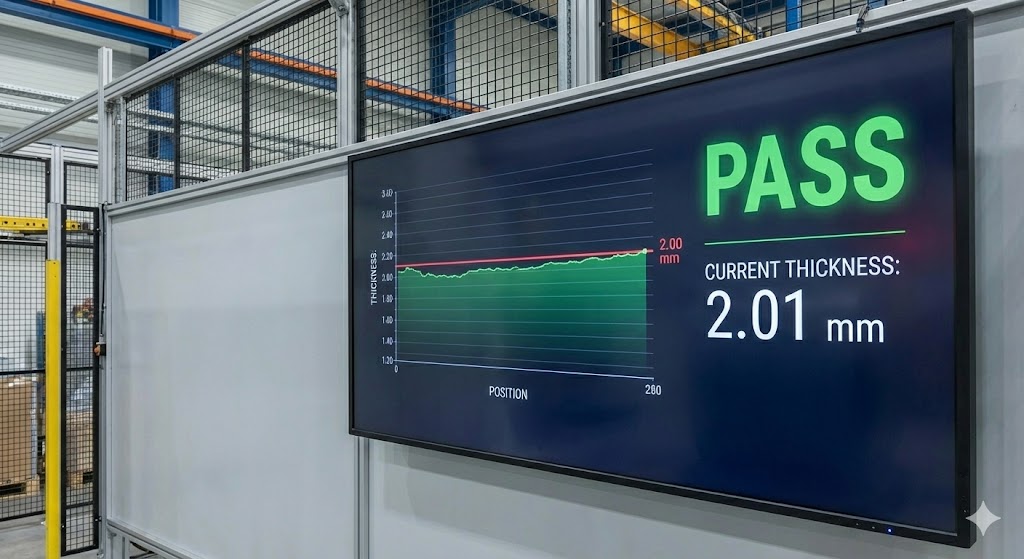
Key specifications defining their performance include measurement range, resolution, repeatability, response time, and environmental ratings. Measurement ranges can vary from a few millimeters to several meters, depending on the model and integrated laser type. Resolution can reach micrometer or even sub-micrometer levels. High repeatability ensures consistent readings critical for quality control. Fast response times, often in the microsecond range, enable use in high-speed production lines. Furthermore, these sensors are frequently housed in rugged enclosures with high IP ratings (e.g., IP67) to withstand industrial environments featuring dust, moisture, oils, and temperature fluctuations.
Applications are widespread across manufacturing and process industries. Common use cases include:
1. Precision Positioning: Aligning components in assembly robots or CNC machines.
2. Thickness Gauging: Measuring the thickness of materials like glass, plastic sheets, or coatings.
3. Level Detection: Monitoring fill levels in containers, especially for liquids or granular materials, through non-metallic walls.
4. Vibration Analysis: Detecting and measuring minute vibrations in machinery for predictive maintenance.
5. Presence Verification: Confirming the presence of objects on conveyor belts, regardless of their optical properties.
When selecting a laser sensor capacitive head, engineers must consider several factors. The nature of the target material (conductive vs. non-conductive, transparent, dark, or shiny) influences the capacitive and laser performance. The required measurement range and accuracy dictate the choice of laser wavelength and capacitive sensor design. Environmental conditions such as temperature, humidity, and potential contamination are critical for housing selection. Finally, the output interface (analog voltage/current, digital IO, or fieldbus protocols like IO-Link or PROFINET) must be compatible with the existing control system.
Installation and calibration are crucial for optimal performance. Proper mounting ensures a stable mechanical base, minimizing vibration-induced errors. Alignment of the laser beam is critical for accurate distance measurement. The capacitive sensor often requires calibration to the specific target material and nominal distance, which may involve setting thresholds or teaching-in reference points. Many modern devices feature auto-calibration routines and user-friendly software for simplified setup.
Maintenance generally involves keeping the lens and sensing face clean from obstructions and buildup. While these sensors are designed for durability, periodic checks of calibration and output signals are recommended as part of a preventive maintenance schedule to ensure long-term reliability.
The integration of laser and capacitive technologies in a single head addresses many limitations of standalone sensors. It provides a robust solution for challenging sensing tasks, enhancing process reliability, improving product quality, and reducing downtime in automated systems. As Industry 4.0 and smart manufacturing evolve, the role of such intelligent, multi-technology sensors is poised to expand, with trends pointing towards enhanced connectivity, embedded diagnostics, and greater miniaturization without sacrificing performance.
In conclusion, laser sensor capacitive heads are powerful tools in the industrial sensor arsenal. Their ability to deliver precise, reliable data under diverse and demanding conditions makes them indispensable for modern automation, driving efficiency and precision in countless applications.