In modern industrial automation, the integration of rotary sliding rail workstations with proximity sensors represents a significant leap in operational efficiency and precision. These systems are pivotal in applications ranging from assembly lines to packaging machinery, where seamless movement and accurate positioning are critical. Rotary sliding rails, also known as circular or ring-shaped guide rails, facilitate smooth rotational motion along a fixed path, enabling workpieces or tools to transition between multiple stations without interruption. This design minimizes downtime and enhances throughput, making it ideal for high-speed production environments.
Proximity sensors play a crucial role in optimizing these workstations by providing non-contact detection of objects. Typically, inductive or capacitive sensors are employed, depending on the material and environmental conditions. Inductive sensors are favored for detecting metallic objects, while capacitive sensors can handle non-metallic materials. When installed at strategic points along the rotary sliding rail, these sensors monitor the presence, position, and movement of components, ensuring each workstation operates in sync. For instance, a sensor can trigger a stop or start signal when a workpiece reaches a specific location, preventing collisions and reducing wear on mechanical parts.
The synergy between rotary sliding rails and proximity sensors offers several advantages. First, it improves accuracy by eliminating manual intervention, as sensors provide real-time feedback to programmable logic controllers (PLCs). This allows for precise control over speed and positioning, reducing errors in tasks like drilling, welding, or inspection. Second, it enhances safety by detecting obstructions or misalignments, automatically halting operations to prevent accidents. Third, maintenance is streamlined, as non-contact sensors have no moving parts, leading to longer lifespans and lower replacement costs compared to mechanical switches.
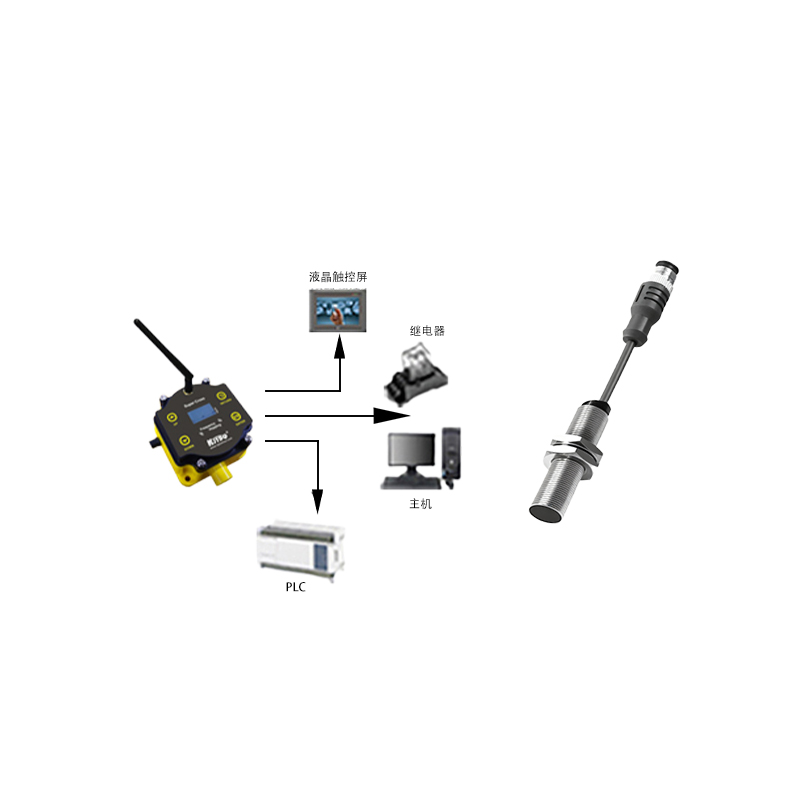
In practice, implementing such a system requires careful consideration of sensor placement and calibration. Engineers must account for factors like sensor range, response time, and environmental interference from dust, moisture, or electromagnetic fields. For example, in a food processing plant, sealed sensors might be necessary to withstand washdowns, while in a metalworking shop, shielded sensors could mitigate false triggers from nearby machinery. Additionally, integrating sensors with industrial networks, such as Ethernet/IP or PROFINET, enables data collection for predictive maintenance and performance analytics.
Case studies from automotive manufacturing highlight the effectiveness of this setup. In engine assembly lines, rotary sliding rail workstations equipped with proximity sensors ensure that components like pistons or valves are correctly aligned before robotic arms engage. This reduces defects and boosts production rates by up to 20%. Similarly, in electronics fabrication, sensors detect circuit boards as they rotate through testing stations, allowing for rapid quality checks without physical contact.
Looking ahead, advancements in smart sensor technology, including IoT-enabled devices and AI-driven diagnostics, promise to further revolutionize these systems. By incorporating self-calibrating sensors or wireless communication, industries can achieve even greater flexibility and automation. Ultimately, the combination of rotary sliding rails and proximity sensors is not just a technical enhancement but a strategic investment in reliability and competitiveness. As global demand for precision manufacturing grows, adopting such integrated solutions will be key to staying ahead in sectors like aerospace, pharmaceuticals, and consumer goods.
In summary, the marriage of rotary sliding rail workstations with proximity sensors exemplifies innovation in industrial automation. By delivering unmatched precision, safety, and efficiency, this technology empowers engineers to build smarter, more resilient production lines. Whether in small-scale operations or large factories, its impact on productivity and cost savings is undeniable, paving the way for a future where automation seamlessly adapts to complex challenges.