In the realm of industrial automation, proximity sensors are indispensable components, and among them, the M12 form factor stands out for its versatility and reliability. M12 proximity sensors, named for their 12mm threaded cylindrical housing, are widely used for non-contact detection of metallic and, in some variants, non-metallic objects. Their compact design, standardized connection system, and robust construction make them a preferred choice in harsh manufacturing environments, from automotive assembly lines to food processing plants.
The core technology behind M12 inductive proximity sensors involves an oscillator circuit that generates a high-frequency electromagnetic field from the sensor's face. When a metallic target enters this field, eddy currents are induced, causing a change in the oscillation amplitude. This change is detected by the sensor's circuitry, which then switches its output state. This principle allows for precise, wear-free detection without physical contact, ensuring long operational life and minimal maintenance. Key specifications include sensing distance, which typically ranges from 2mm to 8mm for standard M12 inductive models, and the type of output (PNP/NPN, NO/NC). The M12 connector, usually featuring 3 or 4 pins, provides a quick, secure, and IP67-rated (or higher) sealed connection, safeguarding against dust and water ingress.
Selecting the right M12 proximity sensor requires careful consideration of several factors. First, determine the target material. Standard inductive sensors detect ferrous metals like steel at their nominal range, while non-ferrous metals like aluminum or copper may require a reduced sensing distance or a specialized factor-1 sensor. For detecting non-metallic objects such as plastic, glass, or liquids, capacitive M12 sensors are employed. They operate by detecting changes in capacitance caused by the target material. Secondly, the operating environment is critical. Sensors with stainless steel housings and high IP ratings (e.g., IP69K) are essential for washdown areas in the food and beverage industry or applications exposed to coolants and oils. Thirdly, output configuration must match the control system's input requirements. PNP (sourcing) and NPN (sinking) outputs are the two primary types, and their compatibility with the PLC or controller is paramount to avoid circuit damage.
Installation and wiring are straightforward but demand attention to detail. Proper mounting, ensuring the correct lateral and axial clearance from metal surroundings, prevents false triggering. The M12 connector system simplifies wiring, often using pre-molded cables with M12 plugs for rapid deployment. However, users must ensure the cable is rated for continuous flexing if used in dynamic applications like cable carriers. Regular functional testing is recommended to verify performance, especially in environments with heavy vibration or temperature fluctuations.
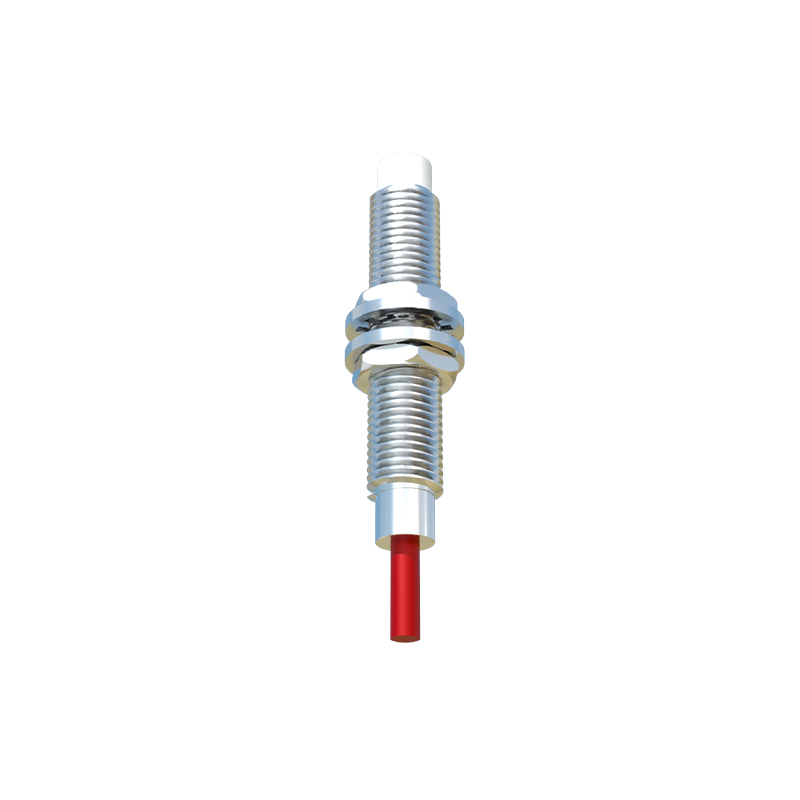
The advantages of M12 proximity sensors are manifold. Their standardized size allows for easy interchangeability and replacement across different machine platforms. The threaded barrel enables simple and secure mounting in drilled holes with locknuts. Their resilience to environmental contaminants and electrical noise makes them exceptionally reliable. Furthermore, advancements have led to specialized variants, including analog output sensors for distance measurement, high-temperature models, and sensors with IO-Link digital communication for advanced diagnostics and parameter setting, enabling predictive maintenance strategies.
In conclusion, the M12 proximity sensor is a cornerstone of modern industrial sensing. Its robust design, coupled with precise and reliable detection capabilities, ensures seamless automation processes. By understanding their operating principles, key selection criteria, and installation best practices, engineers and technicians can optimize machine performance, enhance safety, and reduce downtime, solidifying the M12's role as a critical component in the Industry 4.0 landscape.