In the realm of industrial automation, achieving precise positioning and repeatable motion control is paramount. Servo systems, renowned for their accuracy and dynamic response, rely heavily on establishing a reliable zero point or home position. Traditionally, methods such as mechanical limit switches, encoder index pulses, or hall sensors have been employed for this homing sequence. However, an increasingly prevalent and sophisticated approach involves utilizing non-contact proximity sensors as the definitive servo zero reference. This technique offers distinct advantages in demanding environments, enhancing system robustness, longevity, and precision.
The fundamental principle is straightforward: a proximity sensor, typically inductive or capacitive, is strategically mounted to detect a specific metallic or non-metallic target attached to the moving part of the servo-driven mechanism—be it a linear actuator, rotary table, or robotic arm. During the homing routine, the servo motor initiates a slow, controlled movement. Upon the target entering the sensor's detection field, the sensor's output signal transitions state (e.g., from OFF to ON). This transition event is captured by the servo drive or programmable logic controller (PLC) and is used to define the absolute zero position for the subsequent coordinated motion. Crucially, the exact point of detection is highly repeatable, often within micrometers, providing a consistent datum for every cycle.
The benefits of this methodology are substantial. First and foremost is the elimination of physical contact. Mechanical limit switches suffer from wear, bounce, and eventual failure due to repeated impact. Proximity sensors, operating on electromagnetic or electrostatic principles, experience no such mechanical degradation, significantly reducing maintenance needs and downtime. Their solid-state nature ensures a long operational life even in high-cycle applications. Secondly, they provide exceptional speed and precision. The response time of a modern proximity sensor is extremely fast, allowing for quicker homing sequences without sacrificing accuracy. The defined switching point is consistent, unaffected by factors like mechanical play or switch hysteresis that can plague contact-based methods.
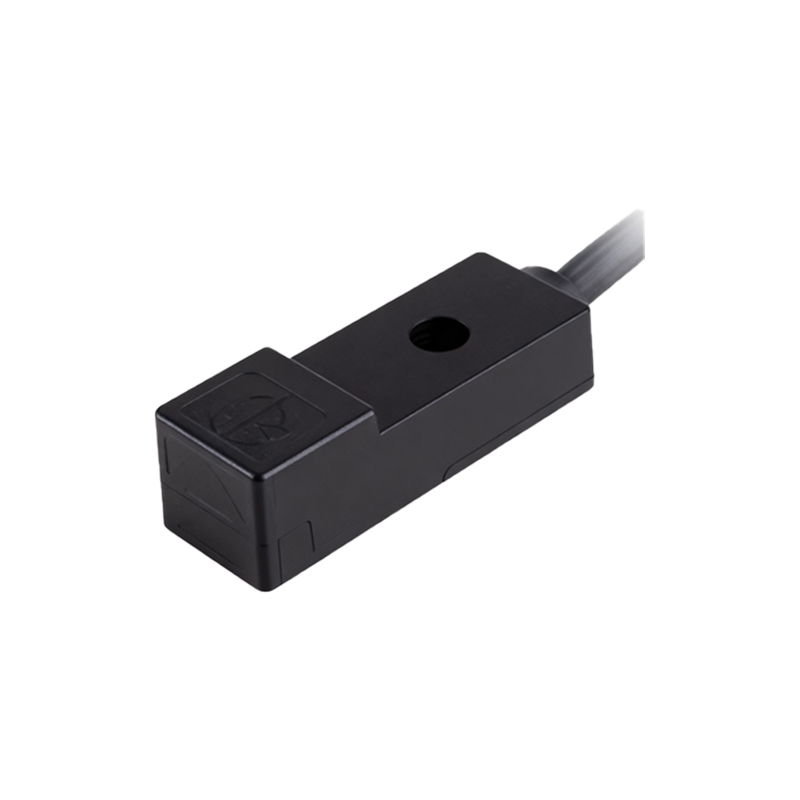
Furthermore, proximity sensors excel in harsh industrial environments. Many models are available with high ingress protection (IP) ratings, making them resistant to dust, coolants, oils, and washdown procedures common in machining or food processing. Their immunity to vibration—a constant challenge in manufacturing—ensures the zero point signal remains stable and reliable. This environmental robustness directly translates to improved system reliability and reduced fault conditions.
Implementation requires careful consideration. Sensor selection is critical. Inductive sensors are ideal for detecting ferrous and non-ferrous metals, while capacitive sensors can detect a wider range of materials, including plastics and liquids, but may be more sensitive to environmental changes. The sensing distance must be chosen appropriately to ensure reliable detection without being overly sensitive to unintended objects. The mounting of both the sensor and the target must be rigid and precise to avoid positional drift. The target's geometry and material should be compatible with the chosen sensor type to ensure a sharp, well-defined switching characteristic.
Integration into the control logic is another key step. The homing sequence must be programmed to utilize the sensor signal correctly. A common strategy is a two-stage approach: initially, the servo moves at a higher speed until the sensor is activated, then it reverses direction at a very low creep speed until the sensor deactivates. The zero point is then set at the midpoint of the activation-deactivation cycle or precisely at the deactivation edge, maximizing repeatability. This "edge-seeking" method compensates for any minor variations in the sensor's response. The servo drive's parameters for homing speed, torque limit, and acceleration must be tuned to ensure a smooth, shock-free engagement with the reference point.
In conclusion, employing proximity sensors as servo zero points represents a best practice in modern motion control design. It marries the non-contact, wear-free reliability of solid-state sensing with the high-precision demands of servo technology. By providing a consistent, durable, and precise reference signal, proximity sensors enhance the overall performance, accuracy, and mean time between failures (MTBF) of automated systems. As industries continue to push for higher productivity and smarter manufacturing, the role of such intelligent homing solutions will only become more central to achieving seamless and reliable automation.