In the rapidly evolving landscape of electrical engineering and automation, battery cell proximity sensors have emerged as critical components for ensuring safety, efficiency, and reliability in various industrial and consumer applications. These sensors are designed to detect the presence or absence of battery cells without physical contact, leveraging advanced technologies to monitor positioning, alignment, and integrity within battery packs or manufacturing lines. This article delves into the fundamental principles, operational mechanisms, and practical implementations of these sensors, tailored for professionals in the electrical industry.
At its core, a battery cell proximity sensor operates based on electromagnetic or capacitive sensing principles. Electromagnetic sensors, often utilizing inductive or Hall effect technologies, generate a magnetic field that interacts with metallic components of battery cells. When a battery cell enters this field, it induces eddy currents or alters magnetic flux, triggering a signal change that indicates detection. This method is highly effective for detecting metallic battery casings, such as those in lithium-ion or nickel-metal hydride cells, and is widely used in automated assembly systems where precise placement is paramount. Capacitive sensors, on the other hand, detect changes in capacitance caused by the proximity of any material, including non-metallic battery components. By measuring shifts in an electrical field, these sensors can identify battery cells regardless of their conductivity, making them versatile for diverse battery chemistries and packaging designs.
The operational mechanism involves a sensing element, signal processing unit, and output interface. Upon detecting a battery cell, the sensor converts physical proximity into an electrical signal, which is then amplified, filtered, and transmitted to control systems like PLCs (Programmable Logic Controllers) or microprocessors. This enables real-time monitoring and feedback, facilitating automated responses such as halting a conveyor belt if a cell is misaligned or triggering quality checks during production. Key parameters influencing sensor performance include sensing range, response time, and environmental robustness. For instance, in high-temperature environments common in battery manufacturing, sensors must withstand thermal variations without compromising accuracy, often requiring IP-rated enclosures for dust and moisture resistance.
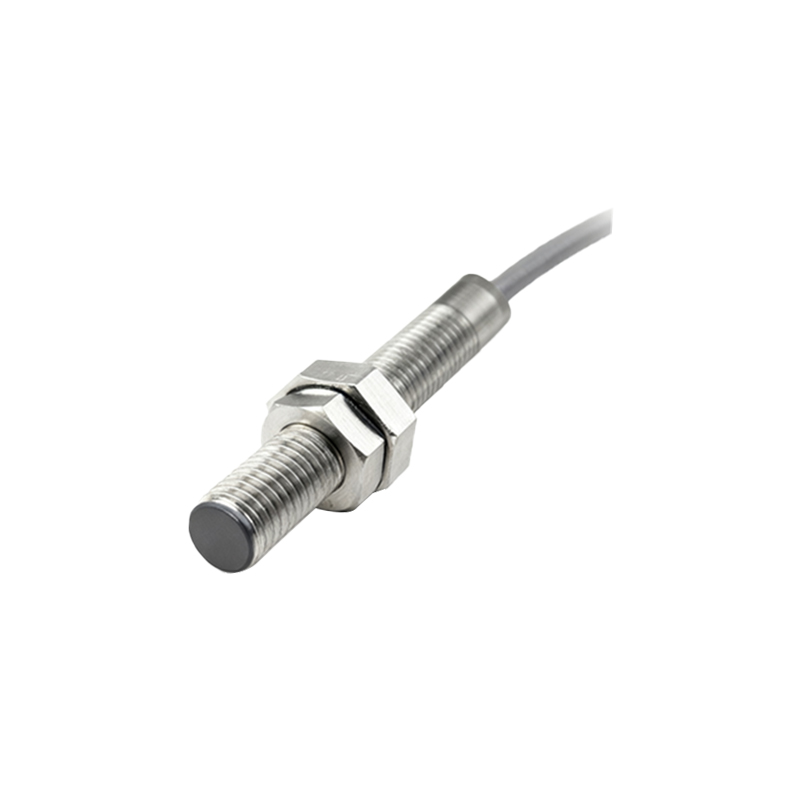
Applications of battery cell proximity sensors span multiple sectors, from automotive to renewable energy. In electric vehicle (EV) battery packs, these sensors ensure cells are correctly seated in modules, preventing short circuits or thermal runaway by detecting misplacements early. In energy storage systems, they monitor battery arrays for maintenance, alerting operators to loose connections or degraded cells. Additionally, in portable electronics manufacturing, sensors streamline quality control by verifying battery insertion in devices like smartphones and laptops, reducing defects and enhancing product longevity.
Advancements in sensor technology have led to innovations such as smart sensors with IoT (Internet of Things) integration, enabling predictive maintenance and data analytics. By collecting proximity data over time, these systems can forecast battery health trends, optimize replacement schedules, and improve overall system efficiency. However, challenges persist, including interference from electromagnetic noise in industrial settings and the need for calibration with varying battery materials. Engineers must select sensors based on specific application requirements, considering factors like detection distance, material compatibility, and cost-effectiveness.
In conclusion, battery cell proximity sensors are indispensable tools in modern electrical systems, underpinning safety and performance through non-contact detection. As battery technologies advance toward higher densities and novel chemistries, sensor designs will continue to evolve, offering greater precision and adaptability. For electrical professionals, understanding these principles is essential for implementing robust solutions that meet the demands of an increasingly automated and energy-driven world. By integrating these sensors into designs, industries can achieve higher reliability, reduced downtime, and enhanced operational workflows, ultimately driving innovation in power management and automation.