In the realm of industrial automation, proximity sensors serve as the critical eyes of machinery, detecting the presence or absence of objects without physical contact. Among the diverse range of form factors, the 30mm diameter cylindrical housing, often referred to as the "30mm head" or "30mm barrel," stands as one of the most ubiquitous and versatile designs. This standardized size has become a workhorse across countless applications, from conveyor systems and robotic cells to machine tools and packaging equipment. Its prevalence is no accident; it represents an optimal balance between sensing performance, mechanical robustness, and ease of installation.
The fundamental operating principle of a 30mm proximity sensor hinges on electromagnetic or electromagnetic field disturbance. Inductive sensors, the most common type within this form factor, generate an oscillating electromagnetic field from their face. When a metallic target enters this field, it induces eddy currents within the target, which in turn dampens the sensor's oscillation. This change is detected by the internal circuitry, triggering a solid-state output signal. This technology makes them ideal for detecting ferrous and non-ferrous metals. For non-metallic object detection, such as plastics, liquids, or wood, capacitive 30mm sensors are employed. These generate an electrostatic field and detect changes in capacitance caused by the presence of any material with a different dielectric constant than air.
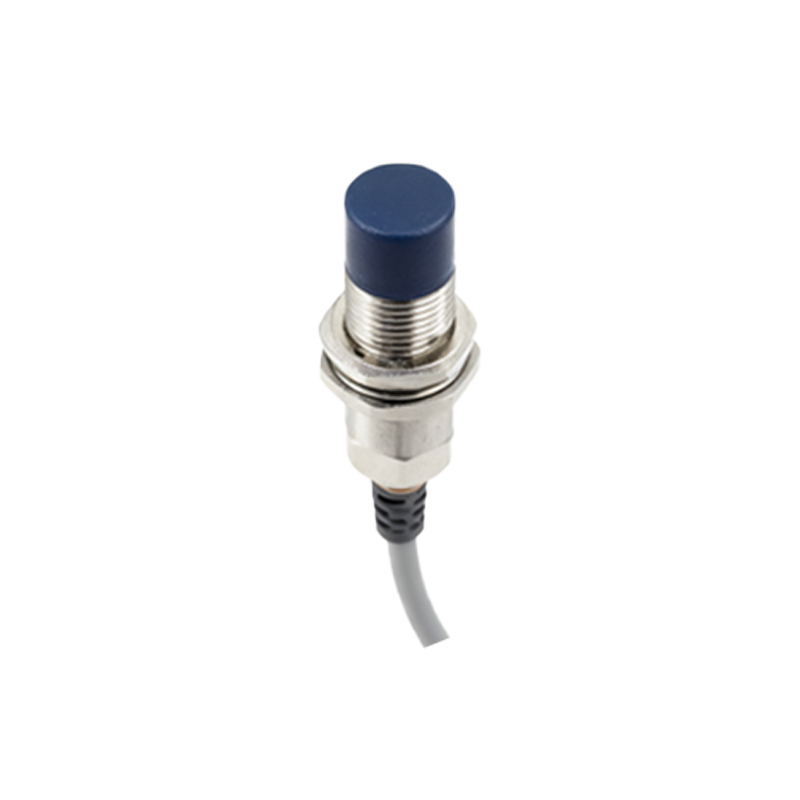
The advantages of the 30mm form factor are manifold. Firstly, its size provides ample internal space for robust coil designs and electronic components, enabling longer sensing ranges compared to smaller-diameter sensors. Typical sensing distances for a standard inductive 30mm sensor can range from 10mm to 15mm for mild steel targets. This generous housing also allows for enhanced protection. Most industrial-grade 30mm sensors boast high Ingress Protection (IP) ratings, such as IP67 or IP69K, making them resistant to dust, water jets, and even temporary immersion. This durability is further complemented by the ability to withstand significant mechanical stress, including shock and vibration commonly found in harsh plant environments.
Wiring and installation are streamlined due to standardization. Many 30mm sensors feature a threaded barrel (commonly M30 x 1.5 metric thread) allowing for easy mounting via a locknut. Electrical connections are typically facilitated through pre-wired cables or quick-disconnect (QD) connectors, with 2-wire, 3-wire, and 4-wire configurations available to suit different DC or AC supply systems. Output types include NPN (sinking), PNP (sourcing), NO (Normally Open), and NC (Normally Closed), providing flexibility for integration with Programmable Logic Controllers (PLCs) and other control systems.
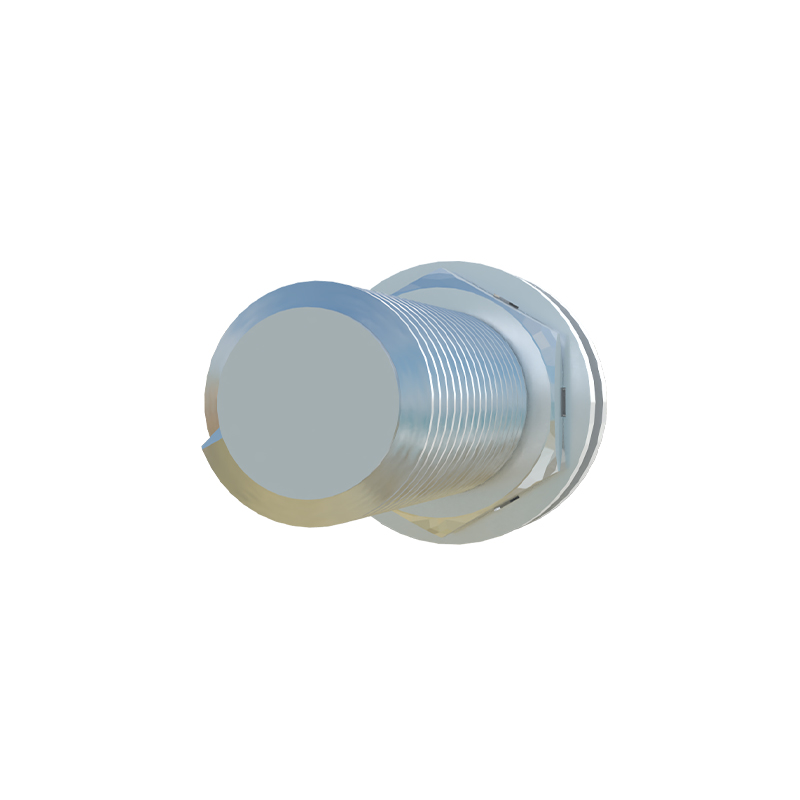
When selecting a 30mm proximity sensor for a specific task, several key parameters must be evaluated beyond just the diameter. The sensing range, as specified for a standard target, is paramount. The material and size of the target object significantly influence the effective range; smaller or non-ferrous metal targets may reduce it. The sensor's housing material is another critical consideration. While nickel-plated brass is common, stainless steel housings are essential for corrosive environments or washdown applications in food and pharmaceutical industries. Temperature rating ensures reliable operation within the application's thermal extremes.
Furthermore, advanced features are increasingly integrated into modern 30mm sensors. These include short-circuit protection, reverse polarity protection, and built-in LED status indicators for operational diagnostics. Some models offer analog outputs (e.g., 4-20mA or 0-10V) for distance-proportional signaling or specialized designs with extended temperature ranges or enhanced resistance to welding fields.
In practice, the application spectrum is vast. On an automotive assembly line, 30mm inductive sensors reliably detect piston positions or confirm the presence of metal components. In material handling, they count packages on a conveyor or verify the position of a palletizer. Within a CNC machine, they serve as precise limit switches for tool changer arms or spindle positioning. Their robustness makes them indispensable in heavy industries like steel mills or foundries.
In conclusion, the 30mm proximity sensor is far more than a simple component; it is a foundational pillar of modern industrial sensing. Its standardized design, proven reliability, and adaptability have cemented its status as a go-to solution for engineers worldwide. By carefully matching the sensor's specifications—be it inductive, capacitive, sensing range, housing material, and output type—to the application's demands, system designers can achieve unparalleled levels of automation reliability, safety, and efficiency. As industries evolve towards smarter, more connected systems, the humble 30mm sensor continues to evolve in tandem, integrating digital intelligence while maintaining the physical robustness that made it an icon in the first place.