Through-beam sensors, also known as opposed-mode or beam-break sensors, represent a fundamental and highly reliable category of photoelectric sensors widely employed in industrial automation. Unlike diffuse or retro-reflective sensors, a through-beam sensor consists of two separate units: a transmitter and a receiver. The transmitter emits a continuous beam of light—typically infrared, visible red, or laser—which is directly aimed at the receiver unit. The receiver detects this light beam. An object is sensed when it physically interrupts this beam, causing the receiver's output state to change. This simple yet robust operating principle grants through-beam sensors significant advantages in terms of sensing range, accuracy, and environmental immunity.
The core working principle is straightforward. The transmitter houses a light-emitting diode (LED) or laser diode. The receiver contains a phototransistor or photodiode tuned to the specific wavelength of the emitted light. In the absence of an object, the light beam reaches the receiver, and the sensor output is in its normal state (often termed "light-on" or "dark-on," configurable by the user). When an opaque object passes between the two units, the beam is broken. The receiver no longer detects the light signal, triggering a change in the output circuit. This binary signal is then used to count objects, detect presence/absence, trigger actions, or provide safety interlocks.
The primary benefits of through-beam sensors are their exceptional sensing distance and high reliability. Because the light beam travels directly from emitter to receiver, these sensors achieve the longest ranges of any photoelectric type, often exceeding 10, 20, or even 100 meters for specialized models. The focused beam also provides very precise detection, allowing for the sensing of very small objects. Furthermore, they are largely immune to factors that plague other sensors. The target object's color, reflectivity, surface finish, or angle have minimal effect on performance, as the sensor simply detects the absence of light. They also exhibit strong resistance to ambient light interference and dust accumulation, as the receiver is tuned to the modulated frequency of its specific transmitter.
Typical applications in industrial settings are numerous. They are indispensable in packaging and material handling for high-speed object counting on conveyor belts, where their speed and accuracy are critical. In the automotive industry, they are used for precise positioning of robotic arms and for verifying the presence of components on assembly lines. They form the basis of safety light curtains, protecting hazardous areas around presses, robots, and automated doors. Additional uses include web break detection in paper and textile manufacturing, fill-level control in bottling plants, and registration mark detection in printing machinery.
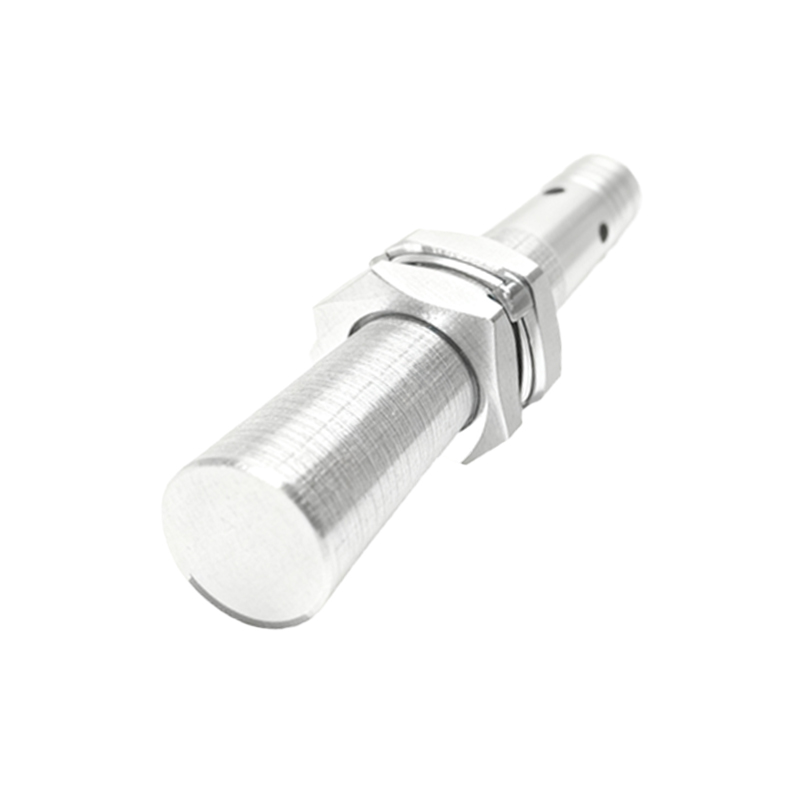
When selecting a through-beam sensor for an application, several key parameters must be considered. First is the required sensing distance, which must be within the sensor's specified range. The size of the target object determines the necessary beam diameter and receiver sensitivity; for detecting very thin materials like wires or foils, a focused laser beam type is often required. Environmental conditions are crucial: models with high Ingress Protection (IP) ratings (e.g., IP67, IP69K) are necessary for washdown areas, while units with robust housings are chosen for high-vibration environments. The choice of light source is also important: infrared beams are discreet and powerful, red LED beams are easy to align visually, and laser beams offer extreme precision for long-range, small-target detection.
Installation and alignment, while conceptually simple, require attention to detail. The transmitter and receiver must be securely mounted and precisely aligned so that the beam is centered on the receiver's detection element. Many modern receivers feature alignment indicators (LEDs or audible signals) to facilitate this process. Proper alignment ensures maximum signal strength and operational reliability. Maintenance generally involves keeping the lenses clean from dirt, oil, or debris that could attenuate the light signal. Regular functional checks are recommended as part of preventive maintenance schedules.
In comparison to proximity sensors like inductive or capacitive types, through-beam sensors are non-contact and can detect any opaque material, not just metals. Compared to other photoelectric modes, they outperform diffuse sensors in range and environmental stability, and outperform retro-reflective sensors by not being fooled by shiny objects that could reflect the beam back. Their main limitation is the need for two separate units and wiring runs, which can increase installation complexity and cost compared to a single-unit sensor. They also cannot detect transparent objects unless a special polarized or luminescence-based model is used.
In conclusion, through-beam sensors remain a cornerstone technology in factory automation. Their unparalleled combination of long range, high precision, and environmental ruggedness makes them the preferred choice for demanding detection tasks where reliability is non-negotiable. As industrial applications evolve towards greater speed and complexity, the fundamental role of the through-beam sensor in providing a simple, definitive "beam broken" signal continues to be irreplaceable. Understanding their operation, benefits, and selection