In the realm of industrial automation, multifunctional proximity sensors have emerged as pivotal components, enabling precise detection and control across diverse environments. These sensors are engineered with sophisticated architectures that integrate multiple sensing principles, such as inductive, capacitive, and ultrasonic technologies, into a single compact unit. The core structure typically comprises a sensing element, signal processing circuitry, output interface, and protective housing, each meticulously designed to enhance reliability and adaptability.
The sensing element, often based on electromagnetic or acoustic fields, detects the presence or absence of objects without physical contact. For instance, inductive sensors utilize coils to generate magnetic fields, ideal for metallic targets, while capacitive variants measure changes in dielectric properties, suitable for non-metallic materials. Ultrasonic sensors employ sound waves to gauge distance, offering versatility in challenging conditions like dust or moisture. Advanced models incorporate hybrid designs, allowing seamless switching between modes via embedded microcontrollers, which optimize performance based on real-time data.
Signal processing circuitry is integral to the sensor's functionality, converting raw analog signals into digital outputs. This includes amplifiers, filters, and analog-to-digital converters (ADCs) that minimize noise and improve accuracy. Modern sensors feature programmable logic controllers (PLCs) or IoT-enabled modules, facilitating communication through protocols like IO-Link or Ethernet/IP. These interfaces support remote configuration and diagnostics, reducing downtime in automated systems.
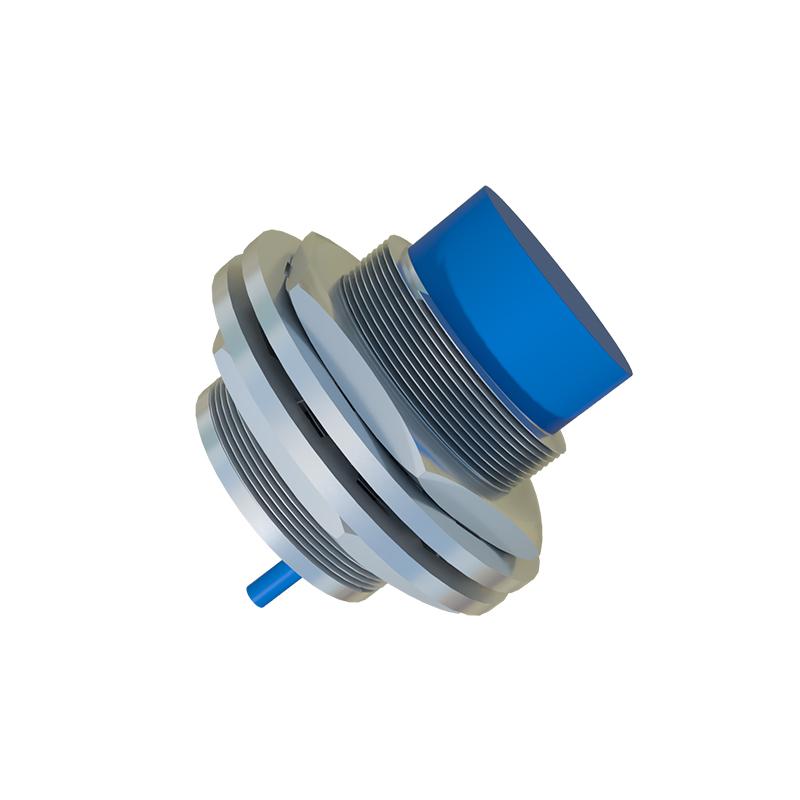
The output interface varies from simple binary signals (e.g., NPN/PNP transistors) to complex analog or serial communications, enabling integration with broader control networks. Protective housings, crafted from materials like stainless steel or rugged polymers, ensure durability against mechanical stress, temperature fluctuations, and corrosive agents. Sealing standards such as IP67 or IP69K guarantee operation in harsh industrial settings.
Innovations in multifunctional proximity sensor architecture focus on miniaturization and energy efficiency. For example, low-power designs leverage energy-harvesting techniques or sleep modes to extend lifespan in wireless applications. Additionally, smart sensors with self-diagnostic capabilities can alert users to potential failures, enhancing predictive maintenance strategies. As Industry 4.0 evolves, these sensors are increasingly embedded with AI algorithms for adaptive learning, allowing them to distinguish between object types or adjust sensitivity autonomously.
In summary, the architecture of multifunctional proximity sensors represents a convergence of precision engineering and digital innovation. By combining multiple detection methods, robust processing, and resilient construction, they empower industries to achieve higher efficiency, safety, and flexibility. Future developments may see further integration with cloud computing and 5G networks, paving the way for fully autonomous industrial ecosystems.