In the realm of industrial automation and control, the reliable detection of objects in harsh environments is a fundamental requirement. Among the myriad of sensing technologies available, small high-temperature proximity switch sensors stand out as critical components engineered to deliver precision and durability where others fail. These compact yet robust devices are specifically designed to operate reliably in elevated temperature conditions, making them indispensable in sectors such as automotive manufacturing, metal processing, glass production, and aerospace.
A proximity switch sensor, at its core, is a non-contact sensor that detects the presence or absence of an object within its sensing range. The "switch" aspect refers to its ability to output a discrete signal, typically used to trigger a control action. What defines the small high-temperature variant is its miniaturized form factor and its specialized construction to withstand ambient temperatures that can routinely exceed 100°C, with some models rated for continuous operation at 200°C or even higher. This is a significant departure from standard inductive or capacitive proximity sensors, which are generally limited to an upper range of 70-85°C.
The engineering behind these sensors is a testament to material science and innovative design. Key to their performance is the selection of high-grade materials. Housing materials often include specialized thermoplastics like PEEK (Polyether Ether Ketone) or PTFE (Polytetrafluoroethylene), and in the most extreme cases, stainless steel or ceramic. These materials provide not only thermal resistance but also excellent chemical and mechanical robustness. Internally, the sensing coil, the heart of an inductive proximity sensor, is wound with high-temperature-rated wire and potted with thermally stable compounds to prevent degradation and maintain electrical integrity. The electronic circuitry is similarly protected and often features components rated for extended temperature ranges.
The principle of operation remains largely based on established technologies. Inductive sensors are the most common for detecting metallic objects. They generate an electromagnetic field; when a metal target enters this field, it causes a change in oscillation amplitude, which is detected and converted into a switching signal. For non-metallic targets, capacitive versions are used, which detect changes in capacitance caused by the target material. In high-temperature models, these core principles are executed with components that maintain stability and accuracy despite thermal expansion and other heat-induced effects.
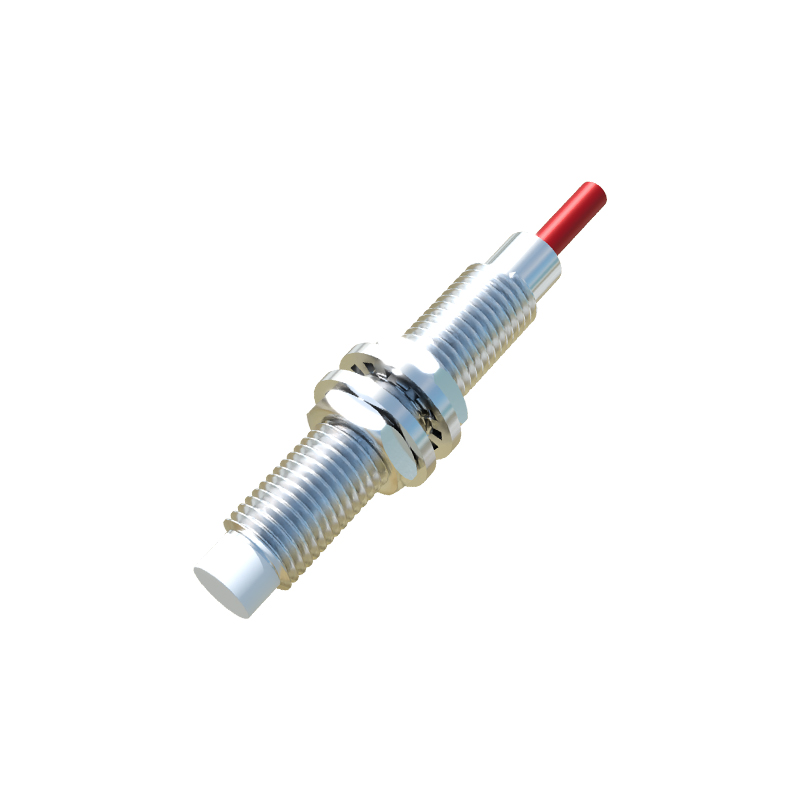
The applications for these sensors are as demanding as their specifications. In automotive foundries and engine assembly lines, they are used to monitor the position of hot engine blocks, manifolds, or exhaust components. Within glass manufacturing, they detect the position of molten glass or hot bottles moving through annealing lehrs. In plastic injection molding, they verify the ejection of hot parts from molds. Their small size is particularly advantageous in machinery with limited space, allowing for installation in cramped quarters near heat sources without compromising the sensing function.
Selecting the right small high-temperature proximity sensor requires careful consideration of several parameters beyond just the temperature rating. The sensing distance, typically a few millimeters for these compact units, must be appropriate for the application. The housing style (e.g., cylindrical, rectangular) and connection type (pre-wired cable or connector) must suit the mounting constraints. The IP (Ingress Protection) rating is crucial for ensuring resistance to dust and coolant ingress, which often accompanies high-heat areas. Output configuration (PNP/NPN, NO/NC) must be compatible with the control system, such as a PLC. Furthermore, resistance to electromagnetic interference (EMI) is vital in industrial settings filled with motors and welders.
Installation and maintenance, while straightforward, demand attention to detail. Even a high-temperature sensor has its limits; it is essential to ensure the rated temperature is not exceeded, considering both ambient heat and radiant heat from the target. Adequate clearance from the hot target and other surfaces should be maintained as per manufacturer guidelines to prevent thermal damage. Regular checks for physical damage, buildup of debris, or degradation of the cable insulation are recommended to ensure long-term reliability.
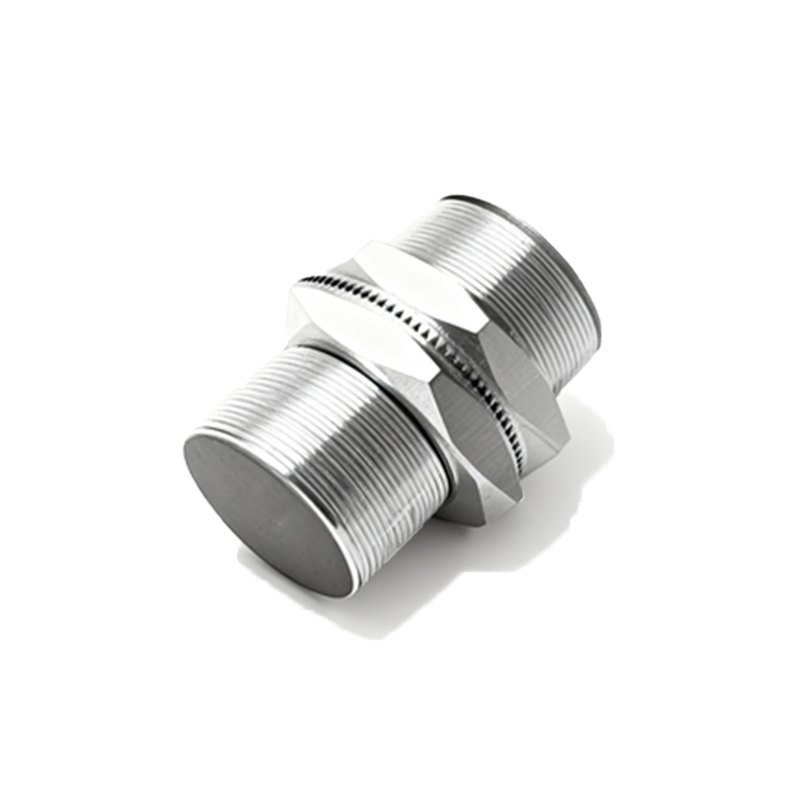
In conclusion, small high-temperature proximity switch sensors are not merely accessories but vital enablers of automation in extreme conditions. Their development reflects a focused response to industry's push towards higher efficiency, greater reliability, and operation in increasingly severe environments. By seamlessly integrating into hot, cramped, and aggressive industrial landscapes, these sensors provide the essential "eyes" for control systems, ensuring processes run safely, efficiently, and without interruption. For engineers and system integrators, understanding their capabilities and specifications is key to building resilient and high-performing automated systems.